What Are the Top 3 Dividend Stocks to Consider in 2018?
TL;DR
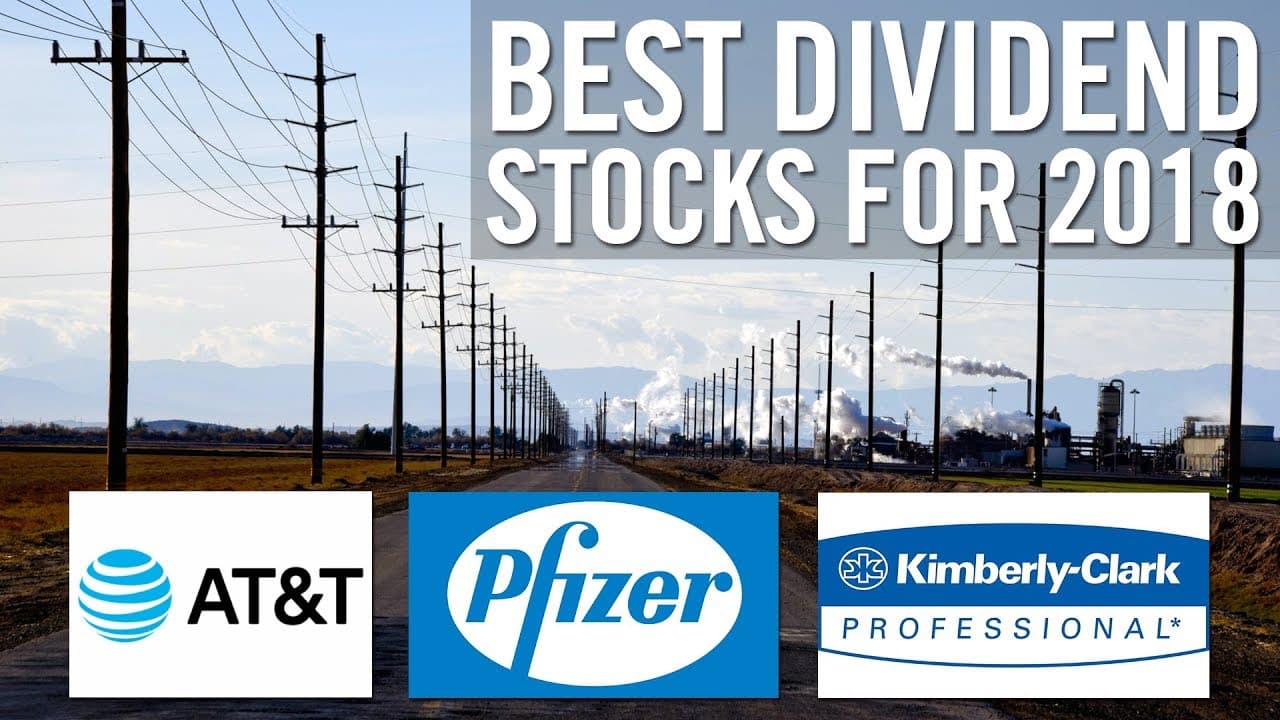
The speaker’s top three dividend stock picks for 2018 are AT&T, Pfizer, and Kimberly-Clark. The evaluation considers dividend history, dividend growth, yield, and coverage; AT&T’s yield is calculated at 5.3%, compared with an S&P 500 average of about 2.2%. Read on to see how dividend yield and coverage can help assess each pick.
Transcript
what's going on you guys I hope you were having a fantastic day today we're going to be talking about the best dividend stocks for 2018 now some of you may be noticing that I'm using a whiteboard here and those of you that have been following my channel for a long time know that I used to have my old whiteboard set up it's actually still back here ... Read More
Key Insights
- 🛻 AT&T, Pfizer, and Kimberly Clark are highlighted as top dividend picks for 2018 due to their consistent dividends and ability to pay them.
- 👨💼 AT&T is a telecommunications company with a subscription-based business model and a dividend yield of 5.4%.
- ❓ Pfizer is a pharmaceutical company with a recession-proof industry and a dividend yield of 3.7%.
- 🛻 Kimberly Clark is a consumer staples company manufacturing everyday essentials, with a dividend yield of 3.5% and the longest dividend growth streak among the picks.
- 🥳 Factors to consider in selecting dividend stocks include dividend history, dividend growth streak, dividend yield, and the dividend coverage ratio.
- ❓ The average dividend yield for the S&P 500 is around 2.2%.
- 🥳 Dividend coverage ratios between 2 and 3 are optimal, indicating that a company can afford to pay its dividend.
Install to Summarize YouTube Videos and Get Transcripts
Explore YouTube Video Summarizer or Get YouTube Transcript Extractor
Questions & Answers
Q: What are the top three dividend stocks to consider for 2018?
The speaker’s three picks are AT&T, Pfizer, and Kimberly-Clark. They are highlighted for their consistent dividends and their ability to make those payments.
Q: Why is AT&T considered a dividend stock?
AT&T is presented as a slow-growing telecommunications company with a subscription-based business model. Because its growth is relatively flat, it pays dividends to reward shareholders and give them a reason to remain invested.
Q: How is AT&T’s dividend yield calculated?
The calculation uses four quarterly dividends of $0.49, for annual dividends of $1.96, divided by a market price of $37.16. That produces a dividend yield of approximately 5.3%.
Q: Why is Pfizer included among the dividend picks?
Pfizer is presented as a pharmaceutical company operating in an industry described as recession-proof. Its dividend yield is identified as approximately 3.7%.
Q: Why is Kimberly-Clark included among the dividend picks?
Kimberly-Clark manufactures everyday consumer staples and has a dividend yield of approximately 3.5%. Among the three picks, it is described as having the longest dividend growth streak.
Q: What dividend yield should an income investor look for?
The speaker suggests looking for a dividend yield between 3% and 6% when income is the priority rather than growth. For comparison, the average dividend yield for the S&P 500 is stated as approximately 2.2%.
Q: What is the dividend coverage ratio, and what range is considered optimal?
The dividend coverage ratio is annual earnings per share divided by the annual dividend per share. A ratio between 2 and 3 is presented as optimal because it indicates that the company can afford its dividend.
Q: What factors should investors examine when evaluating dividend stocks?
The speaker recommends examining dividend history, the number of years the dividend has grown, dividend yield, and the dividend coverage ratio. Together, these measures help assess the size, consistency, growth, and affordability of the dividend.
Summary & Key Takeaways
-
The video introduces the concept of dividend stocks and explains that companies in income mode pay dividends to reward shareholders, while growth companies reinvest earnings for growth.
-
It discusses the importance of calculating the dividend yield, which is the annual dividends divided by the market price, and suggests a range of 3-6% for income investments.
-
The video also emphasizes the significance of the dividend coverage ratio, which is the annual earnings per share divided by the annual dividend per share, with a range of 2-3 considered optimal.
Read in Other Languages (beta)
Share This Summary 📚
Summarize YouTube Videos and Get Video Transcripts with 1-Click
Try YouTube Summary with ChatGPT & Claude or YouTube Transcript Generator
Explore More Summaries from Ryan Scribner 📚




Summarize YouTube Videos and Get Video Transcripts with 1-Click
Try YouTube Summary with ChatGPT & Claude or YouTube Transcript Generator