This Ruins 91% of Melodies
TL;DR
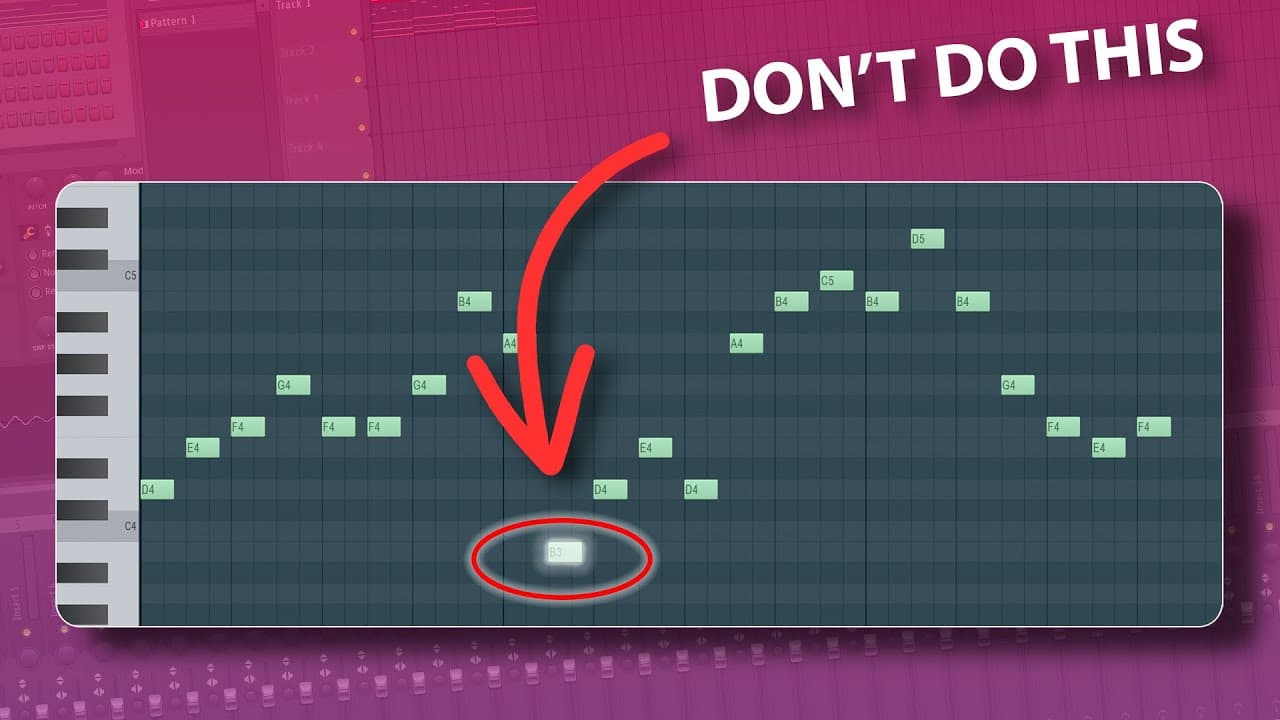
Learn how to avoid common mistakes when writing melodies, such as starting without chords, using weak notes, overcomplicating melodies, and ignoring rhythmic displacement.
Transcript
in this video I'm going to show you four common mistakes that producers make when writing Melodies that cause their Melodies to sound bad or just lack emotion and I'm also going to show you how to avoid making these mistakes so that you can make Melodies that cement into the souls of your listeners for a lifetime and keep them coming back to your m... Read More
Key Insights
- 🆘 Starting with chords before writing melodies helps establish emotional connection and harmony.
- 🎵 Being mindful of certain notes in the scale ensures compatibility with chords and avoids awkward musical situations.
- ❓ Keeping melodies simple and memorable increases their impact and memorability to listeners.
- 👂 Paying attention to rhythmic displacement ensures a cohesive flow and avoids melodies that sound disjointed.
- ❓ Following the expected rhythm pattern in a melody is crucial in maintaining its structural integrity.
- 🖤 Overcomplicating melodies can make them less memorable and lack direction.
- 🆘 Understanding the significance of downbeats, upbeats, and offbeats helps in creating rhythmic melodies.
Install to Summarize YouTube Videos and Get Transcripts
Explore YouTube Video Summarizer or Get YouTube Transcript Extractor
Questions & Answers
Q: Why is it important to start with chords when writing melodies?
Starting with chords helps establish the desired emotion and provides harmony for the melody. It allows you to pick strong notes that connect emotionally with the chords.
Q: Which notes in a scale should I be mindful of when writing melodies?
You should be mindful of the sixth and second notes in the minor scale and the fourth and seventh notes in the major scale. These notes have specific chord compatibility and can sound awkward if used incorrectly.
Q: How can overcomplicating melodies affect the listener's experience?
Overcomplicated melodies can lack direction and become overwhelming for listeners. It's important to start with simple and memorable melodies before adding complexity.
Q: What is rhythmic displacement and why is it important in melody writing?
Rhythmic displacement refers to the placement of phrases within the rhythm of a melody. It is important because it affects the overall cohesion and flow of the melody. Ignoring rhythmic displacement can lead to melodies that sound disjointed.
Key Insights:
- Starting with chords before writing melodies helps establish emotional connection and harmony.
- Being mindful of certain notes in the scale ensures compatibility with chords and avoids awkward musical situations.
- Keeping melodies simple and memorable increases their impact and memorability to listeners.
- Paying attention to rhythmic displacement ensures a cohesive flow and avoids melodies that sound disjointed.
- Following the expected rhythm pattern in a melody is crucial in maintaining its structural integrity.
- Overcomplicating melodies can make them less memorable and lack direction.
- Understanding the significance of downbeats, upbeats, and offbeats helps in creating rhythmic melodies.
- Writing melodies in the time signature of four-four requires maintaining the expected rhythm pattern for each bar.
Summary & Key Takeaways
-
One common mistake in writing melodies is not starting with chords, which can make it hard to connect emotionally. Start with a set of chords that match the desired emotion before working on the melody.
-
Another mistake is using weak notes, such as the sixth and second notes in the minor scale or the fourth and seventh notes in the major scale, without considering their compatibility with certain chords.
-
Overcomplicating melodies can make them less memorable for listeners. Start by writing a simple rhythm and gradually add complexity.
-
Rhythmic displacement is often overlooked but essential in creating cohesive melodies. Pay attention to where each phrase of the melody starts and ends, following the expected rhythm pattern.
Read in Other Languages (beta)
Share This Summary 📚
Summarize YouTube Videos and Get Video Transcripts with 1-Click
Try YouTube Summary with ChatGPT & Claude or YouTube Transcript Generator
Explore More Summaries from Alex Rome 📚

Summarize YouTube Videos and Get Video Transcripts with 1-Click
Try YouTube Summary with ChatGPT & Claude or YouTube Transcript Generator