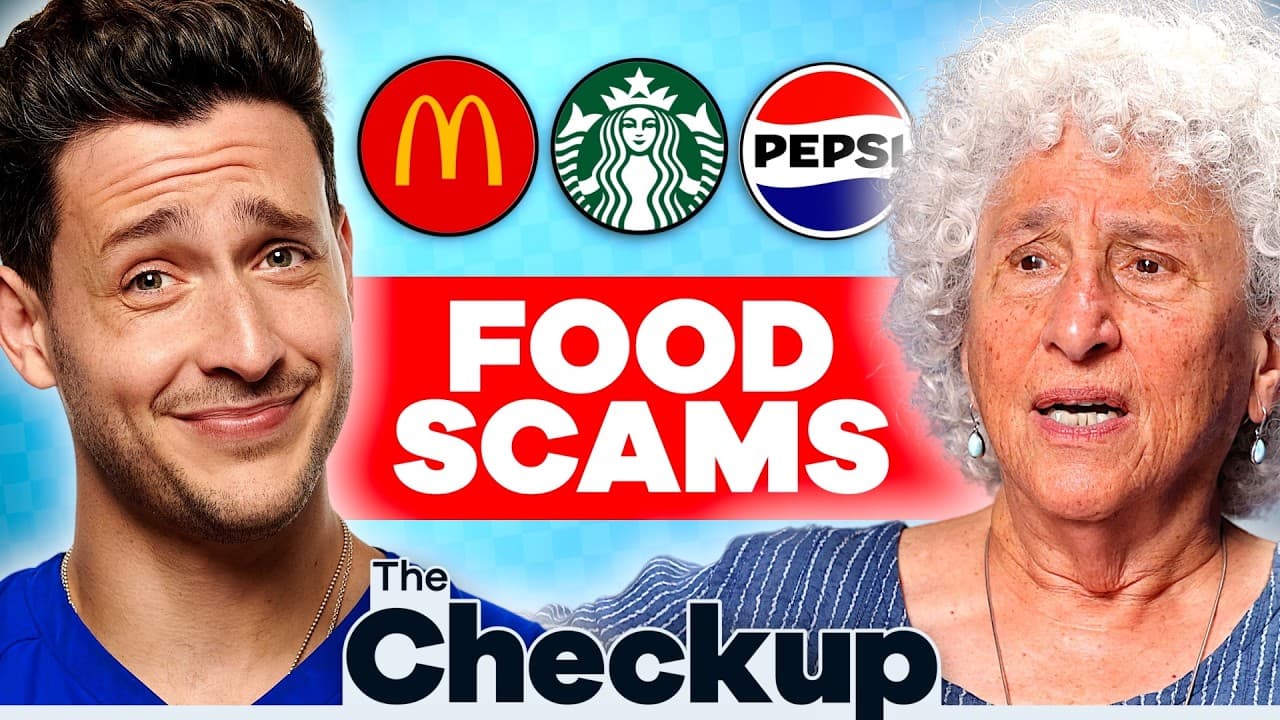
The Corrupt World Of Food Politics | Marion Nestle
TL;DR
Dr. Marion Nestle discusses the food industry's influence on eating habits and public health.
Transcript
- Eating less is terrible for business. That's why they're frantic. These companies are frantic about the new obesity drugs. (dramatic music) (camera shutter clicks) Nestle is coming out with a line of products aimed at people who are taking the obesity drugs. You read in the paper every day about how worried they are that people are going to eat l... Read More
Key Insights
- 😋 The food industry's profit motives heavily influence the availability and marketing of unhealthy foods.
- ❓ Advertising often promotes the illusion of personal choice, diverting attention from corporate marketing strategies.
- 💉 Calls for public health reforms emphasize the need to reevaluate dietary guidelines and industry practices.
- 😋 Ultra-processed foods significantly contribute to health problems due to their calorie density and lack of nutritional value.
- 🛰️ Artificial sweeteners remain contentious, with potential risks outweighing benefits in many diets.
- 🧑⚕️ The impact of corporate lobbying can distort public health messaging and dietary recommendations.
- 🔉 Children's dietary choices are significantly affected by social media and marketing tactics, warranting protective measures.
Install to Summarize YouTube Videos and Get Transcripts
Explore YouTube Video Summarizer or Get YouTube Transcript Extractor
Questions & Answers
Q: What is driving the food industry's frantic response to obesity drugs?
The food industry is primarily driven by profits. As people turn to obesity drugs and potentially consume less, companies fear a decline in sales. Nestle notes that their revenue relies heavily on processed food sales, which could be threatened if consumer behaviors shift due to these new health treatments.
Q: How does the food industry influence individual eating habits?
The food industry employs various marketing strategies that create an "invisible hand" that shapes consumer choices. Advertising, sponsorship, and lobbying efforts subtly encourage people to choose less healthy options while framing these choices as personal preferences rather than a result of corporate influence.
Q: Why is there little awareness about the food industry's role in obesity?
Nestle argues that the food industry deliberately obscures its influence through marketing that emphasizes individual choice. This cultivates a narrative where unhealthy eating is viewed as a personal responsibility, rather than recognizing the industry's substantial impact on food availability and promotion.
Q: What steps should be taken to improve nutritional guidelines in the U.S.?
According to Nestle, a fundamental reform of the food system is necessary, including taking money out of politics to ensure that dietary guidelines prioritize public health. She suggests re-evaluating food subsidies to promote healthier options and restrict marketing of unhealthy products.
Q: What are Nestle's views on artificial sweeteners and their role in diets?
Nestle is cautious about artificial sweeteners, noting a lack of long-term studies on their safety. While they may help some reduce caloric intake, she highlights concerns regarding their metabolic effects and overall health, advocating for moderation and whole food consumption instead.
Q: How does Nestle define ultra-processed foods, and why are they harmful?
Ultra-processed foods are defined as items created through industrial processes that include additives not typically found in a home kitchen. She notes that these foods contribute to overconsumption and are linked to numerous health issues, emphasizing a need for awareness and reduced intake.
Q: What does Nestle suggest about the food industry's influence on children?
Nestle expresses deep concern regarding food marketing targeting children. She points out that companies exploit children's trust to promote unhealthy products, urging for stricter regulations to protect youngsters from misleading advertising and the negative health implications of poor dietary habits.
Q: What historical changes in regulations does Nestle highlight regarding dietary guidelines?
Nestle discusses how lobbying from powerful food industries led to the exclusion of sustainability considerations from the dietary guidelines. As a result, current guidelines are driven by corporate interests rather than public health needs, demonstrating the ongoing impact of the food industry's influence on nutrition policy.
Summary & Key Takeaways
-
Dr. Marion Nestle emphasizes how the food industry focuses on profits over health, influencing what people consume. This prioritization leads to a higher prevalence of processed foods in diets.
-
The industry's marketing strategies often perpetuate the idea of personal choice in food consumption, overshadowing deeper influences like corporate lobbying and advertising.
-
Nestle advocates for systemic change, including revisions to dietary guidelines and the need for a public health approach to address obesity and poor dietary choices.
Read in Other Languages (beta)
Share This Summary 📚
Summarize YouTube Videos and Get Video Transcripts with 1-Click
Try YouTube Summary with ChatGPT & Claude or YouTube Transcript Generator
Explore More Summaries from The Checkup with Doctor Mike 📚



Summarize YouTube Videos and Get Video Transcripts with 1-Click
Try YouTube Summary with ChatGPT & Claude or YouTube Transcript Generator