How Are Fake Google Ads Spreading Malware?
TL;DR
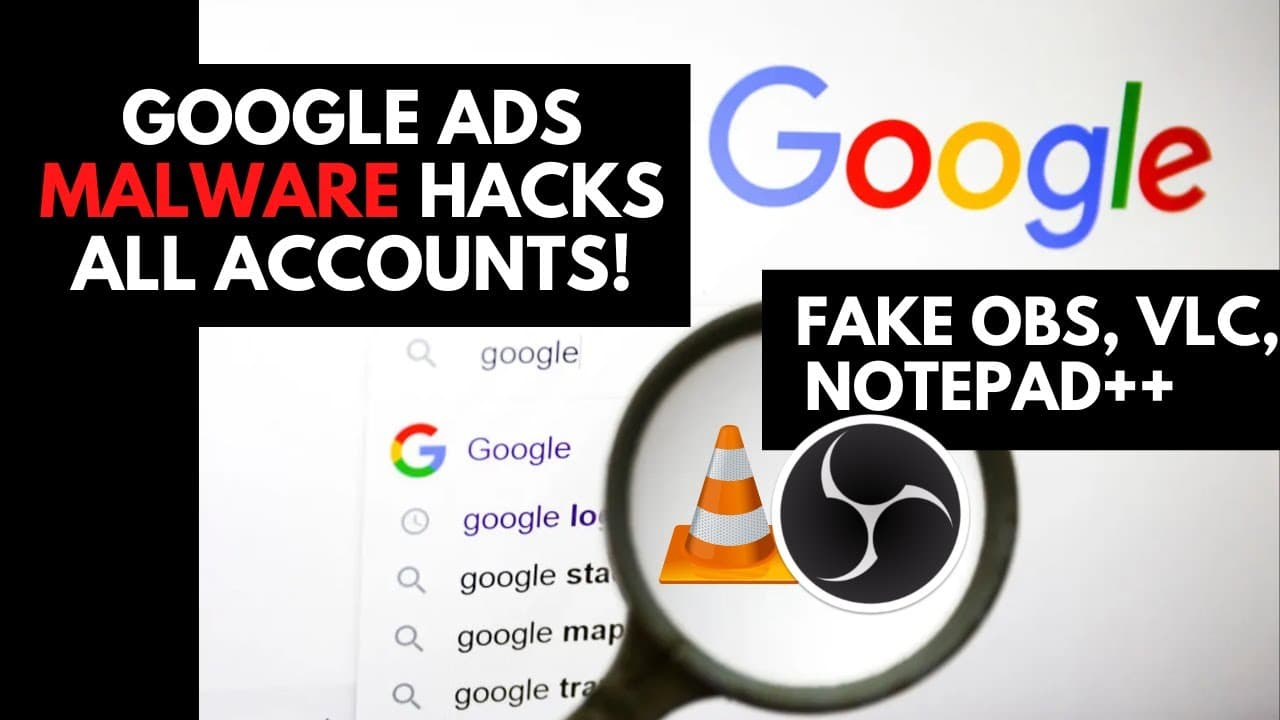
Fake Google ads for popular software like VLC and OBS are leading to malware downloads, with info stealers being a major threat that can access your passwords and credentials. These attacks often exploit large file sizes to evade detection by antivirus software, utilizing misleading websites that appear legitimate but redirect users to malware.
Transcript
big news guys so in the last month you've probably heard that they've been these really convincing fake ads for VLC 7-Zip OBS popular software that actually lead to malware downloads and in fact a popular crypto influencer nft God actually got hacked by one of these I suspect it was some kind of Redline info stealer which I have covered in channel ... Read More
Key Insights
- 🥺 Convincing fake ads for popular software, such as VLC and OBS, continue to circulate, leading to malware downloads.
- 💁 Redline info stealer is a prevalent threat that can compromise a user's digital assets by stealing passwords and authentication tokens.
- 🌥️ Attackers exploit large file sizes to bypass antivirus scans and hide malware inside.
- 😒 Malicious websites use a legitimate-looking frontend to fool Google and set up redirects to deliver malware.
- 🫠 The initial hours of a malicious ad's lifespan are critical, as attackers only need a few victims to achieve their goals.
- 👨🦱 Being cautious when downloading software and checking the URL are crucial to avoid falling victim to malicious redirects.
- 💁 Info stealers are a widespread and prevalent threat that compromises online credentials and personal information.
Install to Summarize YouTube Videos and Get Transcripts
Explore YouTube Video Summarizer or Get YouTube Transcript Extractor
Questions & Answers
Q: How are fake ads for popular software leading to malware downloads?
Fake ads for popular software trick users into downloading malware-infected files, which can compromise their digital assets.
Q: What is an info stealer and how does it work?
An info stealer is a type of malware that attempts to gather sensitive information, such as saved passwords and authentication tokens, from the victim's browser.
Q: How do attackers exploit large file sizes to deliver hidden malware?
Attackers use large file sizes to bypass antivirus scans, as many online scanners skip scanning files above a certain size threshold. They pack malware inside these large files, making it difficult for antivirus software to detect.
Q: How do malicious websites fool Google and deliver malware?
Malicious websites create legitimate-looking websites with SEO content and use them as the advertised site. However, when users click on the ad, they are redirected to a malicious site that delivers malware.
Summary & Key Takeaways
-
Fake ads for popular software are leading to malware downloads and compromising users' digital assets.
-
Info stealers, such as Redline info stealer, are being used to steal passwords and authentication tokens from browsers.
-
Attackers exploit large file sizes to bypass antivirus scans and deliver hidden malware.
-
Malicious websites use legitimate-looking SEO content to fool Google and set up redirects to malware.
Read in Other Languages (beta)
Share This Summary 📚
Summarize YouTube Videos and Get Video Transcripts with 1-Click
Try YouTube Summary with ChatGPT & Claude or YouTube Transcript Generator
Explore More Summaries from The PC Security Channel 📚



Summarize YouTube Videos and Get Video Transcripts with 1-Click
Try YouTube Summary with ChatGPT & Claude or YouTube Transcript Generator