How to Start a Successful Freelance eLearning Business?
TL;DR
To start a successful freelance e-learning business, create a strong portfolio and establish your unique value proposition. Actively network on platforms like LinkedIn, participate in community opportunities, and utilize project-based pricing for clarity. Continuous community engagement and strategic pricing will help attract clients and foster sustained business growth.
Transcript
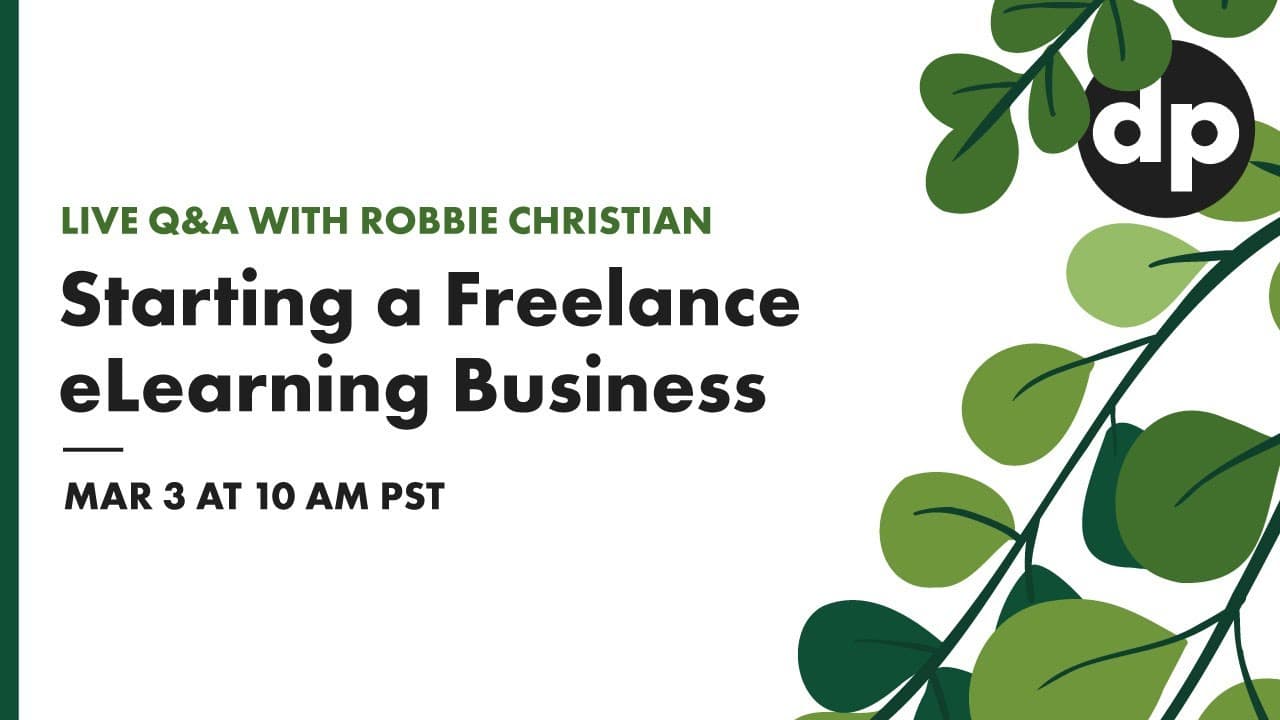
hello my friends this is a replay of a live q a that we did with robbie christian where he chatted about how he started and grew his freelance e-learning business so the session should be packed with plenty of actionable tips that will help you do the same and if you want to attend these sessions live and engage with the community more deeply head ... Read More
Key Insights
- 😥 Start freelancing with a clear value proposition and unique selling points to differentiate in a competitive market.
- 💪 Building a strong portfolio and actively networking are crucial for landing clients in the freelance e-learning industry.
- 👨💼 Establishing a business entity like an LLC provides legal protection and a professional image for freelance operations.
- 💍 Efforts like connecting with the community, engaging on LinkedIn, staying active in opportunities channels, and ongoing portfolio updates are essential for client acquisition.
- 🥺 Utilizing project-based pricing and offering multiple options in proposals can lead to more effective negotiation and agreement with clients.
- 🥰 Master the art of pricing by balancing profitability, value, and client expectations to lay a strong foundation for a successful freelance business.
- 🥺 Consistent communication, clear boundaries, and proactive strategy lead to sustainable client relationships and business growth.
Install to Summarize YouTube Videos and Get Transcripts
Explore YouTube Video Summarizer or Get YouTube Transcript Extractor
Questions & Answers
Q: What prompted Robbie to transition from scuba diving to instructional design?
Robbie recognized a need for e-learning courses in scuba diving, driving his shift to instructional design.
Q: Why did Robbie choose to freelance instead of seeking full-time positions?
Flexibility, self-determination, and autonomy motivated Robbie to dive into freelance instructional design from the beginning.
Q: How did Robbie strategically set his freelance rates and avoid undervaluing his services?
Robbie adopted a method of high initial pricing, gradually adjusting to find the sweet spot that balanced value and competitive rates.
Q: What challenges did Robbie face in the early stages of landing his first clients as a freelancer?
Doubt, patience, and the uncertainty of client acquisition presented challenges for Robbie before securing his initial projects.
Q: What needs to be included in a proposal for potential clients?
Proposals should include detailed scope, pricing, payment terms, review cycles, portfolio rights, and multiple options to facilitate transparent client discussions.
Summary & Key Takeaways
-
Robbie transitioned from scientific scuba diving to instructional design, evolving his skills over ten years.
-
Started freelancing in 2021, growing his business rapidly through portfolio building and strategic pricing.
-
Leveraged community engagement, LinkedIn networking, and proactive proposal strategies to land clients.
Read in Other Languages (beta)
Share This Summary 📚
Summarize YouTube Videos and Get Video Transcripts with 1-Click
Try YouTube Summary with ChatGPT & Claude or YouTube Transcript Generator
Explore More Summaries from Devlin Peck 📚

Summarize YouTube Videos and Get Video Transcripts with 1-Click
Try YouTube Summary with ChatGPT & Claude or YouTube Transcript Generator