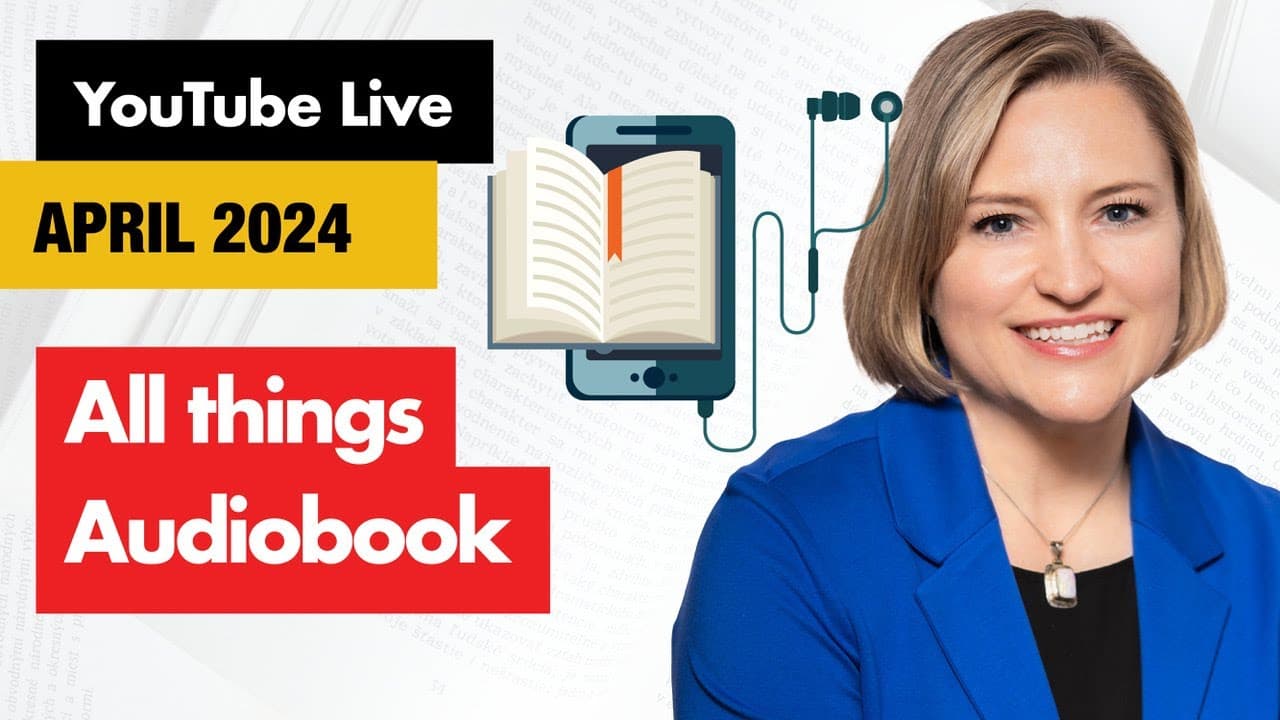
All Things Audiobook FAQ's
TL;DR
This content explores essential tips and questions about audiobook creation and distribution processes.
Transcript
hello and happy Tuesday uh do we have audio it doesn't seem to be moving so hopefully you can confirm that you can hear me uh today we're g going to dive into the remaining questions on audiobooks so if you were at the Deep dive that happened not this Saturday but last Saturday uh or you weren't but you have questions about audiobooks whether it's ... Read More
Key Insights
- 🌎 Audible significantly dominates the audiobook market in North America, essential for authors aiming for wide distribution.
- ❓ Using professionals or AI technology can improve quality and effectiveness in audiobook production.
- 🤳 Self-narration can be personally rewarding but requires understanding pacing and delivery.
- ⌛ Planning, energy, and technical aspects are critical in the audiobook recording process, influencing both quality and time commitment.
- ❓ Authors should ensure that their audiobooks cater to listening preferences, avoiding content overly reliant on visual elements.
- 😒 Effective use of soundproofing and good-quality equipment is necessary for home recordings to achieve professional sound quality.
- 📔 Promotions and marketing strategies for audiobooks should align with general book marketing practices, as they often overlap.
Install to Summarize YouTube Videos and Get Transcripts
Explore YouTube Video Summarizer or Get YouTube Transcript Extractor
Questions & Answers
Q: What are the advantages of using Audible for audiobook distribution?
Audible remains the leading platform for audiobook sales in North America, generating about 80% of audiobooks' revenue for most authors. It combines credibility with other formats available on Amazon, allowing readers to consume books in their preferred manner. However, it restricts pricing and offers a lower royalty percentage, which many authors find detrimental in the long run.
Q: How much time should one expect to record an audiobook?
A typical rule of thumb is to estimate approximately one finished hour of recording for every 10,000 words. Therefore, for a 60,000-word manuscript, an author should plan to spend around 12 to 14 hours in the recording studio, depending on their experience and emotional energy throughout the process.
Q: What makes a book suitable for audiobook narration?
Stories that rely heavily on visual elements, intricate charts, or technical data may not translate well to an audiobook format. The content should engage listeners without requiring constant cross-reference to visuals, making genres like business or self-help ideal for audiobook adaptation.
Q: Can authors effectively narrate their audiobooks, or is professional narration necessary?
Authors can narrate their own audiobooks, often adding personal emotions and insights that a professional voice actor might not convey. However, successful narration requires practice in pacing, breath control, and the ability to articulate the content compellingly and clearly.
Summary & Key Takeaways
-
The speaker discusses common questions regarding audiobooks, emphasizing production, narration, and distribution tips learned from previous sessions.
-
They highlight the dominance of Audible in North America for audiobook sales, explaining advantages and disadvantages for authors choosing distribution channels.
-
Practical advice on self-narration is provided, including recording techniques, energy demands, and the significance of emotional delivery in attracting listeners.
Read in Other Languages (beta)
Share This Summary 📚
Summarize YouTube Videos and Get Video Transcripts with 1-Click
Try YouTube Summary with ChatGPT & Claude or YouTube Transcript Generator
Explore More Summaries from Book Launchers 📚
Summarize YouTube Videos and Get Video Transcripts with 1-Click
Try YouTube Summary with ChatGPT & Claude or YouTube Transcript Generator