What Are Quantum Computers and How Do They Work?
TL;DR
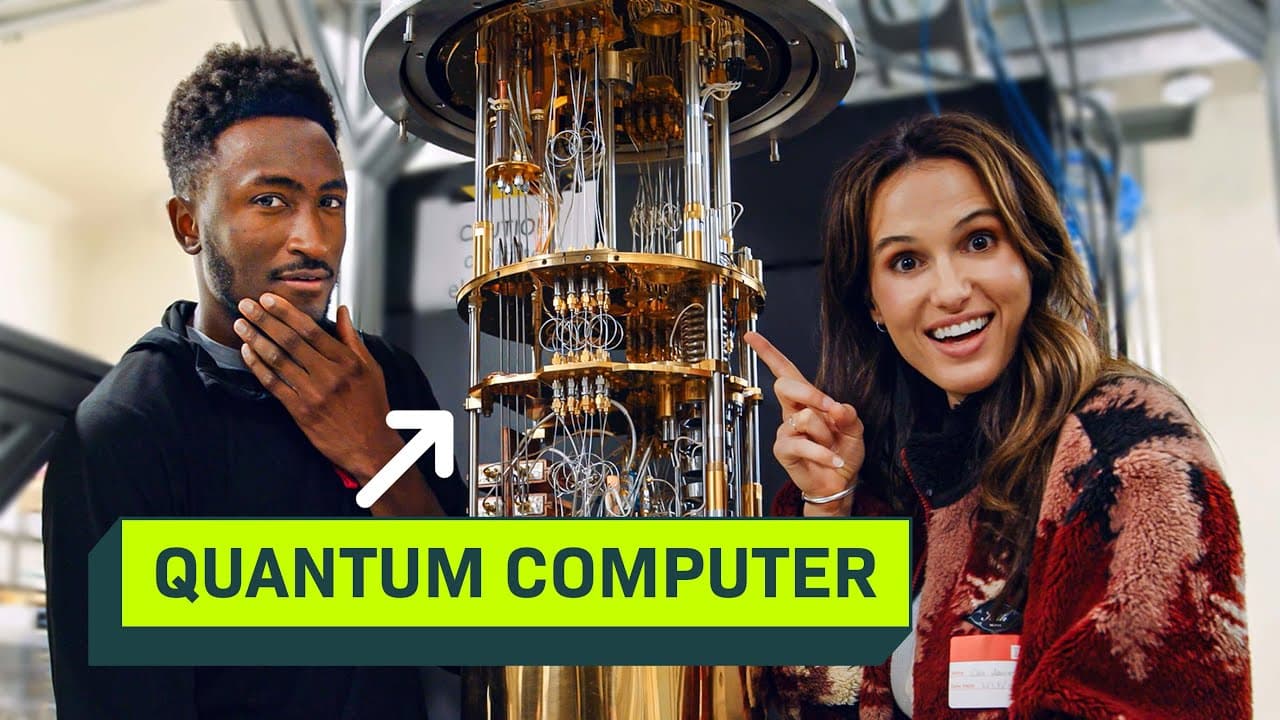
Quantum computers use qubits, which allow for probabilistic calculations and solve complex problems unmanageable for classical computers. They have potential applications in simulating molecular behavior and breaking existing encryption algorithms, significantly impacting fields like materials science and cybersecurity.
Transcript
So, this is it! This... this is a quantum computer? This is a quantum computer! Here I am seeing a real life quantum computer for the very first time, with my friend and king of tech YouTube Marques Brownlee. And I'm finally understanding why quantum computers are such a big deal. "Quantum computers..." "Quantum technology..." "What on earth is a... Read More
Key Insights
- ⚾ Quantum computers operate based on principles of quantum physics, using qubits to perform probabilistic calculations.
- 🥹 The ability of quantum computers to simulate nature and predict molecular behavior holds promise for advancements in various industries, such as materials science and medicine.
- 🍳 Breaking encryption algorithms is a significant concern associated with the development of quantum computers, as it could render current encryption systems unreliable.
- 👾 Progress in quantum computing is being made at a fast pace, and new applications and advancements are expected to continue emerging in the future.
Install to Summarize YouTube Videos and Get Transcripts
Explore YouTube Video Summarizer or Get YouTube Transcript Extractor
Questions & Answers
Q: How do quantum computers differ from classical computers?
Quantum computers use qubits instead of bits, allowing for probabilistic calculations and solving complex problems that classical computers struggle with. They operate based on principles of quantum physics.
Q: What is the significance of simulating nature with quantum computers?
Quantum computers can accurately predict and understand molecular behavior, leading to advancements in materials, battery technology, and medicine. It allows scientists to explore areas previously inaccessible due to computational limitations.
Q: How do quantum computers pose a threat to encryption?
Quantum computers can factor large numbers efficiently, making them capable of breaking encryption systems built on the difficulty of factoring. This raises concerns about the security of online communication and transactions.
Q: When will quantum computers impact regular people and their daily lives?
While the technology still has some way to go, advancements are being made rapidly. In the next five years or even sooner, we might see a shift towards quantum-safe encryption and the integration of quantum computing in certain devices.
Key Insights:
- Quantum computers operate based on principles of quantum physics, using qubits to perform probabilistic calculations.
- The ability of quantum computers to simulate nature and predict molecular behavior holds promise for advancements in various industries, such as materials science and medicine.
- Breaking encryption algorithms is a significant concern associated with the development of quantum computers, as it could render current encryption systems unreliable.
- Progress in quantum computing is being made at a fast pace, and new applications and advancements are expected to continue emerging in the future.
- The analogy of quantum computers as boats navigating unexplored mathematical waters helps to understand their distinct capabilities compared to classical computers.
Summary & Key Takeaways
-
Quantum computers are not faster versions of classical computers but operate using qubits, which have a probabilistic nature that allows for complex calculations.
-
One application of quantum computers is simulating nature, as they can better predict and understand molecular behavior, leading to advancements in materials and medicine.
-
Another significant aspect is the potential to break encryption algorithms, as quantum computers can efficiently factor large numbers, threatening current security systems.
Read in Other Languages (beta)
Share This Summary 📚
Summarize YouTube Videos and Get Video Transcripts with 1-Click
Try YouTube Summary with ChatGPT & Claude or YouTube Transcript Generator
Explore More Summaries from Cleo Abram 📚





Summarize YouTube Videos and Get Video Transcripts with 1-Click
Try YouTube Summary with ChatGPT & Claude or YouTube Transcript Generator