7 of the Strangest Sharks on Earth
TL;DR
Sharks come in many shapes and sizes, with adaptations such as glow-in-the-dark skin, slingshot faces, chainsaw-like snouts, and extremely long lifespans.
Transcript
[ ♪ Intro ] Sharks come in a lot of different shapes and sizes, and not just big, bigger, and “God, help save me!” Worldwide, there are at least 500 different shark species, and most of them aren’t the bazillion-toothed, seal and surfer-terrorizing nemeses of the deep that Hollywood tells us they are. The great white may have a bite force of more t... Read More
Key Insights
- 🦈 There are over 500 different shark species worldwide, with various adaptations beyond the common Hollywood stereotypes.
- 🥶 Greenland sharks are the longest-living vertebrates, potentially due to the bone-crushingly cold water and genetic factors that slow aging.
- 🦈 Adaptations such as whip-like tails, chainsaw-like snouts, and mobile jaws make sharks efficient hunters in their respective environments.
- 🦈 The deep ocean environment has led to unique appearances in sharks, such as the goblin shark's pinkish-gray color and flabby body.
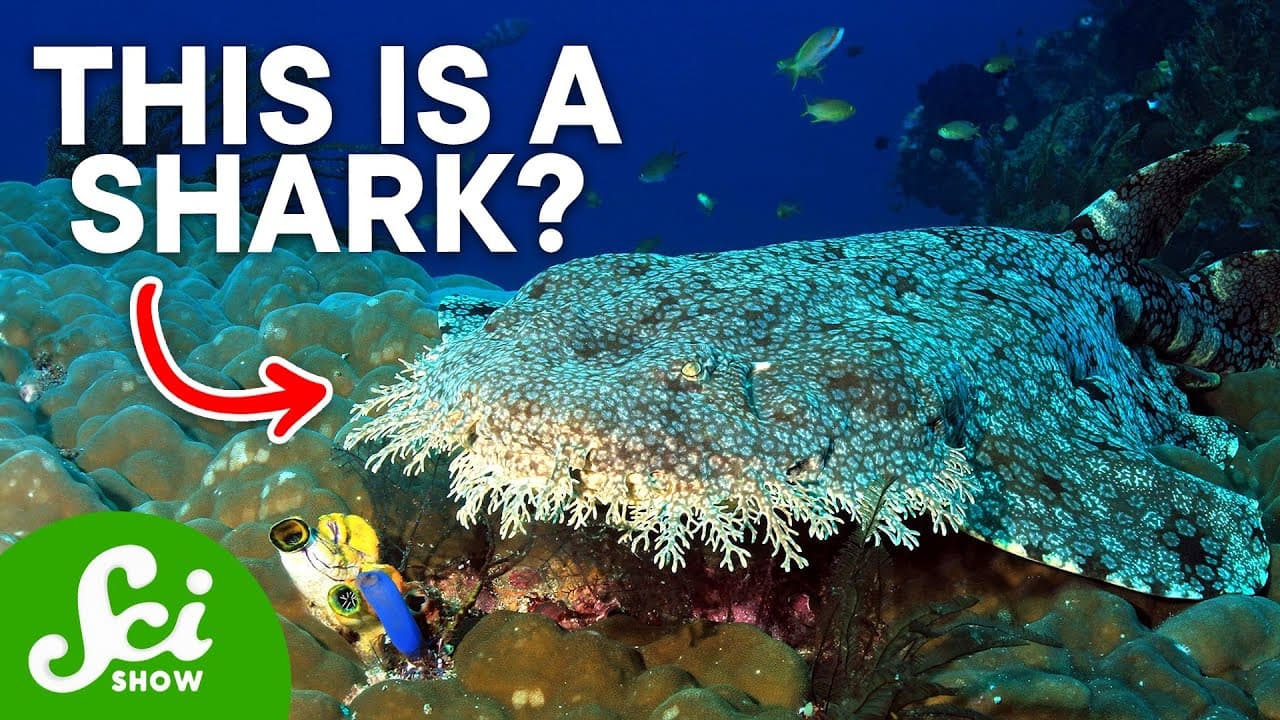
- 🤑 Wobbegong sharks utilize attractors, long mouths, and stealth for successful hunting.
- 😒 Frilled sharks resemble eels and use backward-facing teeth to lure and capture prey.
- 🙂 Catsharks are biofluorescent, using green light to communicate and potentially find mates in the dark depths of the ocean.
Install to Summarize YouTube Videos and Get Transcripts
Explore YouTube Video Summarizer or Get YouTube Transcript Extractor
Questions & Answers
Q: How long can Greenland sharks live, and what factors contribute to their longevity?
Greenland sharks can live up to 512 years, with the cold water and genetic factors potentially slowing their growth rate and activating anti-aging genes.
Q: How do thresher sharks use their tails to catch prey?
Thresher sharks whip their tails at high speeds, dismembering prey in a single strike. This unique hunting technique allows them to efficiently target shoals of fish.
Q: How do sawsharks locate buried prey?
Sawsharks have electroreceptors on their snouts, which they use to sense the electrical fields generated by buried prey. Their saw-like snouts help them locate and dispatch their prey.
Q: How does the goblin shark catch its prey?
The goblin shark has a mobile upper jaw that it can drop and fire at prey. It also uses its strange appearance and flabby body to adapt to the energy-deficient deep ocean environment.
Q: What is the hunting strategy of wobbegong sharks?
Wobbegong sharks attract prey with wiggly lobes on their upper lip, which also help them blend into the ocean floor. They can extend their mouths to catch prey or use stealth tactics to surprise them.
Q: How do frilled sharks catch their prey?
Frilled sharks have backward-facing teeth that hook prey, making it difficult for them to escape. They have a long and flexible mouth, allowing them to swallow prey up to half their body length. They likely hover in the water and strike like snakes.
Q: Why do catsharks glow in the dark?
Catsharks are biofluorescent, emitting green light in response to blue light. This glow helps them see each other in the dark, potentially aiding in finding mates.
Q: What makes catsharks different from bioluminescent organisms?
Catsharks do not produce their own light through a chemical reaction like bioluminescent organisms. Instead, they absorb blue light, re-emitting it as green light through special pigments in their skin.
Summary & Key Takeaways
-
Greenland sharks are the world's longest-living vertebrates, with lifespans ranging from 272 to 512 years. Cold water and genetic factors may contribute to their long lifespan.
-
Thresher sharks use their long, whip-like tails to dismember prey at high speeds, allowing them to hunt more efficiently.
-
Sawsharks have flat, elongated snouts lined with modified teeth-like scales, which they use to locate buried prey. Their snouts also contain electroreceptors to sense prey.
-
The goblin shark has a mobile upper jaw that can be dropped and fired at prey. Its strange appearance and flabby body are adaptations to the deep ocean environment.
-
Wobbegong sharks have wiggly lobes on their upper lip that attract prey and blend into the ocean floor. They can extend their mouths to catch prey and employ stealth tactics.
-
Frilled sharks resemble eels with backward-facing teeth. Their flexible mouths allow them to swallow prey half their body length. They are thought to hover and strike like snakes.
-
Catsharks are biofluorescent, emitting green light in response to blue light. The glow helps them see each other in the dark and may aid in finding mates.
Read in Other Languages (beta)
Share This Summary 📚
Summarize YouTube Videos and Get Video Transcripts with 1-Click
Try YouTube Summary with ChatGPT & Claude or YouTube Transcript Generator
Explore More Summaries from SciShow 📚


Summarize YouTube Videos and Get Video Transcripts with 1-Click
Try YouTube Summary with ChatGPT & Claude or YouTube Transcript Generator