What Would Happen if Mosquitoes Went Extinct?
TL;DR
Killing all mosquitoes is not an effective solution due to their ecological roles, but targeted efforts to genetically modify or infect them can help control diseases they transmit.
Transcript
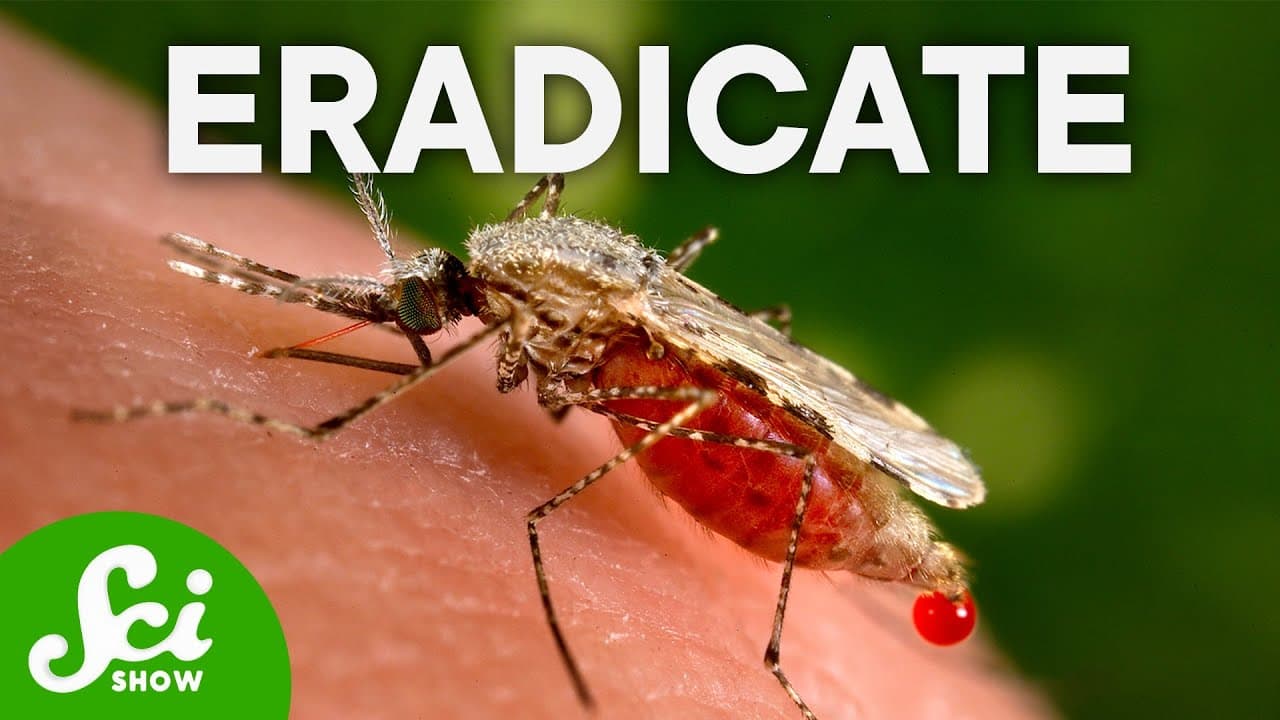
Mosquitoes suck. Not just literally, their bites are also itchy and annoying, and certain species transmit parasites and viruses -- like the ones that cause Malaria, Yellow Fever, and Zika -- infecting and killing hundreds of thousands of people every year. And when we told you about the Zika virus two weeks ago, a lot of you had the same question:... Read More
Key Insights
- 🦟 Killing all mosquitoes is not a viable solution due to the vast number of species and potential ecological consequences.
- 🖐️ Specific mosquito species play essential ecological roles that would be disrupted if killed.
- 🧑🔬 Scientists are focusing on genetic modification and bacterial infection as potential methods to control disease transmission.
- 🦟 Genetically modified mosquitoes can pass self-limiting genes to their offspring, preventing adult mosquito formation.
- 🦟 Modified genes inserted into mosquitoes can kill parasites that cause Malaria before transmission to humans.
- 🦟 Infecting mosquitoes with Wolbachia bacteria can prevent virus growth, reducing disease transmission.
- ❓ Multiple strains of Wolbachia can be used to prevent the development of resistance to the bacteria.
Install to Summarize YouTube Videos and Get Transcripts
Explore YouTube Video Summarizer or Get YouTube Transcript Extractor
Questions & Answers
Q: Why is it difficult to kill all mosquitoes?
There are over 3,000 mosquito species globally, and only a few hundred of them bite humans. Mosquitoes have survived for millions of years and are resilient to predators and environmental changes.
Q: What are the potential ecological consequences of eradicating mosquitoes?
Certain mosquito species, such as those in the Arctic or those serving as food for fish, birds, and insects, play important ecological roles. Removing them could disrupt ecosystems and endanger other plants and animals.
Q: How are scientists targeting mosquito species that transmit diseases?
Scientists are genetically modifying mosquitoes, such as Aedes aegypti, to pass self-limiting genes to their offspring, preventing adult mosquito formation. They are also inserting modified genes to kill Malaria-causing parasites and infecting mosquitoes with bacteria to stop virus growth.
Q: Can targeted efforts control other diseases besides Malaria and Zika?
Yes, the same genetic modification and bacterial infection approaches can potentially be applied to other mosquito species and diseases like Zika, Yellow Fever, and Dengue.
Summary & Key Takeaways
-
Mosquitoes are not only annoying with their bites, but they also transmit diseases like Malaria, Yellow Fever, and Zika.
-
Killing all mosquitoes is not feasible and may have unintended consequences on ecosystems.
-
Scientists are focusing on targeting specific mosquito species that are carriers of diseases through genetic modification and bacterial infection to reduce disease transmission.
Read in Other Languages (beta)
Share This Summary 📚
Summarize YouTube Videos and Get Video Transcripts with 1-Click
Try YouTube Summary with ChatGPT & Claude or YouTube Transcript Generator
Explore More Summaries from SciShow 📚


Summarize YouTube Videos and Get Video Transcripts with 1-Click
Try YouTube Summary with ChatGPT & Claude or YouTube Transcript Generator