What Is Paul Romer's Contribution to Economics?
TL;DR
Paul Romer is renowned for his groundbreaking work in new growth theory, emphasizing the role of ideas and innovation in economic growth. He challenged traditional models by incorporating the concept of ideas being privately produced by for-profit firms. Romer's work extends to practical applications like Aplia and the concept of charter cities, aiming to innovate in education and urban development.
Transcript
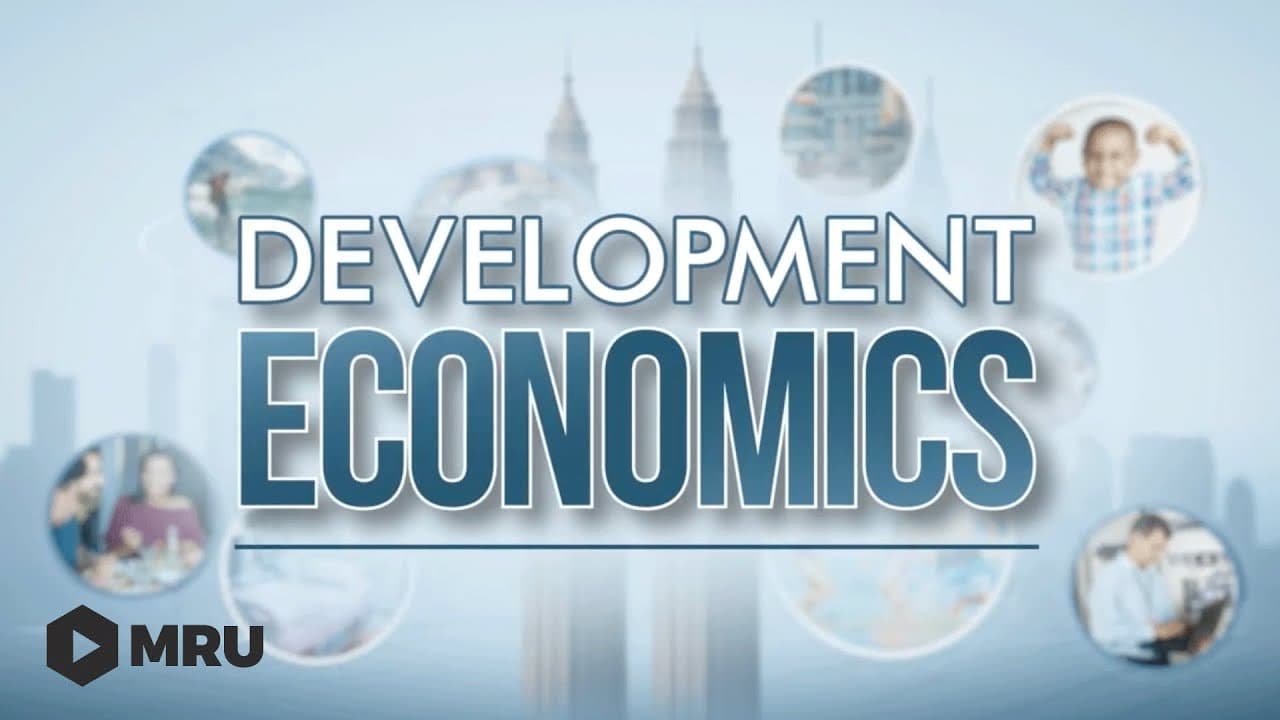
Today, we're going to be talking about Paul Romer. Paul Romer taught for a long time at Stanford University. More recently, he moved to New York University. And he's most famous for being one of the architects of new growth theory, though, more recently, he's becoming famous for his work in development economics, in fact, for his entrepreneurship... Read More
Key Insights
- Paul Romer is a key figure in new growth theory, emphasizing the role of ideas in driving economic growth.
- Romer's seminal paper, 'Endogenous Technical Change', integrates ideas into economic models, challenging assumptions of ideas as public goods.
- He highlighted the issue that ideas cannot be sold in competitive markets due to their non-rivalrous nature and zero marginal cost.
- Romer's work suggests that monopoly power is necessary to fund research and development, as competitive markets cannot support the costs of innovation.
- His model demonstrates how ideas are produced by monopolistic firms and contribute significantly to economic growth.
- Romer ventured into entrepreneurship with Aplia, an online education platform, applying economic principles to real-world applications.
- He proposed the concept of charter cities, aiming to create new urban areas with innovative governance to spur development.
- Romer's ideas have influenced economic thought on intellectual property, human capital, and the transmission of ideas globally.
Install to Summarize YouTube Videos and Get Transcripts
Explore YouTube Video Summarizer or Get YouTube Transcript Extractor
Questions & Answers
Q: What is Paul Romer known for in economics?
Paul Romer is known for his contributions to new growth theory, particularly his work on integrating the role of ideas and innovation in economic growth. His landmark paper, 'Endogenous Technical Change', challenged traditional models by showing how ideas are produced by monopolistic firms and are crucial for economic expansion. Romer's work has had a lasting impact on economic thought, influencing areas like intellectual property and the transmission of knowledge.
Q: How did Romer's model differ from the Solow model?
Romer's model differs from the Solow model by incorporating the production of ideas as a core component of economic growth. While the Solow model treated ideas as exogenous and freely available, Romer emphasized that ideas are produced by for-profit firms and require funding, often through monopoly power. This shift highlights the importance of innovation and intellectual property in driving economic development, providing a more realistic framework for understanding growth dynamics.
Q: Why can't ideas be sold in competitive markets according to Romer?
According to Romer, ideas cannot be sold in competitive markets because they are non-rivalrous and have a zero marginal cost. This means that once an idea is created, it can be used by many without diminishing its value. However, the initial cost of creating an idea, such as research and development, is significant. Competitive markets, which are driven by marginal cost pricing, cannot support these initial costs, necessitating some form of monopoly power to fund innovation.
Q: What was Aplia and how did it relate to Romer's theories?
Aplia was an online education platform founded by Paul Romer, designed to enhance learning through interactive assignments and experiments. It related to Romer's theories by applying the economic principles of innovation and the importance of ideas to the field of education. Aplia demonstrated how digital platforms could revolutionize traditional learning methods, reflecting Romer's belief in the transformative power of ideas and technology in driving progress and efficiency.
Q: What are charter cities and why did Romer propose them?
Charter cities are urban areas with new governance systems designed to foster economic development and innovation. Romer proposed them as a solution to overcome the 'iron rule of rules', which makes it difficult to change entrenched societal norms and governance structures. By establishing cities with new rules on unoccupied land, Romer aimed to create environments that encourage growth, attract investment, and serve as models for reform in other regions, much like Hong Kong influenced China.
Q: How do Romer's ideas impact the understanding of intellectual property?
Romer's ideas impact the understanding of intellectual property by highlighting the necessity of protecting ideas to incentivize innovation. His model shows that without some form of monopoly power, such as patents, firms cannot recoup the costs of research and development. This underscores the importance of intellectual property rights in ensuring that creators can benefit from their innovations, thereby encouraging further investment in new ideas and technologies.
Q: What role do ideas play in Romer's growth theory?
In Romer's growth theory, ideas play a central role as the primary drivers of economic growth. Unlike traditional models that focus on capital accumulation, Romer's theory emphasizes how ideas, produced by monopolistic firms, lead to technological advancements and increased productivity. This shift places innovation and knowledge creation at the heart of economic development, highlighting the importance of supporting research and development to sustain long-term growth.
Q: Why is Romer's work considered revolutionary in economics?
Romer's work is considered revolutionary because it fundamentally altered the understanding of economic growth by integrating the role of ideas and innovation. His model challenged existing theories by demonstrating that ideas are not just public goods but are produced by firms seeking profit. This perspective opened new avenues for research in growth theory, intellectual property, and development economics, influencing both academic thought and practical policy-making in these areas.
Summary & Key Takeaways
-
Paul Romer is a pivotal figure in economic thought, known for integrating the role of ideas into growth theory. His work challenges traditional models by highlighting the need for monopoly power to fund innovation, as ideas cannot thrive in purely competitive markets. Romer's contributions extend beyond theory, with ventures like Aplia and his charter cities initiative, reflecting his commitment to applying economic principles to real-world challenges.
-
Romer's influential paper, 'Endogenous Technical Change', revolutionized growth theory by placing ideas at its core. He demonstrated how monopolistic firms produce ideas, which are crucial for economic development. This model opened new avenues of thought in economics, including intellectual property and the dynamics of knowledge transmission.
-
Beyond academia, Romer applied his theories to practical ventures like Aplia, an online education platform, and proposed charter cities to foster development. His innovative approach continues to shape economic policies and inspire new perspectives on growth and development.
Read in Other Languages (beta)
Share This Summary 📚
Summarize YouTube Videos and Get Video Transcripts with 1-Click
Try YouTube Summary with ChatGPT & Claude or YouTube Transcript Generator
Explore More Summaries from Marginal Revolution University 📚
Summarize YouTube Videos and Get Video Transcripts with 1-Click
Try YouTube Summary with ChatGPT & Claude or YouTube Transcript Generator