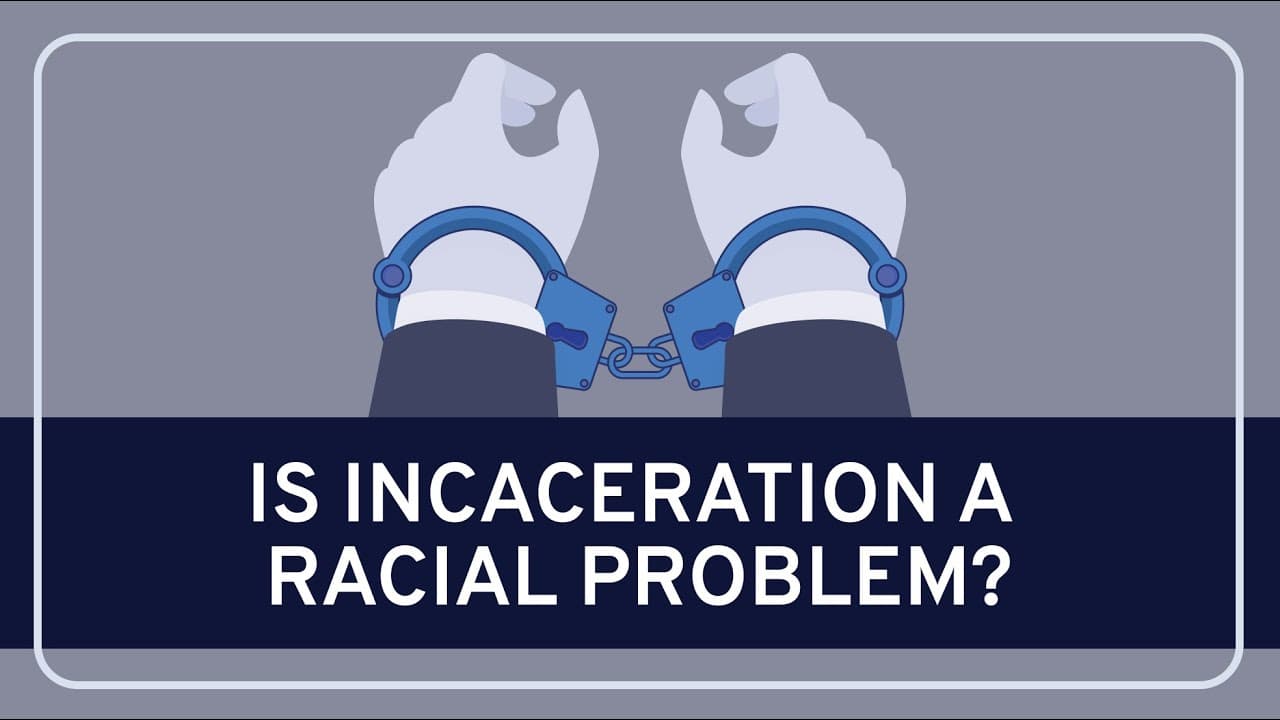
PHILOSOPHY - Race: Race and the Carceral State [HD]
TL;DR
Race is a tool for state control, not intrinsic identity.
Transcript
(intro music) I'm Olufemi O. Taiwo. I'm a graduate student in philosophy at UCLA, and today I'll be talking about race and the carceral state. We often use racial terms like "white" and "black." Sometimes we mix these terms with ones about ethnicity and geographic descriptions, like nationalities. But ethnicity is primarily defined by intergroup so... Read More
Key Insights
- Race is not an inherent identity but a social construct that varies across different environments and cultures, affecting how individuals are perceived and treated.
- Ethnicity and nationality are defined by social and legal constructs, which do not always align with visual racial classifications.
- Race functions as a technology for division and hierarchy, serving the interests of managerial states to maintain control and efficiency.
- The carceral state uses racial stigmas to justify policing and incarceration, disproportionately targeting marginalized communities under the guise of criminality.
- Historical policies around housing and zoning have concentrated poverty and crime, justifying increased policing in those areas and creating a cycle of criminalization.
- Artistic expressions, such as music and poetry, have highlighted the systemic issues of race and incarceration, offering a lens to understand these social dynamics.
- The problem of crime is sociologically circular, as hyper-policing reinforces the conditions it claims to address, rather than offering solutions.
- Changing a nation's character requires collective effort to restructure systems beyond mere electoral victories, addressing the underlying racial biases in policies.
Install to Summarize YouTube Videos and Get Transcripts
Explore YouTube Video Summarizer or Get YouTube Transcript Extractor
Questions & Answers
Q: How does the video define race in the context of the carceral state?
The video defines race not as an intrinsic identity but as a social construct that varies across different environments. It is used as a technology for division and control by the state, affecting policies and perceptions that lead to the disproportionate policing and incarceration of marginalized communities.
Q: What role do historical policies play in the current state of hyper-policing?
Historical policies, especially those related to housing and zoning, have concentrated poverty and crime in specific areas, justifying increased policing. This creates a cycle where these communities are perpetually policed and criminalized, reinforcing the conditions that the policies claim to address.
Q: How do artistic expressions contribute to the understanding of race and incarceration?
Artistic expressions, such as music and poetry, have been instrumental in highlighting the systemic issues of race and incarceration. They provide a lens to understand the social dynamics and the impact of policies on marginalized communities, offering insights that challenge the status quo and inspire change.
Q: What is the significance of the term 'managerial state' in the video?
The 'managerial state' refers to a government organized around efficiency, influenced by market regulations and business interests. In this context, race is used as a tool to maintain control and hierarchy, serving the interests of those in power rather than addressing the needs of all citizens equally.
Q: How does the video suggest addressing the issues of race and the carceral state?
The video suggests that addressing these issues requires more than proving facts or winning electoral battles. It involves motivating collective action to restructure systems, challenging the national character, and addressing the underlying racial biases that influence policies and societal attitudes.
Q: What is the sociological circularity mentioned in the video regarding crime and policing?
The sociological circularity refers to the way hyper-policing reinforces the conditions it claims to address. By concentrating policing in certain areas, it perpetuates a cycle of criminalization and poverty, making it appear as though these communities are inherently problematic, rather than addressing the root causes of crime.
Q: How does the video view the potential for change in addressing racial issues?
The video presents both pessimistic and optimistic views. While pessimists may see little potential for change, optimists believe that in a genuine democracy, race functions as a technology only if people accept marginalization. Therefore, there is potential for change if collective efforts are made to restructure systems and challenge biases.
Q: What challenge and opportunity does Chris Lebron highlight regarding national character?
Chris Lebron highlights that changing a nation's character involves more than factual arguments or electoral victories. It presents both a challenge and an opportunity to motivate collective action towards restructuring systems, addressing racial biases, and redefining the kind of nation a country aspires to be.
Summary & Key Takeaways
-
Olufemi O. Taiwo discusses the complex relationship between race and the carceral state, emphasizing that race is a social construct used by states for control. He highlights how racial classifications vary across cultures and environments, impacting perceptions and treatments of individuals.
-
The video explores how race functions as a tool for division and hierarchy, serving the interests of managerial states. It discusses the role of racial stigmas in justifying the hyper-policing and incarceration of marginalized communities, perpetuating cycles of criminalization.
-
Taiwo argues for a re-evaluation of national character, suggesting that addressing racial issues requires collective restructuring of systems. He emphasizes that artistic expressions have long highlighted these systemic issues, providing insights into the societal impact of race and incarceration.
Read in Other Languages (beta)
Share This Summary 📚
Summarize YouTube Videos and Get Video Transcripts with 1-Click
Try YouTube Summary with ChatGPT & Claude or YouTube Transcript Generator
Explore More Summaries from Wireless Philosophy 📚
Summarize YouTube Videos and Get Video Transcripts with 1-Click
Try YouTube Summary with ChatGPT & Claude or YouTube Transcript Generator