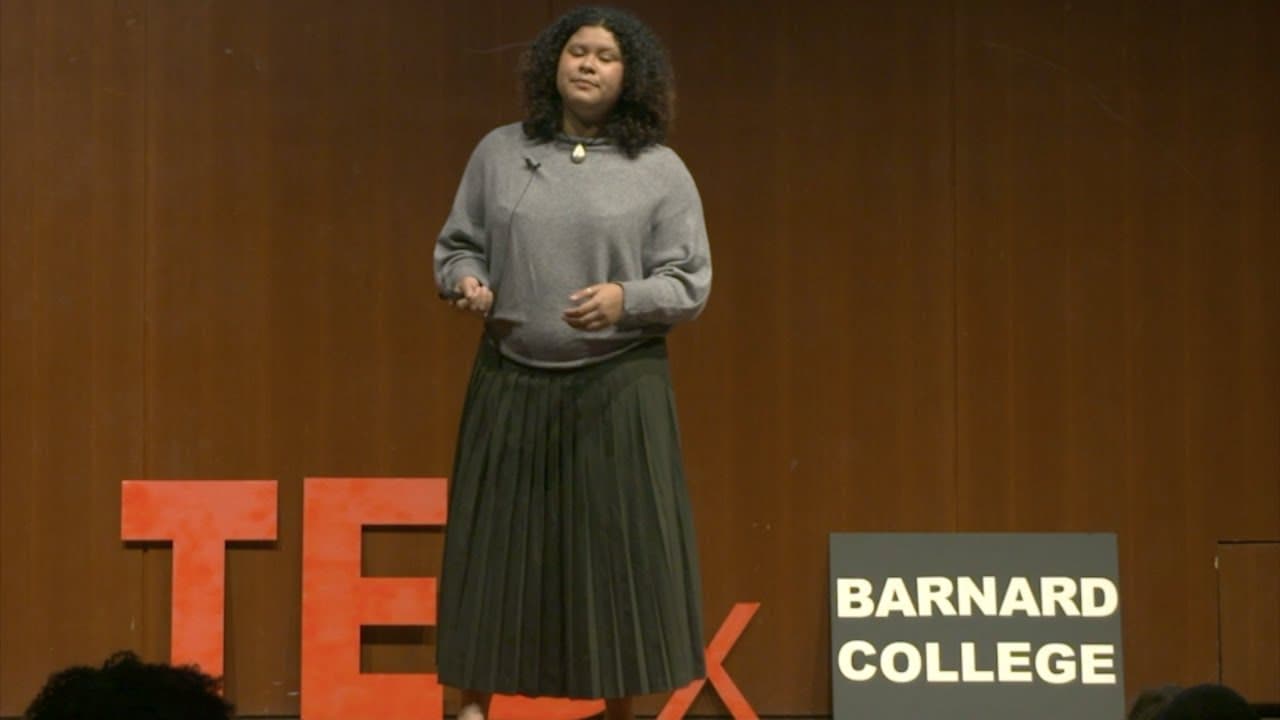
Isis Contreras Perez TEDx Speech | Isis Contreras Perez | TEDxBarnard College
TL;DR
Climate disparities impact black and brown communities, urging action for environmental justice and racial equity.
Transcript
first I would like to acknowledge that the land that we're standing on here today is the homeland of the traditional LPE people at the end of this presentation there will be a QR code with over 15 organizations one of which is the LPE Art Center if you would like to make a donation let's begin in New York City amidst its towering buildings and bust... Read More
Key Insights
- 🤎 Climate disparities disproportionately impact black and brown communities, highlighting the need for environmental justice.
- 🥵 Urban heat islands in neighborhoods with fewer green spaces lead to health problems and systemic injustices.
- ❓ Historical racist policies like redlining have contributed to current climate disparities in marginalized communities.
- 🪡 Institutions like Columbia need to address their role in exacerbating climate and racial injustices in gentrifying neighborhoods.
- 💦 Organizations in Harlem are actively working to educate youth on climate sustainability and create sustainable community gardens.
- 👨⚖️ Individuals must recognize their complicity in perpetuating injustices and take proactive steps towards climate justice and racial equity.
- 👨⚖️ Acknowledging the intersection of climate change and racism is crucial in building a world where environmental justice and racial equity are lived realities.
Install to Summarize YouTube Videos and Get Transcripts
Explore YouTube Video Summarizer or Get YouTube Transcript Extractor
Questions & Answers
Q: How do climate change and racism intersect in impacting marginalized communities?
Climate change and racism converge in ways that disproportionately affect people of color, leading to health disparities, lack of resources, and systemic injustices.
Q: What role do urban heat islands play in exacerbating climate disparities in black and brown neighborhoods?
Urban heat islands, caused by a lack of green spaces, contribute to higher temperatures, air pollution, and health problems in black and brown communities, highlighting environmental injustice.
Q: How have historical racist policies like redlining contributed to current climate disparities?
Historical racist policies like redlining have led to fewer trees in black neighborhoods, resulting in higher temperatures and health issues due to the lack of green spaces and systemic disinvestment.
Q: What actions can individuals and institutions take to address climate injustice and racial equity?
Individuals and institutions can support organizations working on climate justice, educate communities on sustainability, address systemic inequities, and amplify the voices of those affected by environmental injustices.
Summary & Key Takeaways
-
Disparities in climate and racism intersect, affecting marginalized communities disproportionately.
-
Urban heat islands in black and brown neighborhoods contribute to health issues and lack of resources.
-
Institutions like Columbia must address their role in exacerbating injustices and work towards climate and racial equity.
Read in Other Languages (beta)
Share This Summary 📚
Summarize YouTube Videos and Get Video Transcripts with 1-Click
Try YouTube Summary with ChatGPT & Claude or YouTube Transcript Generator
Explore More Summaries from TEDx Talks 📚

Summarize YouTube Videos and Get Video Transcripts with 1-Click
Try YouTube Summary with ChatGPT & Claude or YouTube Transcript Generator