The Carbonless Fuel That Could Change How We Ship Goods | Maria Gallucci | TED
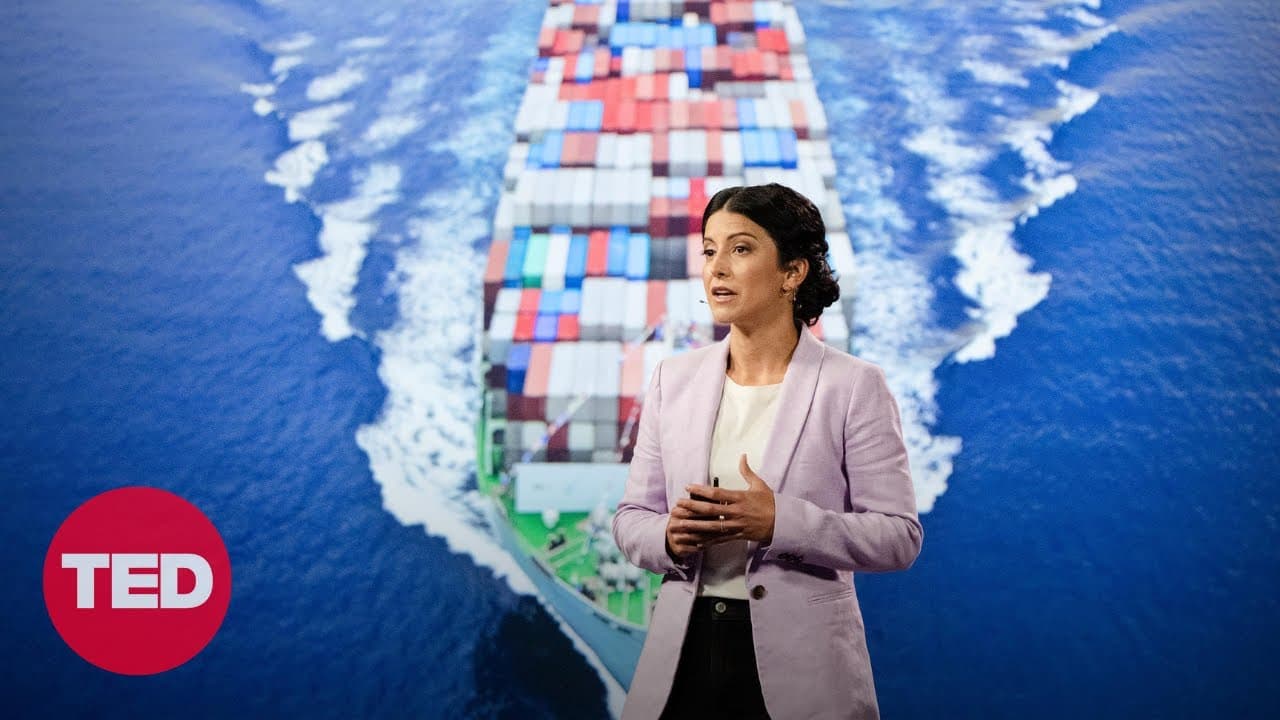
TL;DR
The content discusses the potential for green ammonia to revolutionize the shipping industry and reduce greenhouse gas emissions.
Transcript
A few years ago, I sailed on a ship that comes from an earlier era, when moving goods by sea didn't mean polluting the planet. Our voyage to the Caribbean was eye-opening, and not just because I learned that apparently, I’m incurably seasick. (Laughter) I also saw what it's like when you take away the diesel fumes and the black smoke that spew from... Read More
Key Insights
- 🌍The shipping industry contributes a significant share of the world's annual greenhouse gas emissions, making it crucial to find sustainable alternatives.
- 🛢️Green ammonia, a fuel that does not produce carbon dioxide when used, is emerging as a game-changing solution for powering cargo ships and reducing pollution.
- 🚢Tens of thousands of freighters crisscross the oceans daily, transporting billions of dollars worth of goods. Green ammonia has the potential to revolutionize this industry.
- 💡Renewable electricity, such as solar, wind, and hydropower, is essential for producing green ammonia.
- ⛽️Green ammonia can be used in either internal combustion engines or fuel cells to power cargo ships effectively.
- 🔧The necessary technology and infrastructure for green ammonia production and distribution are currently being developed, with the first ammonia-powered ships set to launch soon.
- 🌬️Combining green ammonia with other clean technologies on ships, such as batteries and wind-assisted propulsion, can further enhance sustainability and efficiency.
- 📈Policies and incentives, similar to the rise of electric cars, could drive the adoption of green ammonia by reducing fuel costs and technology expenses while curbing emissions.
Install to Summarize YouTube Videos and Get Transcripts
Explore YouTube Video Summarizer or Get YouTube Transcript Extractor
Questions & Answers
Q: What is green ammonia and why is it significant for the shipping industry?
Green ammonia is a form of ammonia that is produced without using any fossil fuels, making it environmentally friendly. It is significant for the shipping industry because it can be used as a cleaner alternative to highly polluting fossil fuels currently used by cargo ships. By using green ammonia as a fuel source, the shipping industry can reduce its greenhouse gas emissions and contribute to addressing climate change.
Q: How can green ammonia be produced?
Green ammonia can be produced through a process that utilizes renewable electricity. Firstly, electrolysis is used to split water into hydrogen and oxygen using electricity generated from renewable sources. Then, the nitrogen component is separated from the air, and finally, hydrogen and nitrogen are combined at high temperatures to produce ammonia (NH3). This process ensures that green ammonia is created without any carbon molecules and therefore does not produce carbon dioxide when used as fuel.
Q: In what ways can green ammonia be used to power cargo ships?
Green ammonia can be used to power cargo ships through two main methods. The first method involves modifying the internal combustion engines currently used in ships, so they can effectively use ammonia as fuel. Chemical tankers, which already carry ammonia in their cargo holds, are expected to be the early adopters of this method. The second method involves using fuel cells, which generate electricity through a chemical reaction, to power the ship's motors and propellers. In Norway, the development of an ammonia-fuel-cell ship is already underway.
Q: What infrastructure is required for the widespread adoption of green ammonia in the shipping industry?
To support the widespread adoption of green ammonia in the shipping industry, the necessary infrastructure needs to be developed. This includes storage facilities, pipelines, and distribution networks to ensure that ships can easily access and fill their tanks with green ammonia anywhere in the world. Although infrastructure for the chemical and fertilizer industries already exists, it needs to be expanded and built near ports on a global scale. This expansion must be carried out with caution to ensure safety and environmental protection.
Q: How can the shipping industry transition to using green ammonia on a larger scale?
The transition to using green ammonia on a larger scale in the shipping industry can follow a similar path to the rise of electric cars. Policies aimed at reducing emissions and incentivizing green investments can encourage the shift away from fossil fuels. As green ammonia gains popularity, the costs of fuel and technology associated with its usage are expected to decline, making it more accessible to ship operators. Additionally, the development of renewable energy sources, such as offshore wind farms and solar arrays, can provide the necessary electricity for producing green ammonia, further supporting its adoption.
Summary & Key Takeaways
-
The shipping industry is a significant contributor to greenhouse gas emissions and pollution, making it necessary to find alternative fuels and technologies.
-
Green ammonia has emerged as a promising solution for powering cargo ships, as it does not produce carbon dioxide when used as fuel and can be made using renewable electricity.
-
To transition to green ammonia, supportive policies, investments in infrastructure, and collaboration with renewable energy sources are necessary to drive adoption and reduce costs. Additionally, other technologies such as batteries and wind-assisted propulsion can further enhance the sustainability of ships.
Read in Other Languages (beta)
Share This Summary 📚
Summarize YouTube Videos and Get Video Transcripts with 1-Click
Try YouTube Summary with ChatGPT & Claude or YouTube Transcript Generator
Explore More Summaries from TED 📚






Summarize YouTube Videos and Get Video Transcripts with 1-Click
Try YouTube Summary with ChatGPT & Claude or YouTube Transcript Generator