That Time the British Developed a Flying Jeep
TL;DR
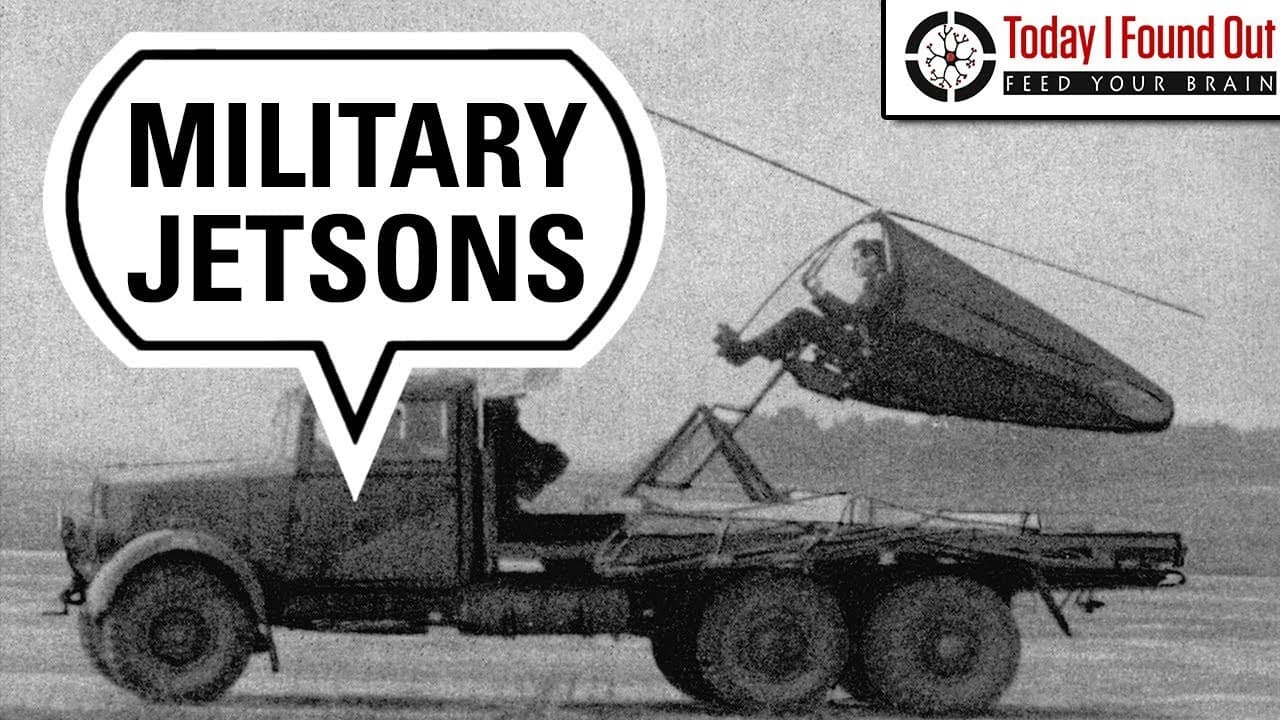
During World War II, the British military developed and tested a flying Jeep to airdrop vehicles to soldiers on the battlefield.
Transcript
hello I'm Simon Whistler you're watching today I found out and in the video today that time the British deployed a flying Jeep how many of you science fiction buffs have fantasized about zipping around town in your very own flying car sure a trip in a helicopter or airplane has now become the standard or even mundane mode of travel for long distanc... Read More
Key Insights
- 🪽 The British military developed a flying Jeep during World War II to airdrop vehicles to soldiers.
- 🖐️ Ralph Haffner played a significant role in designing the rotor chute and conceptualizing the rotor buggy.
- 🦶 The flying Jeep was tested multiple times, achieving altitudes of up to 400 feet.
Install to Summarize YouTube Videos and Get Transcripts
Explore YouTube Video Summarizer or Get YouTube Transcript Extractor
Questions & Answers
Q: Why did the British military develop a flying Jeep during World War II?
The British military wanted to airdrop off-road vehicles to provide transportation for infantry soldiers on the battlefield, allowing for quick mobility in difficult terrains.
Q: Who was Ralph Haffner, and what role did he play in developing the flying Jeep?
Ralph Haffner was an admirer of Juan de la Cierva, a Spanish pioneer of rotary-wing aircraft. Haffner designed the rotor chute, a parachute towed by an airplane, for delivering soldiers more precisely. He later conceptualized the rotor buggy, a vehicle equipped with rotor technology.
Q: How did they test the durability of the Jeep when dropped from heights?
They conducted tests using a regular non-flying 4x4 wartime Jeep loaded with concrete. Dropping it from heights up to 2.35 meters (7 feet) proved that the Jeep could withstand the impact without damage.
Q: Why was the further development of the flying Jeep abandoned?
Although the flying Jeep showed satisfactory performance, controlling the vehicle proved to be difficult for pilots. The introduction of military gliders like the Airspeed Horsa transport vehicle made the flying Jeep less necessary.
Summary & Key Takeaways
-
In 1942, the British military sought a way to airdrop off-road vehicles to provide transportation for infantry soldiers. They looked to Ralph Haffner, who had previously designed a rotor chute for delivering soldiers to battlefields more precisely.
-
Haffner designed the rotor buggy, a vehicle equipped with rotor technology that could be flown and dropped from a height without causing damage. Tests using a regular non-flying 4x4 Jeep proved that dropping it from heights up to 2.35 meters (7 feet) worked without damaging the vehicle.
-
The flying Jeep, equipped with a 40-foot rotor and streamlined tail fairing, was tested multiple times, achieving altitudes of up to 400 feet. However, the difficulty in controlling the vehicle led to its further development being abandoned after military gliders were introduced.
Read in Other Languages (beta)
Share This Summary 📚
Summarize YouTube Videos and Get Video Transcripts with 1-Click
Try YouTube Summary with ChatGPT & Claude or YouTube Transcript Generator
Explore More Summaries from Today I Found Out 📚






Summarize YouTube Videos and Get Video Transcripts with 1-Click
Try YouTube Summary with ChatGPT & Claude or YouTube Transcript Generator