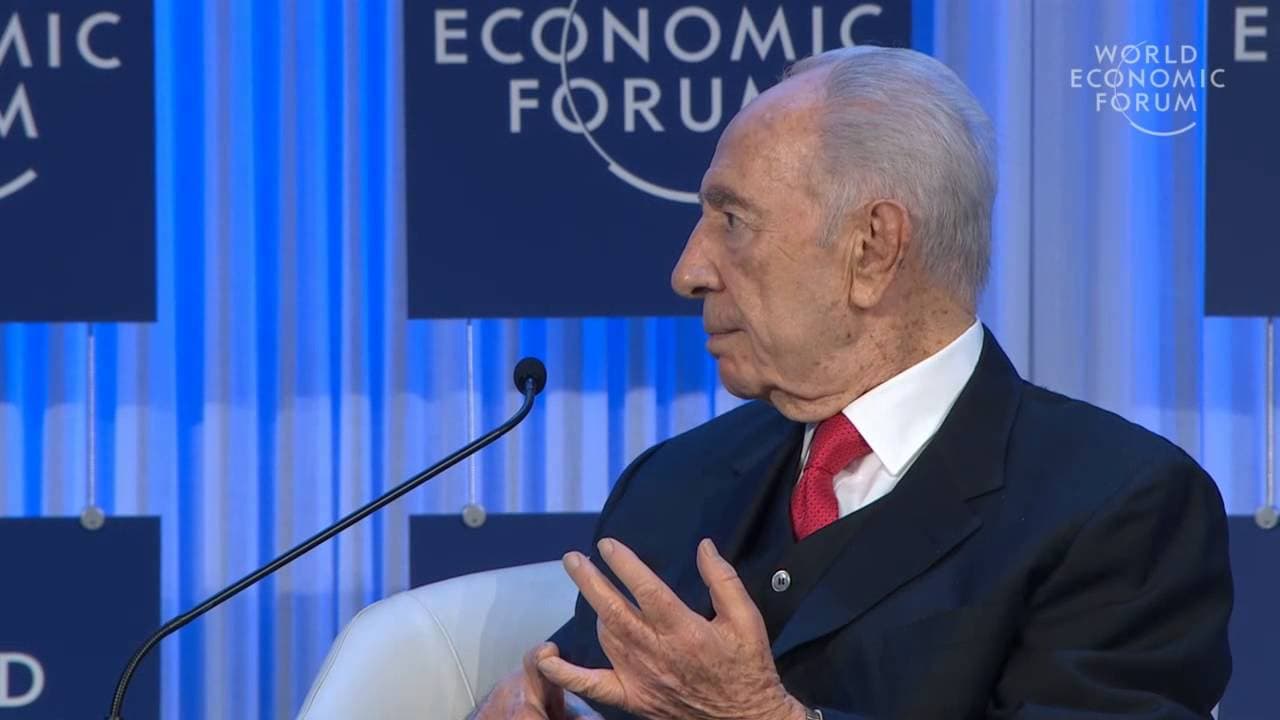
Davos 2013 - A Conversation with Shimon Peres, President of Israel
TL;DR
President Peres discusses Israel's election results, Egyptian-Israeli relations, Syria's crisis, and Iran's nuclear standoff, emphasizing the importance of science, women's rights, and global cooperation.
Transcript
it gives me pleasure to welcome a personality whom i really consider a friend of davos and the mentor of mine president shimon peres shimon you don't need an introduction i am delighted that you came here your country just had elections so my first question to you uh referring to the elections in israel can we already discuss the results and can we... Read More
Key Insights
- 🥳 Israel faces challenges forming a coalition government post-elections due to diverse party policies.
- ✌️ Promoting peace between Egypt and Israel is essential to avoid costly conflicts for both nations.
- 🇦🇪 Solutions to the Syrian crisis involve international collaboration led by the Arab League and the United Nations.
- 🤝 Dealing with Iran's nuclear ambitions requires a united global front to enforce economic sanctions and diplomatic measures.
- 💦 President Peres emphasizes the transformative power of science in addressing water scarcity and poverty.
- 🗯️ Empowering women and ensuring equal rights are crucial for societal progress, according to President Peres.
- 👂 The importance of individuality and listening to the younger generation's expectations for future governance and leadership.
Install to Summarize YouTube Videos and Get Transcripts
Explore YouTube Video Summarizer or Get YouTube Transcript Extractor
Questions & Answers
Q: How does President Peres view the recent election results in Israel, and what is the significance of coalition governments?
President Peres highlights the complexity of forming a government in Israel due to the diverse parties involved and the challenges of direction until formal results are finalized.
Q: What does President Peres advocate for regarding the Egyptian-Israeli relationship, particularly in terms of shared interests and peace maintenance?
President Peres stresses the mutual benefits of peace between Egypt and Israel, pointing to economic stakes and the need to avoid conflict for both nations' prosperity.
Q: How does President Peres propose solving the Syrian crisis, and what role does he envision for the Arab League and the United Nations in this scenario?
President Peres suggests involving the Arab League and the United Nations to establish a transitional government in Syria, emphasizing the need for urgent action to prevent further humanitarian tragedies.
Q: How does President Peres assess the standoff with Iran and propose navigating the situation, especially concerning Iran's nuclear ambitions?
President Peres expresses concerns about Iran's nuclear aspirations and advocates for a global approach, including economic sanctions and diplomatic pressure, to prevent Iran from acquiring nuclear weapons.
Summary & Key Takeaways
-
President Peres reflects on Israel's coalition government post-elections and emphasizes the need for parties to unite for the country's direction.
-
He discusses the importance of maintaining peace between Egypt and Israel, highlighting economic challenges as the core issue facing both nations.
-
President Peres suggests a solution for the Syrian crisis and outlines the global approach needed to handle Iran's nuclear ambitions.
Read in Other Languages (beta)
Share This Summary 📚
Summarize YouTube Videos and Get Video Transcripts with 1-Click
Try YouTube Summary with ChatGPT & Claude or YouTube Transcript Generator
Explore More Summaries from World Economic Forum 📚

Summarize YouTube Videos and Get Video Transcripts with 1-Click
Try YouTube Summary with ChatGPT & Claude or YouTube Transcript Generator