Fahad Al-Attiya: A country with no water
TL;DR
This content provides insights into the history and current challenges facing Qatar's food security, as well as the proposed sustainable solutions.
Transcript
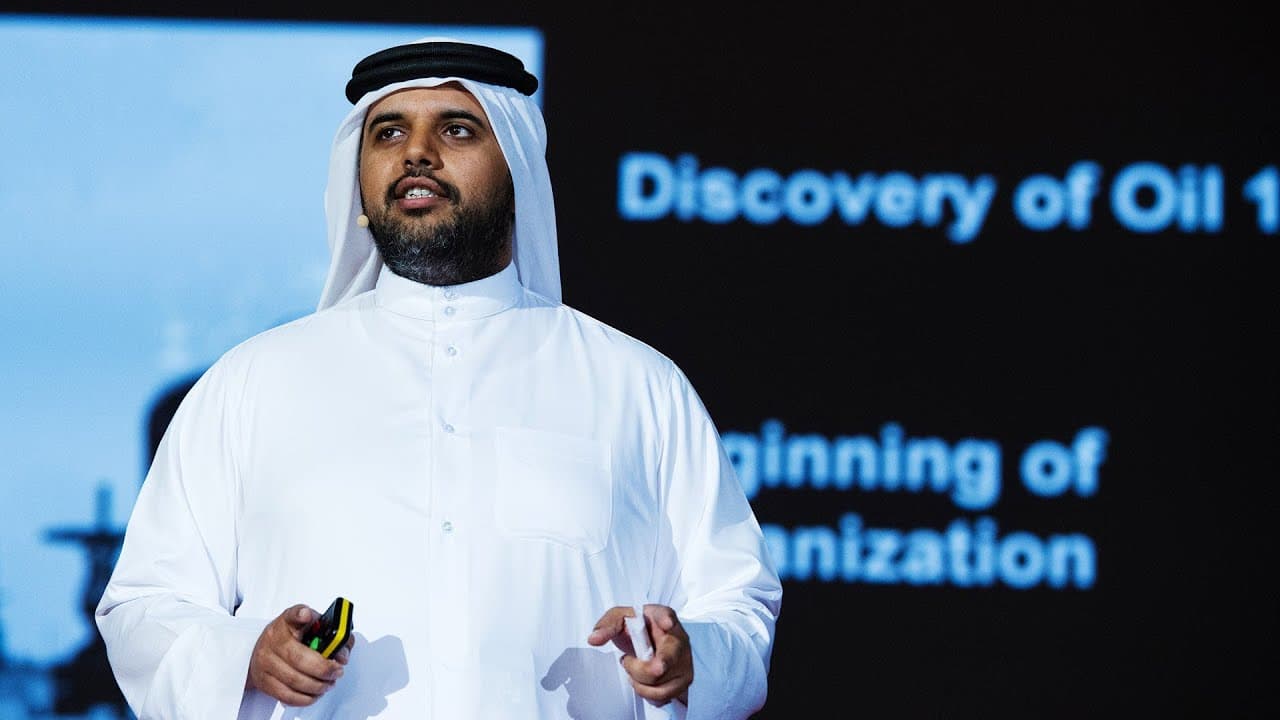
Translator: Timothy Covell Reviewer: Morton Bast Salaam alaikum. Welcome to Doha. I am in charge of making this country's food secure. That is my job for the next two years, to design an entire master plan, and then for the next 10 years to implement it -- of course, with so many other people. But first, I need to talk to you about a story, which i... Read More
Key Insights
- 💧 Qatar's transformation from a resource-lacking country to a thriving nation is historic, growing economically by 15% annually for the past five years without water.
- 🏙️ Qatar's population has increased to 1.7 million in less than 60 years, with a rapidly growing skyline and bustling cities like Doha.
- 🌧️ Despite limited rainfall of only 74 millimeters per year, desalination technology has allowed Qatar to meet its water demands, becoming one of the highest water consumers globally.
- 🚰 However, Qatar's reliance on desalination poses risks, such as growing global demand, changing diets, and declining agricultural yields due to climate change.
- 🚜 With only two days of water reserve, importing 90% of its food, and cultivating less than 1% of its land, Qatar faces challenges in ensuring its sustainability and continuity.
- ☀️ Qatar plans to use its comparative advantage of abundant sunshine to harness renewable energy, specifically solar power, to produce the water needed for farming and food production.
- 📚 To ensure the success of this plan, Qatar aims to develop high-level education, research and development, industries, and technologies while implementing legislation, policies, and regulations.
- 🌇 Qatar's long-term objective is to become a millennium city, living in peace and perpetuity, alongside other iconic global cities like Istanbul, Rome, and Paris.
Install to Summarize YouTube Videos and Get Transcripts
Explore YouTube Video Summarizer or Get YouTube Transcript Extractor
Questions & Answers
Q: What was Qatar like in the 1940s?
In the 1940s, Qatar had a population of about 11,000 people, and there was no water, energy, or oil. Most of the inhabitants lived in coastal villages or were roaming nomads searching for water. There were no cities or infrastructures like those seen today.
Q: How did the discovery of oil impact Qatar?
The discovery of oil in 1939 changed the face of Qatar. It led to urbanization and brought people together, who previously lived scattered due to a lack of resources. The development of oil resources allowed for the building of cities and the concentration of populations. Different accents emerged within the country.
Q: What is the current population of Qatar?
Today, Qatar's population is 1.7 million people. This growth has occurred in less than 60 years. The country has experienced an average economic growth rate of 15 percent over the past five years.
Q: How has Qatar managed to sustain its growth without water?
Despite having limited water resources, Qatar has managed to sustain its growth by relying on desalination technology. Through desalination, the country is able to convert seawater into drinkable water. Energy plays a crucial role in this process, and Qatar utilizes fossil fuels, such as oil, to power the desalination process.
Q: What are the risks and challenges Qatar faces in terms of food security?
Qatar faces several risks and challenges in terms of food security. The country has a growing population and increasing demand for food. There are concerns about declining yields due to climate change and changing diets. Qatar only has a two-day water reserve, imports 90 percent of its food, and cultivates less than 1 percent of its land. These factors directly affect the sustainability and continuity of the nation.
Q: Is there a sustainable solution to Qatar's water and food security challenges?
Yes, there is a sustainable solution to Qatar's water and food security challenges. The plan involves utilizing renewable energy, specifically solar power, to produce the water needed for agriculture. By implementing 1,800 megawatts of solar systems, Qatar aims to produce 3.5 million cubic meters of water. This water will be used to support farmers in irrigating their crops and providing food for society. The plan also emphasizes the importance of legislation, policies, regulations, and investment in education, research, and technology.
Summary & Key Takeaways
-
Qatar's food security is a major concern, and the speaker is tasked with designing and implementing a master plan to address this issue.
-
Qatar has experienced significant growth and development, particularly due to the discovery and exploitation of oil resources.
-
The speaker emphasizes the importance of water and energy, particularly through the use of desalination and renewable energy sources such as solar power, in ensuring sustainable development and food production in Qatar.
Read in Other Languages (beta)
Share This Summary 📚
Summarize YouTube Videos and Get Video Transcripts with 1-Click
Try YouTube Summary with ChatGPT & Claude or YouTube Transcript Generator
Explore More Summaries from TED 📚






Summarize YouTube Videos and Get Video Transcripts with 1-Click
Try YouTube Summary with ChatGPT & Claude or YouTube Transcript Generator