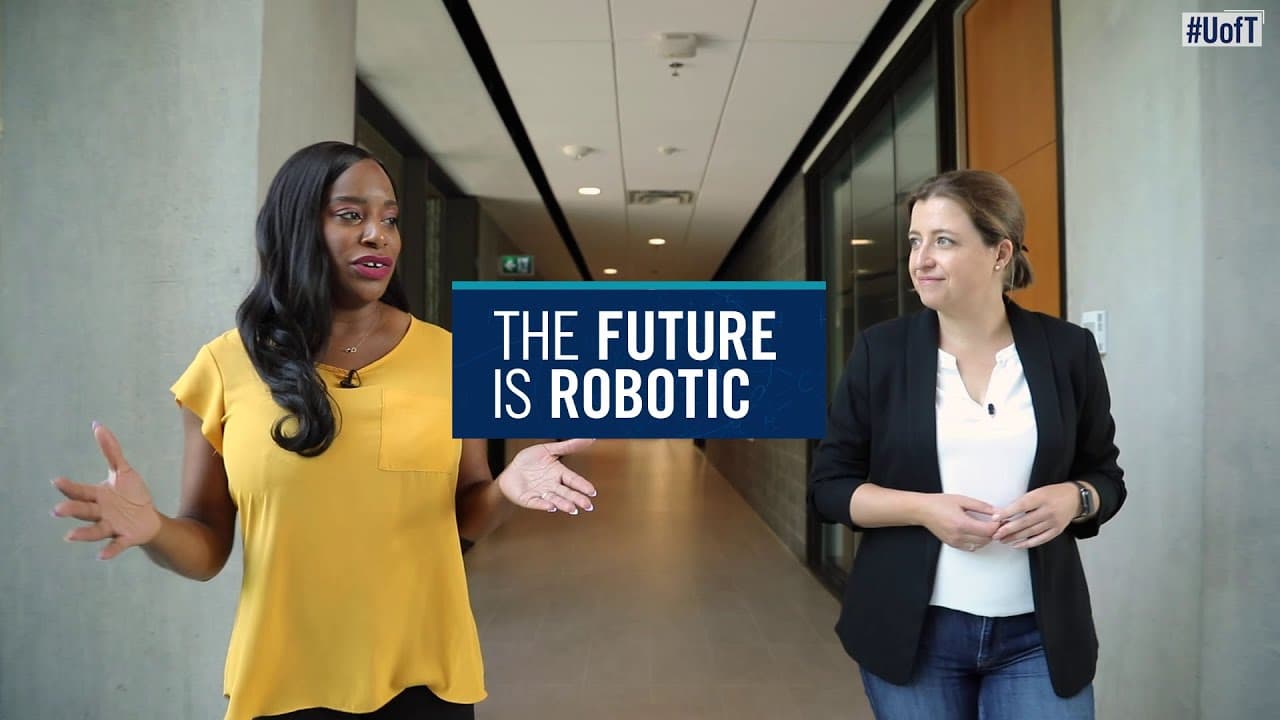
The Future is Robotic | U of T Groundbreakers EP3
TL;DR
Robotics in healthcare revolutionizes surgeries with tiny, curvilinear robots for precise, minimally invasive procedures.
Transcript
there's no limit to what robots could potentially do right there could be robots in space there can be robots in medicine robotics is such an interesting field of study um can you tell me how you got into it and what makes you so passionate about it as a teenager i always thought medicine is my way to go but then i loved star trek and i had compute... Read More
Key Insights
- 💻 Robotics in healthcare blends medicine and computer science for innovative surgical approaches.
- 🤖 Animal-inspired robots like worms and snakes revolutionize surgical precision and reach.
- 🤖 Small, curvilinear robots enable minimally invasive procedures and redefine surgical tools.
- ♿ Surgeons can utilize robotic assistance to access hard-to-reach areas for precise tumor removals.
- 👨🔬 Interdisciplinary collaboration drives research in robotics and problem-solving in continuum robotics.
- 👨🔬 Autonomous vehicles research in robotics focuses on enhancing performance for human-like capabilities.
- 💗 Toronto's growing profile in robotics and AI showcases top-tier talent and innovation.
Install to Summarize YouTube Videos and Get Transcripts
Explore YouTube Video Summarizer or Get YouTube Transcript Extractor
Questions & Answers
Q: How did the speaker's interests in medicine and computer science converge into a passion for robotics?
The speaker's teenage fascination with medicine and computer science club exposure sparked an interest in robotics, leading to a unique blend of medical understanding and technical acumen in surgical robotics development.
Q: How do tiny, curvilinear robots inspired by animals like worms and snakes revolutionize surgical procedures?
These innovative robots offer enhanced precision and reach, enabling minimally invasive procedures and rethinking traditional surgical approaches, particularly in treating deep-seated tumors like those within the brain.
Q: What value does surgical robotics bring to the healthcare industry, particularly in improving surgical outcomes?
Surgical robots empower surgeons to revolutionize their approach to surgeries, especially in accessing hard-to-reach areas like deep-seated tumors, leading to more precise, minimally invasive procedures with improved patient outcomes.
Q: How does interdisciplinary collaboration play a role in robotics research, particularly in shaping the future of robotics?
Collaborating with researchers across various fields like engineering and computer science allows for unique problem-solving approaches, leading to impactful solutions in continuum robotics with far-reaching effects on diverse applications.
Summary & Key Takeaways
-
The speaker's passion for robotics stemmed from a blend of interests in medicine and computer science, leading to innovative approaches in surgical robotics.
-
By creating robots inspired by animals like worms and snakes, the team aims to surpass humanoid robots for enhanced surgical precision and reach in healthcare.
-
The focus on developing small, curvilinear robots opens the door to minimally invasive procedures, revolutionizing surgical approaches and tool functionalities in treating deep-seated tumors.
Read in Other Languages (beta)
Share This Summary 📚
Summarize YouTube Videos and Get Video Transcripts with 1-Click
Try YouTube Summary with ChatGPT & Claude or YouTube Transcript Generator
Explore More Summaries from U of T Groundbreakers 📚



Summarize YouTube Videos and Get Video Transcripts with 1-Click
Try YouTube Summary with ChatGPT & Claude or YouTube Transcript Generator