How to Achieve Optimal Performance with Navy SEAL Tactics
TL;DR
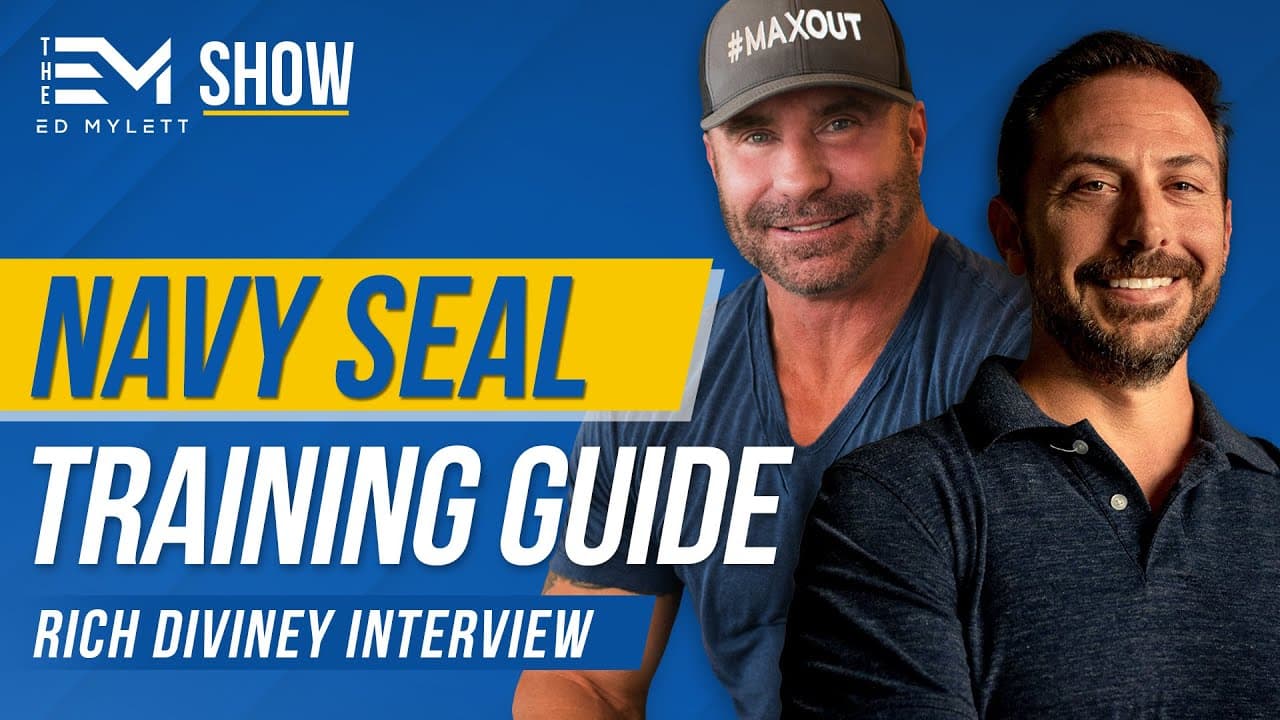
Rich Diviney, a former Navy SEAL, emphasizes the importance of optimal performance over peak performance, highlighting adaptability and resilience. He distinguishes between skills and attributes, explaining how the latter are crucial for handling uncertainty and stress. Diviney shares techniques for building mental resilience, managing stress, and embracing vulnerability within teams to achieve consistent high performance.
Transcript
any time that you uh have something bad happen okay something something negative bad it's awful it's horrible you have two minutes to wallow to mourn to do whatever you need to do okay after that two minutes you know you stop and you get back on track and this is the this is the crux of optimal performance and in fact uh growth because we can't gro... Read More
Key Insights
- Optimal performance is about doing your best in any situation, not just achieving peak performance.
- Attributes like adaptability and resilience are innate and inform how we handle stress and uncertainty.
- Skills are learned and visible, but attributes reveal themselves in challenging situations.
- Navy SEAL training focuses on attributes rather than skills, preparing individuals for unpredictable environments.
- Resilience involves bouncing back to baseline after setbacks; anti-fragility means returning stronger.
- The 'two-minute rule' helps manage emotional responses, allowing brief reflection before moving forward.
- Dynamic subordination in teams allows the most capable person to lead in any given situation, enhancing adaptability.
- Quality questions direct our focus and problem-solving, impacting performance and recovery.
Install to Summarize YouTube Videos and Get Transcripts
Explore YouTube Video Summarizer or Get YouTube Transcript Extractor
Questions & Answers
Q: How to differentiate between skills and attributes?
Skills are learned abilities that can be taught and measured, such as riding a bike or shooting a gun. They are visible and direct behavior in known situations. Attributes, on the other hand, are innate qualities like resilience and adaptability. They inform behavior, especially in uncertain and stressful situations, and are harder to assess and measure.
Q: What is the 'two-minute rule' and how does it help?
The 'two-minute rule' allows individuals to process emotions by giving them two minutes to wallow or celebrate after a negative or positive event. This brief period helps in managing emotional responses before returning to baseline and focusing on the next steps. It promotes resilience by preventing prolonged dwelling on setbacks or resting on laurels.
Q: Why is recovery important for resilience?
Recovery is essential for resilience as it allows the body and mind to repair and grow stronger after stress. Without sufficient recovery, continuous stress can lead to burnout and decreased performance. Techniques such as sleep, breathing exercises, and visualization help shift the nervous system into a recovery state, enhancing resilience and overall well-being.
Q: How can we manage fear and stress effectively?
Fear arises from the combination of anxiety and uncertainty. Managing fear involves reducing anxiety through techniques like deep breathing and visualization, and reducing uncertainty by focusing on controllable elements. By stepping into fear and taking action, the brain releases dopamine, reinforcing positive behavior and helping to navigate stressful situations.
Q: What is dynamic subordination in team settings?
Dynamic subordination is a team strategy where leadership shifts based on the situation. The person closest to the problem and most capable takes the lead, while others follow. This approach enhances adaptability, allowing teams to respond effectively to changing conditions. It relies on trust and open communication to function smoothly.
Q: How does asking quality questions impact performance?
Asking quality questions directs the brain's focus and problem-solving capabilities. The brain is a question-answering machine, and the questions we ask influence our perception and actions. By consciously choosing empowering questions, such as 'What can I control now?', we can enhance performance, resilience, and recovery by focusing on solutions rather than problems.
Q: What role does vulnerability play in high-performing teams?
Vulnerability in high-performing teams involves openly acknowledging strengths and weaknesses. This transparency fosters trust and allows team members to rely on each other's strengths while compensating for weaknesses. It supports dynamic subordination by enabling the most capable person to lead in specific situations, enhancing overall team effectiveness.
Q: Why is it important to recognize milestones in personal growth?
Recognizing milestones provides a physiological reward through dopamine release, reinforcing positive behavior and motivation. It encourages flexibility in pursuing long-term goals by allowing adaptation to changing circumstances. Celebrating milestones, even small ones, helps maintain momentum and provides opportunities for reflection and adjustment in the pursuit of larger objectives.
Summary & Key Takeaways
-
Rich Diviney discusses the difference between peak and optimal performance, emphasizing the latter as more sustainable and realistic. He explains that attributes, such as resilience and adaptability, are more crucial than skills in uncertain situations. Diviney shares the importance of vulnerability and dynamic subordination within teams for effective leadership.
-
The video highlights techniques for managing stress and fear, such as breathing exercises and focusing on controllable elements. Rich Diviney also emphasizes the significance of recovery and reflection for maintaining performance, using concepts like the 'two-minute rule' to manage emotional responses.
-
Diviney underscores the role of asking quality questions to guide focus and enhance problem-solving. He explains that the brain naturally seeks answers to questions, making it crucial to direct this process positively. The interview provides insights into building mental resilience and optimal performance using Navy SEAL tactics.
Read in Other Languages (beta)
Share This Summary 📚
Summarize YouTube Videos and Get Video Transcripts with 1-Click
Try YouTube Summary with ChatGPT & Claude or YouTube Transcript Generator
Explore More Summaries from Ed Mylett 📚





Summarize YouTube Videos and Get Video Transcripts with 1-Click
Try YouTube Summary with ChatGPT & Claude or YouTube Transcript Generator