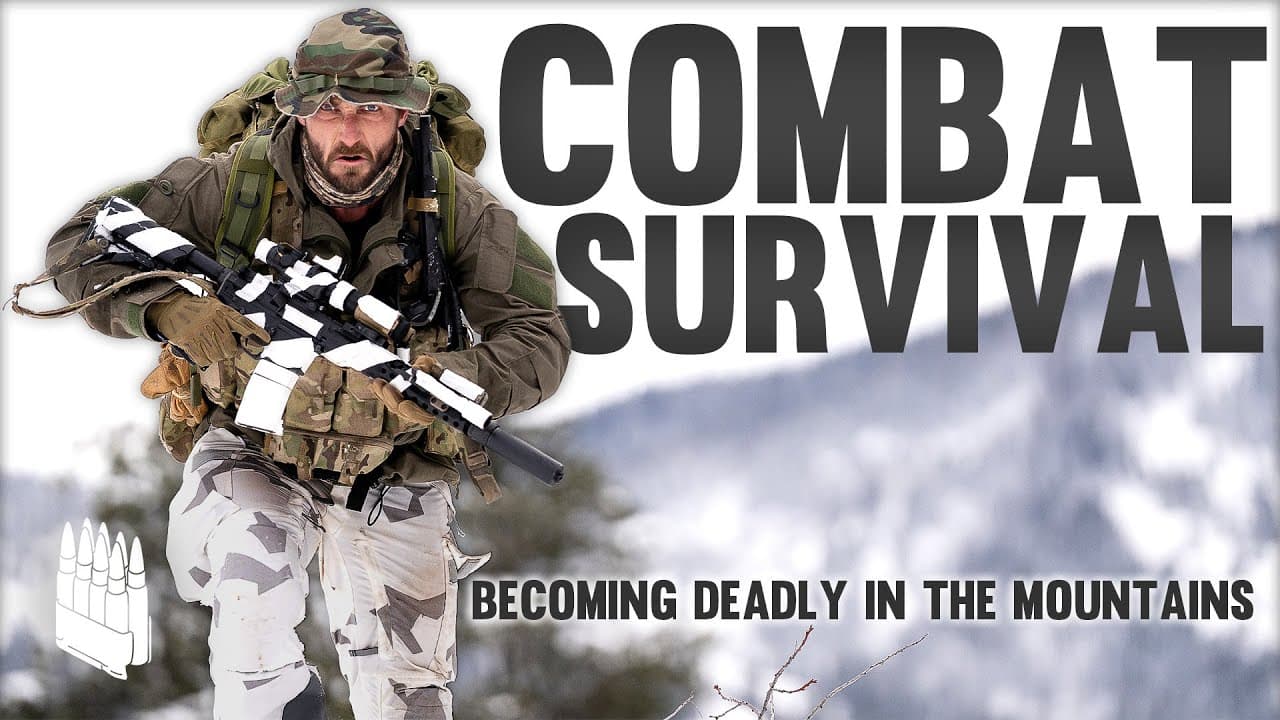
How To Evade A Professional Military In The Winter Mountains
TL;DR
Learn essential evasion tactics in winter mountain environments.
Transcript
right flank right flank hey bad Intel man hey Smith gone we got 250 moving on right flank we need to go right now come on it might seem like what we're teaching today is crazy but I can tell you for a fact that many people who found themselves in situations where they have to evade a modern trained fighting force wish they had this informat... Read More
Key Insights
- Evasion in winter mountainous terrain requires understanding the importance of initial movement, creating distance, and using the terrain to your advantage.
- Survival skills are crucial, including knowledge of personal protection, sustenance, and communication strategies to ensure safety during evasion.
- Camouflage and clothing play a vital role in evasion, with emphasis on layering and using natural elements to blend into the environment.
- Understanding thermal detection and how to mitigate its effectiveness is critical, using terrain and cover to avoid being spotted by advanced technology.
- Tracking and counter-tracking techniques help evade pursuers, focusing on creating false trails and using natural obstacles to delay trackers.
- The importance of hydration is highlighted, with tips on how to prevent water from freezing and methods to collect and consume snow safely.
- Communication should be limited to avoid detection, with strategies for maintaining contact with a base without compromising safety.
- Physical fitness is emphasized as a crucial factor in successful evasion, with the need for endurance and strength to navigate challenging environments.
Install to Summarize YouTube Videos and Get Transcripts
Explore YouTube Video Summarizer or Get YouTube Transcript Extractor
Questions & Answers
Q: What is the first step in evading a military force in winter mountains?
The first step is the initial movement, which involves creating as much distance as possible between you and your pursuers. This includes running until you cannot run anymore, walking until you can no longer walk, and crawling if necessary. The goal is to put time, distance, and challenging terrain between you and the enemy.
Q: How important is physical fitness in evasion scenarios?
Physical fitness is crucial in evasion scenarios as it determines your ability to move quickly and efficiently over difficult terrain. Being fit allows you to cover more ground, evade pursuers more effectively, and endure the physical demands of the environment, increasing your chances of survival and reaching safety.
Q: What role does camouflage play in evasion tactics?
Camouflage is vital in evasion tactics as it helps you blend into the environment and avoid detection by pursuers. Effective camouflage involves using natural materials, understanding the environment, and ensuring that clothing and equipment do not reflect light or stand out against the background, reducing the likelihood of being spotted.
Q: What are some techniques to counter thermal detection?
To counter thermal detection, use thick cover and dense forests to block the line of sight. Remember that thermal imaging works like a regular eye; if it can't see you, it can't detect you. Use the terrain to your advantage, and always assume you are being watched by drones or thermal imaging equipment.
Q: How can you maintain communication without being detected?
Maintain communication by setting specific contact windows and using code words. Turn off radios and disconnect batteries when not in use to avoid emitting signals. If using a cell phone, keep it in a Faraday bag or ensure it's turned off with the battery removed to prevent tracking.
Q: What are some effective counter-tracking techniques?
Effective counter-tracking techniques include creating false trails, using natural obstacles to obscure tracks, and employing methods like J-hooks to confuse trackers. Moving through thick vegetation and using snowshoes can also help reduce track visibility and delay pursuers.
Q: Why is hydration important, and how can you manage it in cold environments?
Hydration is crucial in cold environments to maintain energy levels and prevent dehydration. Manage it by keeping water close to the body to prevent freezing, using snow as a water source, and ensuring you have a reliable method to melt and purify snow for safe consumption.
Q: How can you use the environment to your advantage during evasion?
Use the environment by selecting challenging terrain that slows down pursuers, utilizing natural cover for concealment, and understanding the local flora and fauna to navigate effectively. The terrain can also be used to mislead trackers by creating false trails and using natural obstacles to delay them.
Summary & Key Takeaways
-
The video provides a comprehensive guide on evading a professional military force in winter mountain environments, emphasizing initial movement, terrain use, and camouflage. It stresses the importance of physical fitness and survival skills, including hydration, sustenance, and personal protection.
-
Key strategies include creating distance from pursuers, using natural cover to avoid detection, and understanding thermal imaging limitations. Communication is vital but should be minimal to prevent tracking, with pre-established contact windows and code words.
-
Tracking and counter-tracking techniques are essential, focusing on creating false trails and using natural obstacles to delay pursuers. The video also highlights the importance of proper clothing and camouflage to blend into the environment effectively.
Read in Other Languages (beta)
Share This Summary 📚
Summarize YouTube Videos and Get Video Transcripts with 1-Click
Try YouTube Summary with ChatGPT & Claude or YouTube Transcript Generator
Explore More Summaries from Garand Thumb 📚



Summarize YouTube Videos and Get Video Transcripts with 1-Click
Try YouTube Summary with ChatGPT & Claude or YouTube Transcript Generator