Elon Musk: Can we travel faster than the speed of light? | Lex Fridman Podcast Clips
TL;DR
Reusable rockets can significantly reduce the cost of space travel, but achieving full reusability is a complex problem, with no need for new physics.
Transcript
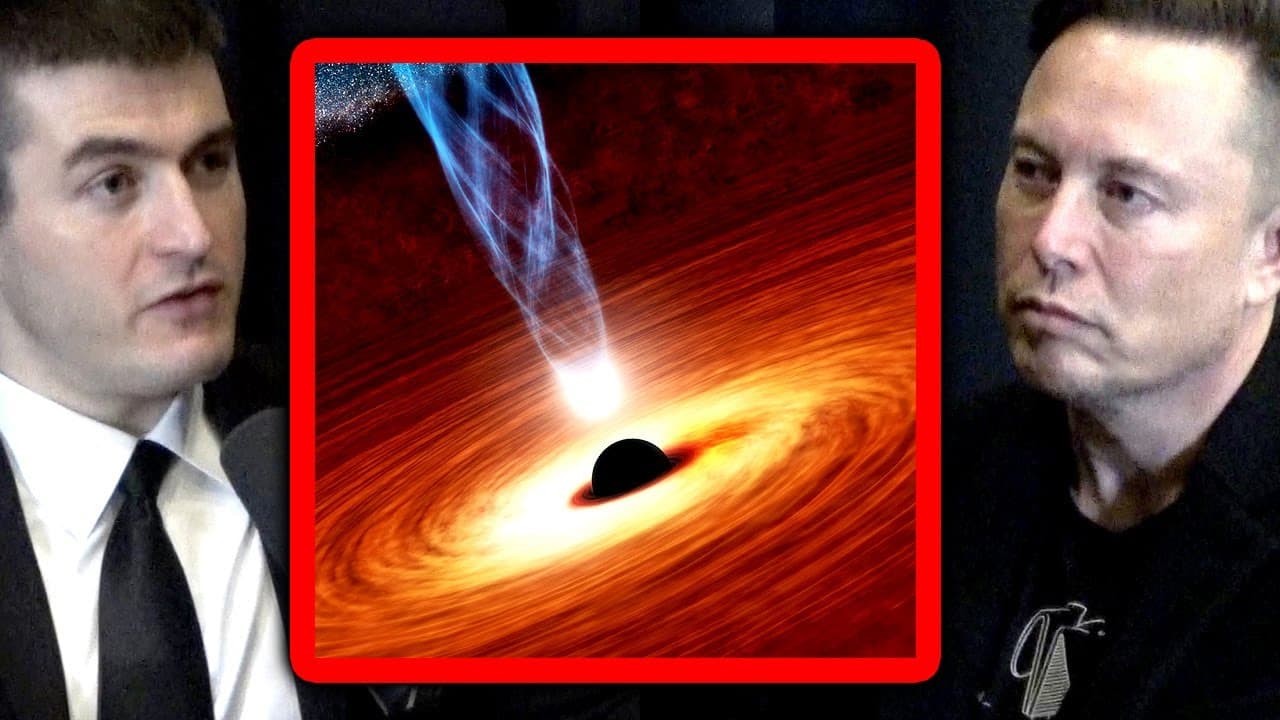
so you did mention physics as the the first starting point so um general relativity allows for wormholes uh they technically can exist do you think those can ever be leveraged by humans to travel fast in the speed of light well are you saying the whole thing is debatable uh the that we currently do not know of any means of going faster than the spe... Read More
Key Insights
- 👻 General relativity allows for wormholes, but utilizing them for fast travel remains uncertain due to the massive energy requirements.
- 🙂 The expansion of the universe during the Big Bang demonstrates that space can move faster than the speed of light.
- 👾 Achieving fully and rapidly reusable rockets is the ultimate goal for cost-effective space travel.
- ↗️ SpaceX's Falcon 9 is partially reusable, but achieving reusability for the upper stage and fairings is necessary for further cost reduction.
- 🤪 The challenge lies in engineering and designing a complex machine capable of going to orbit and returning intact.
- 🧑🏭 Full reusability, rather than breakthroughs in theoretical physics, is the most significant factor in reducing the cost per launch.
- 😋 Creating fully reusable rockets has the potential to decrease the cost per ton to orbit by a factor of a hundred or more.
- 🎙️ More videos with Elon Musk:
Install to Summarize YouTube Videos and Get Transcripts
Explore YouTube Video Summarizer or Get YouTube Transcript Extractor
Questions & Answers
Q: Can wormholes be leveraged by humans for fast travel?
While wormholes are theoretically possible according to general relativity, we currently do not have the means to exploit them for fast travel. The energy required for such space manipulation is immense.
Q: How much innovation is possible with rocket propulsion to improve efficiency?
The ultimate goal is a fully and rapidly reusable orbital system. SpaceX's Falcon 9 is currently the only reusable rocket, but achieving reusability for the upper stage is still a challenge. Full reusability could reduce the cost per ton to orbit by a factor of a hundred.
Q: Is there a need for new physics to achieve fully reusable rockets?
No, there is no need for any breakthrough in theoretical physics. The main challenge lies in the engineering and design aspects of creating a fully reusable rocket system.
Q: How does reusability affect the cost of space travel?
Reusability is crucial in reducing the cost of space travel. If parts of the rocket are thrown away after each launch, the expenses increase significantly. Fully reusable rockets, like SpaceX's Starship, have the potential to bring down the cost of launches by a factor of a thousand.
Summary & Key Takeaways
-
General relativity allows for the existence of wormholes, but currently, there is no known method to travel faster than the speed of light.
-
Space itself can move faster than the speed of light, as seen during the expansion of the universe in the Big Bang.
-
The holy grail of rocket propulsion is achieving fully and rapidly reusable rockets, which can reduce the cost per ton to orbit by a factor of a hundred.
Read in Other Languages (beta)
Share This Summary 📚
Summarize YouTube Videos and Get Video Transcripts with 1-Click
Try YouTube Summary with ChatGPT & Claude or YouTube Transcript Generator
Explore More Summaries from Lex Clips 📚


Summarize YouTube Videos and Get Video Transcripts with 1-Click
Try YouTube Summary with ChatGPT & Claude or YouTube Transcript Generator