What Makes a Species a Species?
TL;DR
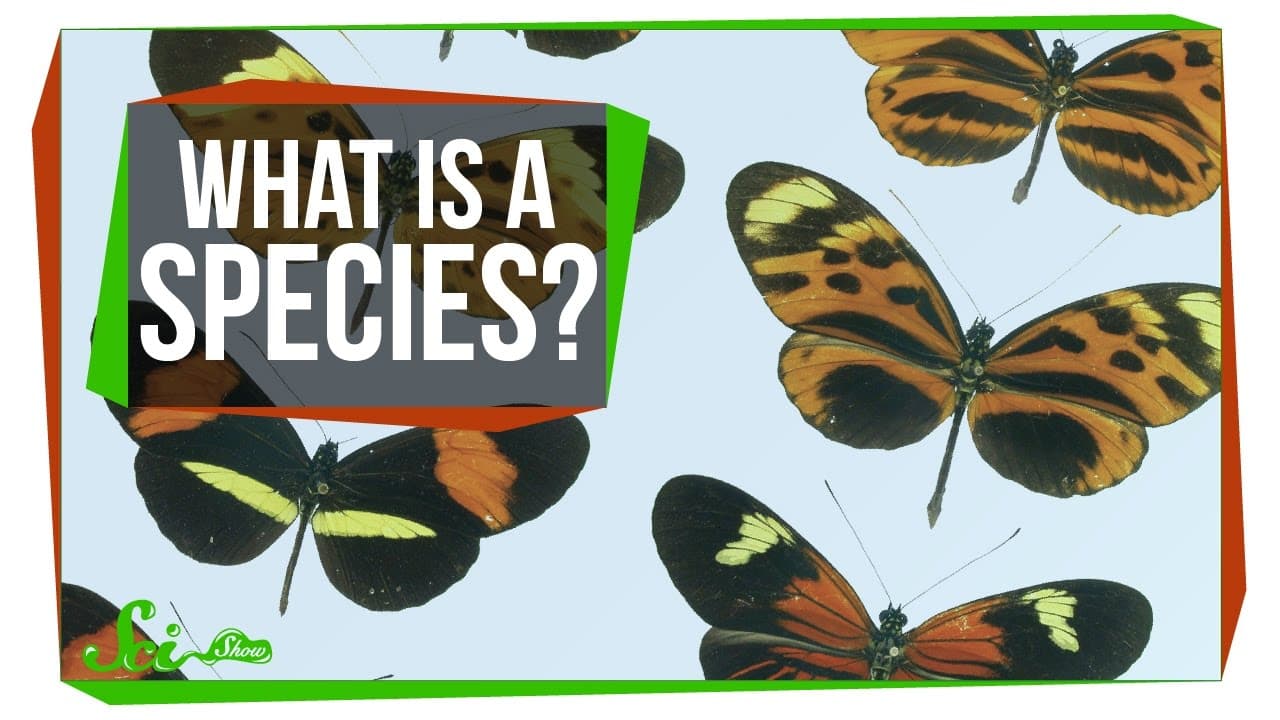
Classifying species is complex, and scientists use different rules depending on the situation. The biological species concept (BSC) is commonly used, but it doesn't work for all organisms or situations.
Transcript
Classifying living things is kind of like Pokemon. It appeals to our instinct to collect and identify. And the fact that we have a classification system is super useful for scientists. I mean, it shows how every type of organism we know of is connected to all the others. We’ve mapped out all of life in one giant chart. It’s amazing, when you think ... Read More
Key Insights
- 🧑🔬 Classification of living things is essential for scientists to understand the relationship between different organisms.
- 💦 The biological species concept is widely used but doesn't work for all organisms, such as bacteria and fossils.
- 🛟 Different criteria, such as genetics and morphology, are used to classify organisms that cannot reproduce sexually or are preserved as fossils.
Install to Summarize YouTube Videos and Get Transcripts
Explore YouTube Video Summarizer or Get YouTube Transcript Extractor
Questions & Answers
Q: What is the biological species concept?
The biological species concept defines species based on their ability to produce fertile offspring. If they can breed and produce fertile offspring, they are considered part of the same species.
Q: Why doesn't the biological species concept work for bacteria?
Bacteria reproduce asexually and can share genetic material with each other. Therefore, reproductive isolation is irrelevant, and scientists use other criteria such as genetics, morphology, and evolutionary relationships to classify bacteria.
Q: How do paleontologists classify fossils?
Since paleontologists can't observe mating behavior in fossils, they rely on morphology, or the physical characteristics of the creature, to classify them.
Q: Can hybrids between two species be classified as separate species?
There is a debate among scientists about whether the barriers between species are leakier than the BSC allows. Some hybrids can produce fertile offspring and gene flow can occur between parental species, challenging the traditional definition of separate species.
Key Insights:
- Classification of living things is essential for scientists to understand the relationship between different organisms.
- The biological species concept is widely used but doesn't work for all organisms, such as bacteria and fossils.
- Different criteria, such as genetics and morphology, are used to classify organisms that cannot reproduce sexually or are preserved as fossils.
- Hybrids challenge the strict definition of species, and gene flow between different species may occur more frequently than previously thought.
Summary & Key Takeaways
-
Scientists use classification to understand how different organisms are connected and to map out all of life.
-
The biological species concept defines species based on their ability to produce fertile offspring.
-
However, the BSC doesn't work for all organisms, such as bacteria and fossils.
-
Hybrids and subspecies also challenge the strict definition of species.
Read in Other Languages (beta)
Share This Summary 📚
Summarize YouTube Videos and Get Video Transcripts with 1-Click
Try YouTube Summary with ChatGPT & Claude or YouTube Transcript Generator
Explore More Summaries from SciShow 📚
Summarize YouTube Videos and Get Video Transcripts with 1-Click
Try YouTube Summary with ChatGPT & Claude or YouTube Transcript Generator