The LAZY Person's Guide to Ultimate Discipline

TL;DR
Discipline is about designing environments, not willpower.
Transcript
most people think discipline is about willpower waking up at 5:00 a.m or grinding through misery but what if i told you that real discipline actually feels easy we've been sold this idea that discipline requires constant willpower and sacrifice that to achieve anything worthwhile you must wage a daily battle against your own desires but after study... Read More
Key Insights
- Discipline is often misunderstood as sheer willpower; instead, it's about creating environments that make good decisions effortless.
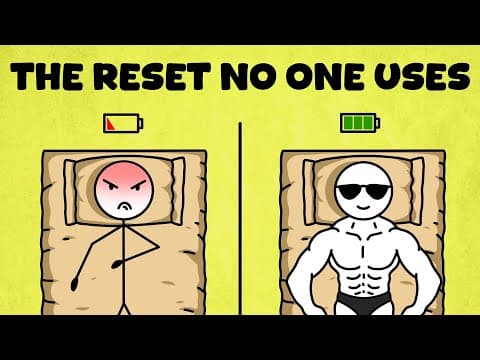
- Willpower is a limited resource, akin to a battery that depletes with use, making environment design crucial for sustainable discipline.
- Highly disciplined individuals aren't necessarily using more willpower; they structure their environments to make good choices easier.
- Behavioral psychology suggests that our actions are shaped more by our environments than by our intentions.
- Motivation is not a prerequisite for action; instead, taking action can generate motivation, creating a positive feedback loop.
- Automaticity, where behaviors require minimal conscious effort, is achieved through habit stacking and environmental adjustments.
- Building systems that account for human limits and fluctuating energy can transform discipline from a struggle to a sustaining force.
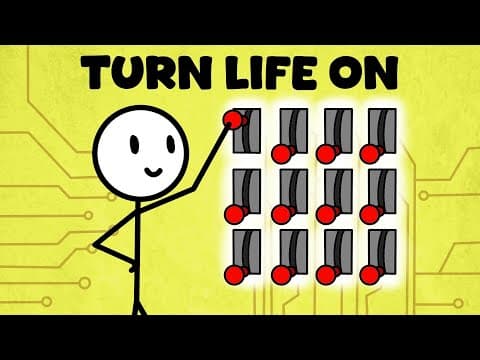
- The transformation to effortless discipline involves shifting from relying on willpower to designing systems that align with one's nature.
Install to Summarize YouTube Videos and Get Transcripts
Explore YouTube Video Summarizer or Get YouTube Transcript Extractor
Questions & Answers
Q: What is the main misconception about discipline?
The main misconception about discipline is that it relies solely on willpower and motivation. Many people believe that to achieve their goals, they must constantly fight against their desires and push themselves through sheer determination. However, this video argues that real discipline is about designing environments that make good decisions the easiest ones to make, reducing the reliance on willpower.
Q: How does environment design contribute to discipline?
Environment design contributes to discipline by structuring the surroundings in a way that naturally leads to good decisions. By making positive behaviors easier and negative ones harder, individuals can reduce the mental effort required to stay disciplined. This approach leverages the principle that our environments shape our actions more powerfully than our intentions, making discipline feel more effortless.
Q: What role does motivation play in discipline according to the video?
According to the video, motivation is not a necessary precursor to action. Instead, taking action can generate motivation. This counters the common belief that one must feel motivated before acting. By taking small steps regardless of motivation, individuals can create a positive feedback loop where action leads to motivation, making it easier to maintain discipline over time.
Q: What is automaticity and how is it achieved?
Automaticity is the state where behaviors require minimal conscious effort, becoming second nature. It is achieved through habit stacking, where new behaviors are anchored to existing routines. By making small environmental adjustments, individuals can transform daily choices into automatic actions, reducing the mental energy required for discipline and making it a default state rather than a struggle.
Q: How can systems help in maintaining discipline?
Systems help maintain discipline by providing a reliable framework that accounts for human limits, fluctuating energy, and the need for rest. By designing systems that include plans for failure and recovery, individuals can create resilient discipline that bends but doesn't break under pressure. This approach shifts the focus from willpower to system design, making discipline more sustainable and less reliant on motivation.
Q: What is the significance of habit stacking in achieving discipline?
Habit stacking is significant in achieving discipline because it allows individuals to anchor new behaviors to existing routines, creating a chain reaction of positive behaviors. By attaching new habits to established ones, individuals can bypass the need for motivation or memory, making it easier to maintain consistency and build discipline over time. This approach leverages the power of automaticity, where behaviors become second nature.
Q: How does the video redefine the concept of discipline?
The video redefines discipline by shifting the focus from willpower and motivation to system design and environment structuring. It challenges the traditional view that discipline requires constant effort and sacrifice, proposing instead that discipline can be effortless when environments are designed to make good decisions the path of least resistance. This approach emphasizes aligning with one's nature rather than fighting against it.
Q: What is the ultimate test of discipline transformation according to the video?
The ultimate test of discipline transformation, according to the video, is the ability to maintain consistency when motivation is completely absent. It involves trusting the systems in place even when every emotional signal suggests quitting. This test highlights the shift from relying on willpower to depending on well-designed systems that account for human limits, ensuring discipline remains a sustaining force even during challenging times.
Summary & Key Takeaways
-
The video challenges the traditional view of discipline as willpower-driven and introduces a paradigm shift towards designing environments that support desired habits. By structuring environments, individuals can make good decisions the path of least resistance, making discipline feel effortless.
-
Research shows that willpower is not an endless resource, and relying on it alone often leads to burnout. Instead, the video suggests focusing on creating systems and environments that naturally lead to positive behaviors, reducing the need for constant motivation.
-
The concept of automaticity is introduced, where behaviors become second nature through habit stacking. This shift from conscious decision-making to automatic routines allows individuals to maintain discipline even when motivation is lacking, ultimately leading to consistent goal achievement.
Read in Other Languages (beta)
Share This Summary 📚
Summarize YouTube Videos and Get Video Transcripts with 1-Click
Try YouTube Summary with ChatGPT & Claude or YouTube Transcript Generator
Explore More Summaries from MindFlow 📚




Summarize YouTube Videos and Get Video Transcripts with 1-Click
Try YouTube Summary with ChatGPT & Claude or YouTube Transcript Generator