How Taxes Impact Market Surplus and Deadweight Loss
TL;DR
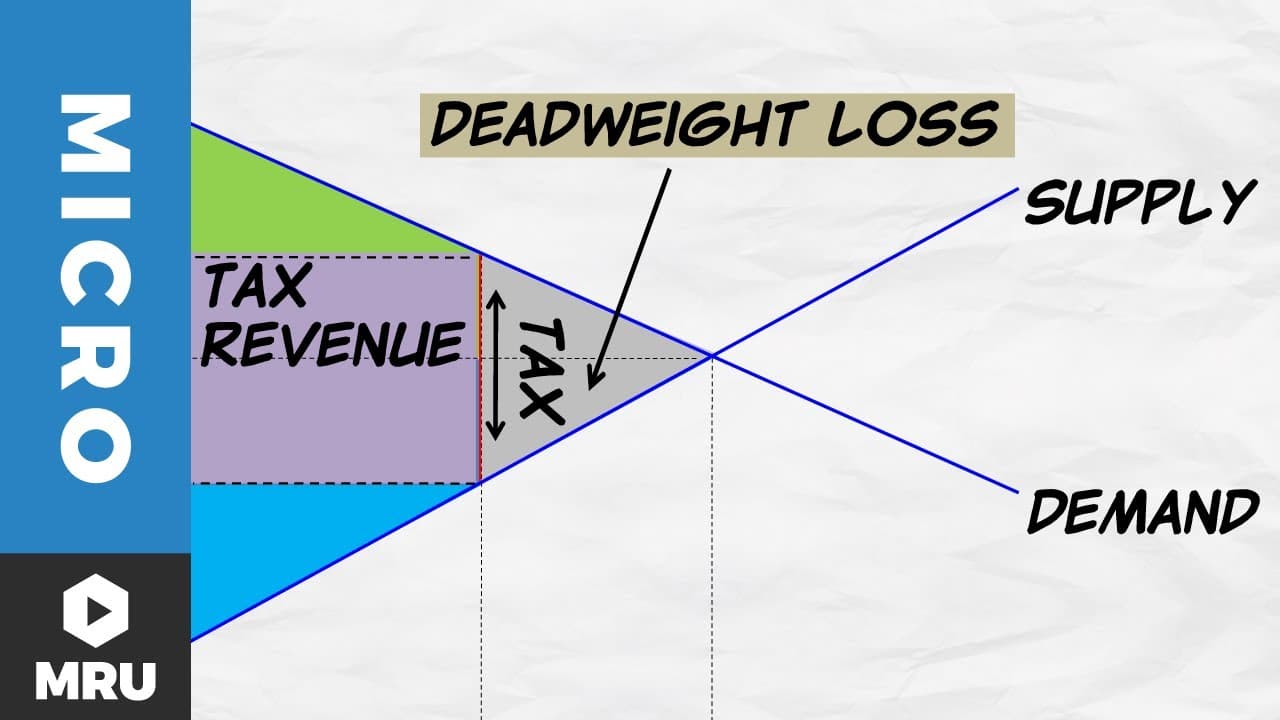
Taxes reduce consumer and producer surplus, leading to a deadweight loss, which represents the value of trades not made due to the tax. Deadweight loss is larger when demand is elastic. Taxing goods with inelastic demand minimizes lost trades and maximizes revenue, as illustrated by the failed luxury yacht tax.
Transcript
♪ [music] ♪ - [Prof. Alex Tabarrok] So far in our videos, we've looked at the effect of taxes on market prices, but we haven't said much about why government levies taxes in the first place, namely to get revenues. So let's look at that and also at the cost of raising revenues, which is deadweight loss. We can show pretty much everything we need to... Read More
Key Insights
- Taxes reduce both consumer and producer surplus, leading to a loss in total market surplus.
- Deadweight loss is the value of trades not made due to a tax, representing lost gains from trade.
- A tax creates deadweight loss by deterring trades that would have been beneficial.
- Deadweight loss is larger when the demand curve is elastic because taxes deter more trades.
- Taxing goods with inelastic demand minimizes deadweight loss and maximizes tax revenue.
- The 1990 luxury yacht tax in the U.S. resulted in lower-than-expected revenue due to elastic demand.
- The yacht tax led to job losses and more unemployment benefits paid than tax revenue collected.
- Subsidies are similar to negative taxes and affect market surplus in the opposite way.
Install to Summarize YouTube Videos and Get Transcripts
Explore YouTube Video Summarizer or Get YouTube Transcript Extractor
Questions & Answers
Q: How do taxes affect consumer and producer surplus?
Taxes reduce consumer and producer surplus by increasing the price for buyers and decreasing the price received by sellers. This reduction in surplus occurs because taxes introduce a wedge between the price buyers pay and the price sellers receive, leading to fewer exchanges in the market.
Q: What is deadweight loss in the context of taxes?
Deadweight loss is the value of trades not made due to a tax. It represents the lost gains from trade that occur when a tax deters beneficial exchanges that would have happened in a free market. This loss is not offset by tax revenue, as it arises from the reduction in total market transactions.
Q: Why is deadweight loss larger with elastic demand?
Deadweight loss is larger with elastic demand because taxes deter more trades when consumers and producers are sensitive to price changes. Elastic demand means that a small change in price leads to a large change in quantity demanded, resulting in more lost trades and greater deadweight loss.
Q: Why should goods with inelastic demand be taxed?
Goods with inelastic demand should be taxed because they minimize deadweight loss and maximize tax revenue. Inelastic demand means that consumers are less sensitive to price changes, so taxes deter fewer trades, resulting in less waste and more efficient revenue collection for the government.
Q: What happened with the 1990 luxury yacht tax in the U.S.?
The 1990 luxury yacht tax in the U.S. led to lower-than-expected revenue because the demand for yachts was elastic. Yacht buyers delayed or avoided purchases, resulting in a significant drop in sales. The tax also caused job losses in the yacht industry and higher unemployment benefits than tax revenue collected.
Q: How does deadweight loss relate to government revenue?
Deadweight loss relates to government revenue as it represents the value of trades not made due to a tax, which do not generate any revenue. The government only collects revenue from trades that continue to occur despite the tax, so minimizing deadweight loss is crucial for efficient revenue collection.
Q: What is the relationship between subsidies and taxes?
Subsidies are similar to negative taxes, as they provide financial support to lower the price for consumers or increase the price received by producers. While taxes reduce market surplus and create deadweight loss, subsidies increase market surplus by encouraging more trades, effectively reversing the impact of taxes.
Q: Why is it important to consider elasticity when imposing taxes?
Considering elasticity when imposing taxes is important because it affects the extent of deadweight loss and revenue generation. Taxing goods with elastic demand leads to significant deadweight loss and reduced revenue, while taxing goods with inelastic demand minimizes waste and maximizes revenue, ensuring a more efficient tax policy.
Summary & Key Takeaways
-
Taxes lead to a reduction in consumer and producer surplus, causing a deadweight loss, which is the value of trades not made. Deadweight loss is larger with elastic demand, as taxes deter more trades. Taxing goods with inelastic demand minimizes lost trades and maximizes revenue.
-
The 1990 luxury yacht tax in the U.S. provides a real-world example of deadweight loss. The tax resulted in lower-than-expected revenue due to the elastic demand for yachts, leading to job losses and higher unemployment benefits than tax revenue collected.
-
Subsidies act as negative taxes, affecting market surplus oppositely. The key takeaway is to tax goods with inelastic demand to minimize deadweight loss and maximize revenue, as elastic demand leads to more waste and fewer trades.
Read in Other Languages (beta)
Share This Summary 📚
Summarize YouTube Videos and Get Video Transcripts with 1-Click
Try YouTube Summary with ChatGPT & Claude or YouTube Transcript Generator
Explore More Summaries from Marginal Revolution University 📚


Summarize YouTube Videos and Get Video Transcripts with 1-Click
Try YouTube Summary with ChatGPT & Claude or YouTube Transcript Generator