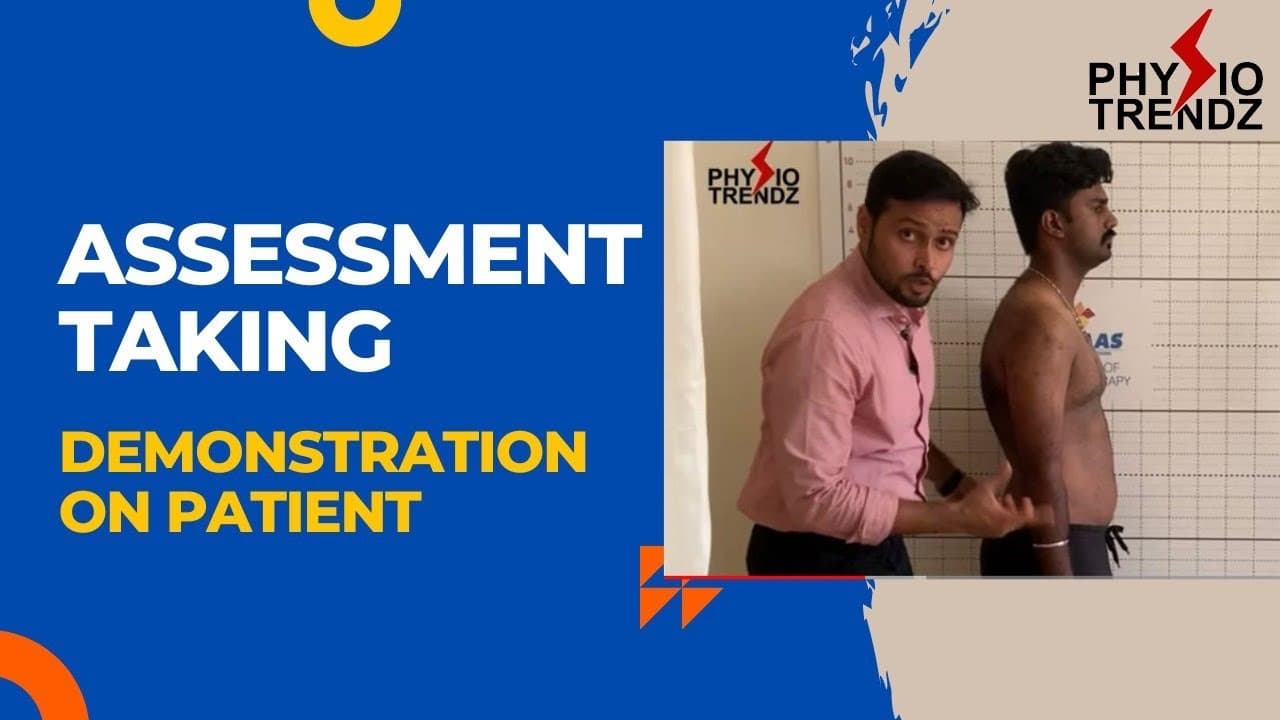
Back Pain Full Physiotherapy Assessment and Diagnosis Explained on Patient; //Physiotrendz
TL;DR
A detailed back pain assessment revealing L4 L5 nerve root compression.
Transcript
everyone so today I am going to show you a live assessment of a patient first can you tell us your names my name is we are going to record this assessment do you have any obligations about it thank you same composition the trunk is shifting on that side to maintain this pelvis height if you notice the distance between arm and body over here and alm... Read More
Key Insights
- The patient has a history of falls leading to back pain, with a hairline fracture in the coccyx noted in an X-ray.
- Pain levels vary from 6-7 during activities to 4-5 at rest, indicating significant discomfort.
- Postural analysis reveals a forward neck posture, anterior pelvic tilt, and uneven shoulder heights.
- Gait analysis shows increased lumbar lordosis and external rotation of the right foot.
- Palpation identifies tenderness in the L4 L5 region, suggesting nerve root compression.
- The SLR and slump tests are positive, confirming the presence of disc prolapse.
- Weakness in hip abductors and lower abdominal muscles is observed, contributing to postural issues.
- The patient's condition requires targeted physiotherapy to address muscle tightness and nerve compression.
Install to Summarize YouTube Videos and Get Transcripts
Explore YouTube Video Summarizer or Get YouTube Transcript Extractor
Questions & Answers
Q: What is the patient's main complaint?
The patient's main complaint is back pain, which has persisted since a fall four years ago. The pain varies in intensity, ranging from 6-7 during activities to 4-5 at rest. The patient also reports tingling and numbness in the right leg, indicating possible nerve involvement.
Q: What postural abnormalities were observed?
The assessment revealed several postural abnormalities, including a forward neck posture, anterior pelvic tilt, and uneven shoulder heights. Additionally, the right foot showed increased external rotation. These findings suggest imbalances that may contribute to the patient's back pain and discomfort.
Q: What did the gait analysis reveal?
The gait analysis showed increased lumbar lordosis and external rotation of the right foot. This suggests that the patient's walking pattern is affected, likely due to compensatory mechanisms for managing pain or muscle imbalances. No significant abnormalities were found in the knee or ankle positions.
Q: What were the results of the palpation?
Palpation identified tenderness in the L4 L5 region, indicating possible nerve root compression. This area is associated with the patient's complaints of pain and tingling in the right leg. The tenderness was classified as grade 1, as the patient reported pain without significant withdrawal or guarding.
Q: Which tests confirmed the presence of disc prolapse?
The SLR (Straight Leg Raise) and slump tests were positive, confirming the presence of disc prolapse. The SLR test indicated pain and symptom aggravation between 30 and 70 degrees of leg elevation, while the slump test showed increased pain with dorsiflexion, both pointing to nerve root involvement.
Q: What muscle weaknesses were identified?
The assessment identified weaknesses in the hip abductors and lower abdominal muscles. These weaknesses contribute to the patient's postural issues, such as anterior pelvic tilt and compensatory trunk movements. Addressing these muscle weaknesses is crucial for improving the patient's overall function and reducing pain.
Q: What is the significance of the Trendelenburg sign in this assessment?
The Trendelenburg sign indicated some weakness in the hip abductor muscles. During the test, the patient showed compensatory trunk shifting to maintain pelvic height, rather than a complete pelvic drop. This suggests partial weakness in the hip abductors, which may contribute to the patient's postural and gait issues.
Q: What are the key areas to address in the patient's treatment plan?
The treatment plan should focus on addressing the L4 L5 nerve root compression, strengthening the hip abductors and lower abdominal muscles, and improving flexibility in the hamstrings. Additionally, correcting postural imbalances and gait abnormalities will be essential to alleviate the patient's pain and enhance functional mobility.
Summary & Key Takeaways
-
A thorough physiotherapy assessment of a patient with back pain reveals L4 L5 nerve root compression. The patient experiences varying pain levels, with significant discomfort during activities. Posture and gait analyses highlight several issues, including forward neck posture and anterior pelvic tilt.
-
The assessment includes various tests, such as SLR and slump tests, which confirm disc prolapse. Palpation identifies tenderness in the L4 L5 region. The patient also exhibits weakness in hip abductors and lower abdominal muscles, requiring targeted physiotherapy intervention.
-
The video provides a comprehensive analysis of the patient's condition, from initial complaints to diagnosis. It emphasizes the importance of detailed assessments in physiotherapy to address muscle tightness, nerve compression, and postural issues effectively.
Read in Other Languages (beta)
Share This Summary 📚
Summarize YouTube Videos and Get Video Transcripts with 1-Click
Try YouTube Summary with ChatGPT & Claude or YouTube Transcript Generator