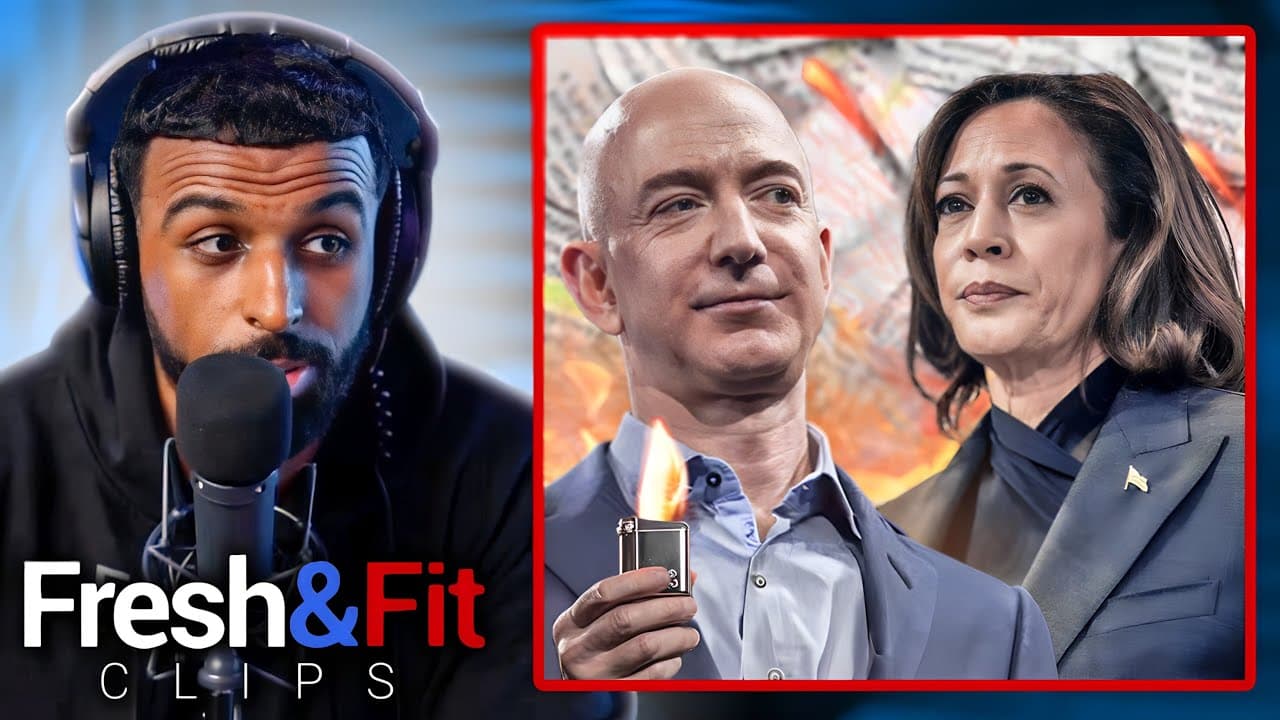
Jeff Bezos STOPS Washington Post's KAMALA Endorsement!
TL;DR
The discussion highlights how billionaire tech leaders' whims impact political narratives and free speech.
Transcript
um Jeff Basel reporting wants more conservative opinion writers at the Washington Post interesting wonder why very very interesting and Jeff Bezos uh you know there was going to be something put out I think uh you know about him endorsing uh Kamala or some [ __ ] like that and he uh killed the story 100% And and a lot of these uh people these billi... Read More
Key Insights
- 🤨 The influence of billionaires in politics raises ethical questions regarding media integrity and political narratives.
- 🥶 Many tech companies portray a commitment to free speech while actively engaging in censorship that aligns with governmental directives.
- 🖤 Celebrities’ political endorsements often lack connection to everyday hardships, distancing them from average Americans' realities.
- 😑 The First Amendment faces challenges as influential figures avoid taking risks to protect their financial interests rather than championing free expression.
- 🧘 Media figures’ centrist approaches may dilute meaningful political conversations, favoring safe, market-friendly positions over engaging discourse.
- 🇨🇫 Celebrity endorsements can sway public opinion but may also perpetuate misinformation about the political climate and societal issues.
- 😚 Societal and corporate pressures often dictate the actions and words of influential figures, necessitating a closer examination of motivations behind public stances.
Install to Summarize YouTube Videos and Get Transcripts
Explore YouTube Video Summarizer or Get YouTube Transcript Extractor
Questions & Answers
Q: What role do billionaires play in shaping political opinions?
Billionaires like Jeff Bezos and Mark Zuckerberg significantly influence political narratives through media ownership and strategic endorsements. They often support candidates who align with their interests, adapting their public stances depending on electoral climates, which raises questions about the integrity of political discourse in the media they control.
Q: How do tech companies justify censorship while claiming to support free speech?
Tech companies assert their right to censor content based on the argument of being private entities. However, when they employ censorship at the behest of the government, it raises concerns about their commitment to free speech. This juxtaposition highlights the conflict between corporate interests and constitutional rights, especially concerning the First Amendment.
Q: Why might celebrities endorse controversial political figures?
Celebrities often endorse prominent political figures without real understanding of the average person's experience. Their financial security allows them to make endorsements seemingly devoid of concern for the significant issues facing the general populace, detaching them from the ramifications of their endorsements on everyday Americans.
Q: What concerns are raised regarding the First Amendment?
The discussion points to a perceived erosion of First Amendment rights as influential figures hesitate to express dissenting opinions due to fear of financial repercussions or backlash. There’s concern that the lack of vigorous exercise of these rights contributes to their gradual fading from societal relevance, potentially leading to complacency among the public.
Q: How are media personalities viewed in their handling of political discourse?
Media personalities are often criticized for taking centrist stances to retain broad audience appeal, which stifles genuine debate and discussion. By avoiding strong opinions, they are perceived as not truly engaging with significant issues but rather prioritizing their marketability over impactful discourse.
Q: What is the significance of the recent celebrity endorsements in politics?
Recent endorsements from high-profile celebrities, like Beyoncé for Kamala Harris, reflect a trend where public figures leverage their influence without a thorough understanding of the political landscape. This can lead to misrepresentation of issues that affect everyday citizens while focusing solely on creating emotional connections rather than substantive political platforms.
Q: How do societal pressures influence corporate actions?
Corporations, particularly in the tech sector, face pressure to align with the prevailing political climate for business sustainability. This leads to decisions that favor governmental preferences, raising ethical questions around their accountability and commitment to free speech while navigating complex corporate and political landscapes.
Summary & Key Takeaways
-
The content critiques billionaires like Jeff Bezos and Mark Zuckerberg for their perceived influence on media and politics, especially during election cycles, suggesting they adjust their stances based on public sentiment and electoral prospects.
-
It emphasizes the contradiction in tech companies claiming to uphold free speech while allegedly bowing to government pressures, raising concerns about their adherence to the First Amendment.
-
The dialogue reflects on celebrity endorsements of political figures, asserting that these influencers often lack insight into the struggles of average Americans, potentially detaching their fans from critical political realities.
Read in Other Languages (beta)
Share This Summary 📚
Summarize YouTube Videos and Get Video Transcripts with 1-Click
Try YouTube Summary with ChatGPT & Claude or YouTube Transcript Generator
Explore More Summaries from FreshandFit 📚
Summarize YouTube Videos and Get Video Transcripts with 1-Click
Try YouTube Summary with ChatGPT & Claude or YouTube Transcript Generator