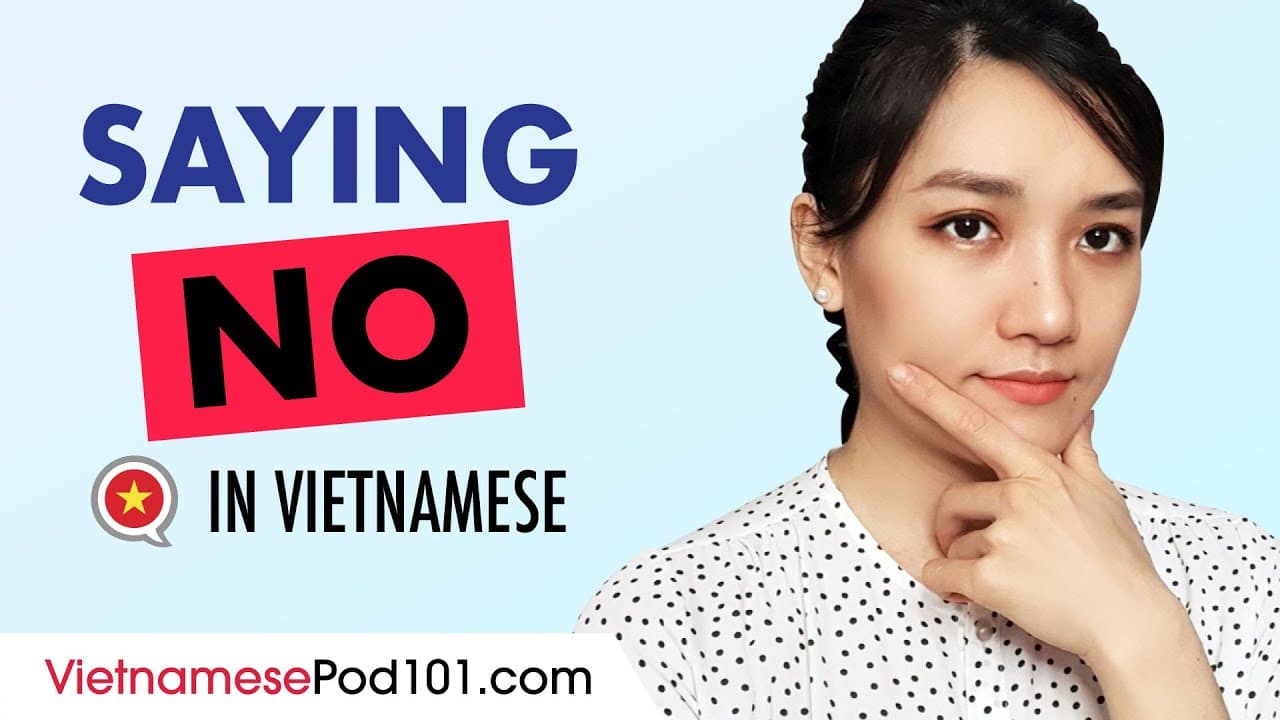
How to Politely Say No in Vietnamese
TL;DR
To politely say no in Vietnamese, use phrases like 'I'm busy' or 'I have a plan' for direct rejections. For a softer approach, use 'Let me see' or 'I'll text you later' to buy time and maintain politeness. These expressions are culturally appropriate and commonly used to avoid causing offense.
Transcript
want to speak real Vietnamese from your first lesson sign up for your free lifetime account at Vietnamese pod101.com there might be plenty of times that you don't want to go out with someone or you just simply want to say no so how do you say that in Vietnamese in this video today I'm going to share with you how to say no or how to reject someone i... Read More
Key Insights
- In Vietnamese, saying 'I'm busy' is a common and polite way to decline an invitation.
- Using 'I have a plan' implies a prior commitment, making it a polite rejection.
- 'Let me see' is a polite way to delay a decision without outright refusal.
- 'I'll text you later' suggests future contact, softening the rejection.
- Adding pronouns at the end of sentences can make them sound friendlier.
- Short sentences are often used in casual Vietnamese to convey politeness.
- Cultural nuances in Vietnamese emphasize politeness and indirect refusals.
- Adjusting the time of a meeting can be a way to say no while showing willingness to meet later.
Install to Summarize YouTube Videos and Get Transcripts
Explore YouTube Video Summarizer or Get YouTube Transcript Extractor
Questions & Answers
Q: How to politely say no in Vietnamese?
To politely say no in Vietnamese, you can use phrases like 'I'm busy' (tôi bận) or 'I have a plan' (tôi có kế hoạch). These expressions are direct yet polite. For a softer approach, you might say 'Let me see' (để tôi xem) or 'I'll text you later' (tôi sẽ nhắn tin sau), which imply a polite delay or future contact.
Q: What is a common way to reject an invitation in Vietnamese?
A common way to reject an invitation in Vietnamese is to say 'I'm busy' (tôi bận rồi). This is a straightforward and polite way to decline without causing offense. It is often used in both formal and informal settings, making it a versatile expression for various social interactions.
Q: How can I soften a rejection in Vietnamese?
To soften a rejection in Vietnamese, you can use phrases like 'Let me see' (để tôi xem) or 'I'm not sure yet' (tôi chưa biết). These expressions suggest that you are considering the request, which can help maintain politeness and avoid hurting the other person's feelings.
Q: Why is politeness important in Vietnamese language?
Politeness is important in Vietnamese because it reflects cultural values that prioritize respect and harmony in social interactions. Using polite language helps maintain relationships and shows consideration for the other person's feelings. This is especially crucial in a collectivist society where social harmony is valued.
Q: What role do pronouns play in Vietnamese refusals?
In Vietnamese, pronouns can be used at the end of sentences to make refusals sound friendlier and more personal. This practice helps convey respect and politeness, especially when speaking to someone older or in a higher social position. It reflects the speaker's awareness of social hierarchies.
Q: How does culture influence saying no in Vietnamese?
Culture influences saying no in Vietnamese by emphasizing indirectness and politeness. Direct refusals can be considered rude, so it's common to use softer expressions or imply a future response. This approach helps maintain social harmony and avoid confrontation, which are important aspects of Vietnamese culture.
Q: Can I use short sentences for polite refusals in Vietnamese?
Yes, short sentences are often used in Vietnamese for polite refusals. They are concise yet convey the intended message effectively. For example, saying 'I'm busy' (tôi bận) is a brief but polite way to decline an invitation. This style is common in everyday casual conversations.
Q: What are some practical examples of saying no in Vietnamese?
Practical examples of saying no in Vietnamese include 'I'm busy' (tôi bận), 'I have a plan' (tôi có kế hoạch), and 'Let me see' (để tôi xem). These expressions are culturally appropriate and help convey politeness. They are commonly used in various contexts to avoid causing offense while declining offers or invitations.
Summary & Key Takeaways
-
To decline an invitation in Vietnamese, use phrases like 'I'm busy' or 'I have a plan' for direct rejections. These expressions are polite and commonly used. Alternatively, 'Let me see' or 'I'll text you later' can soften the rejection by implying a future response.
-
In Vietnamese culture, politeness is key when saying no. Using indirect phrases like 'I'm not sure yet' helps maintain a polite tone. It's important to adjust your language based on the relationship and context, using appropriate pronouns to sound friendly.
-
The video provides practical examples of how to say no in Vietnamese without causing offense. By using culturally appropriate expressions, learners can navigate social interactions smoothly. The tips are designed for beginners to quickly grasp basic conversational skills in Vietnamese.
Read in Other Languages (beta)
Share This Summary 📚
Summarize YouTube Videos and Get Video Transcripts with 1-Click
Try YouTube Summary with ChatGPT & Claude or YouTube Transcript Generator
Explore More Summaries from Learn Vietnamese with VietnamesePod101.com 📚




Summarize YouTube Videos and Get Video Transcripts with 1-Click
Try YouTube Summary with ChatGPT & Claude or YouTube Transcript Generator