Lucien Engelen: Crowdsource your health
TL;DR
This talk discusses the failure of ehealth projects due to a lack of patient involvement and highlights the importance of listening to patients for successful implementation.
Transcript
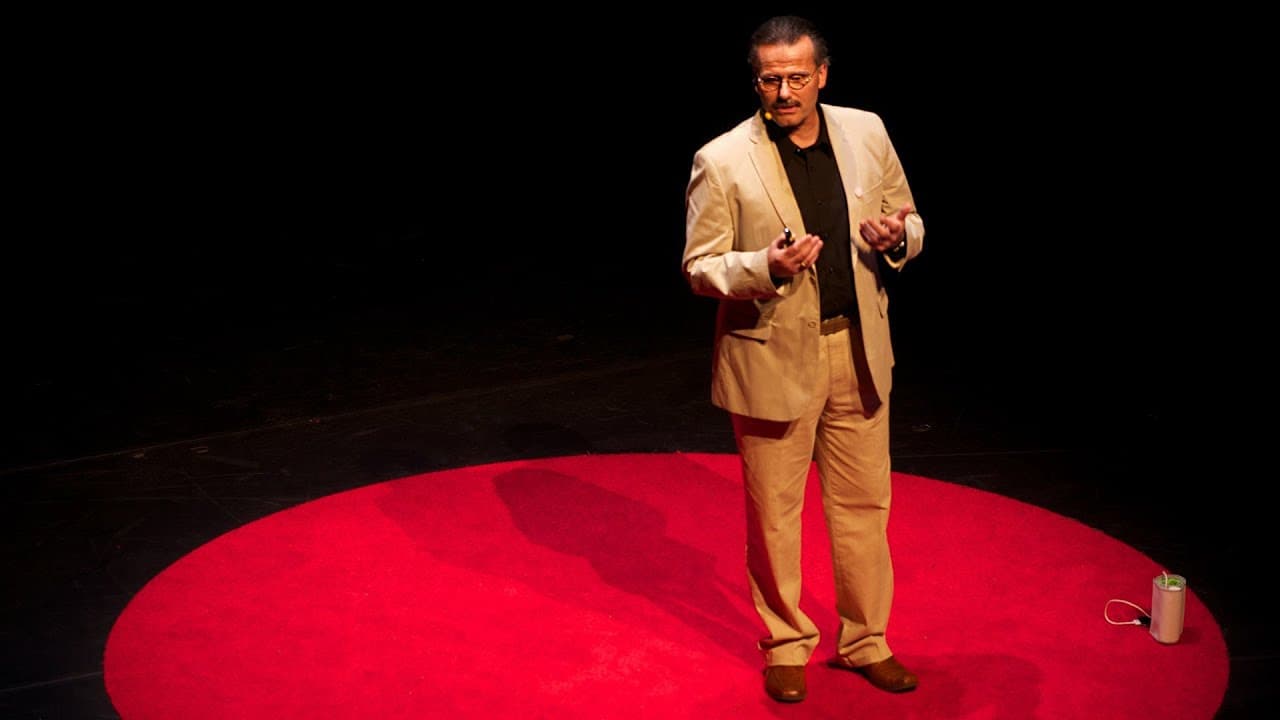
I would like to talk to you about why many ehealth projects fail. And I really think that the most important thing of it is that we stopped listening to patients. And one thing we did at Radboud University is we appointed a Chief Listening Officer. Not in a very scientific way -- she puts up a little cup of coffee or a cup of tea and asks patients,... Read More
Key Insights
- 👂 Listening to patients is crucial in ehealth projects and appointing a Chief Listening Officer can improve their success.
- ⚖️ Peer pressure, through social media or gaming activities, can be a powerful tool to help patients make healthier choices and take control of their health.
- 💡 Easy-to-use technology, such as a blood pressure meter connected to a smartphone, can empower patients to monitor their own health and share data with their doctors or others.
- 🌐 Crowdsourcing can be a valuable strategy to gather information and resources in healthcare, such as identifying the locations of lifesaving AEDs (automated external defibrillators).
- 📱 Mobile applications and augmented reality can help individuals quickly find the nearest AED in case of emergencies, potentially saving lives.
- 🌍 Collaboration and cooperation among universities and companies globally can create a hub to crowdsource AEDs and improve access to these devices worldwide.
- 💪 Validation of submitted AED locations by courier services or other professionals can ensure that the information remains up to date and reliable.
- 🌱 Taking control of our own health and actively participating in healthcare can lead to better outcomes and contribute to managing healthcare costs and demands.
Install to Summarize YouTube Videos and Get Transcripts
Explore YouTube Video Summarizer or Get YouTube Transcript Extractor
Questions & Answers
Q: Why do many ehealth projects fail?
Many ehealth projects fail because we stopped listening to patients. At Radboud University, we appointed a Chief Listening Officer who engages with patients, their families, and relatives to understand their needs and how we can assist them. Neglecting patient input is one of the major reasons behind the failure of most ehealth projects.
Q: How can simple devices like weight scales contribute to ehealth?
Simple devices like weight scales can play a significant role in ehealth. For example, my weight scale not only helps me measure my weight but also automatically sends the data to Google Health and my general practitioner. This enables my doctor to track my weight over time and identify any potential issues or patterns, empowering them to provide timely support.
Q: How can peer pressure be utilized in ehealth?
Peer pressure can be a useful tool in ehealth. In my case, with over 4000 followers on Twitter, people often comment on my weight scale data, encouraging me to make healthier choices. Peer pressure can be harnessed to tackle issues like obesity or smoking cessation. It can also promote collaboration and gamification to empower individuals to take control of their own health.
Q: How can crowdsourcing help improve healthcare?
Crowdsourcing can be a valuable approach to enhance healthcare. An example is our initiative in the Netherlands where we crowdsourced information about automated external defibrillators (AEDs). By creating a website and asking the crowd to submit AED locations, we now have over 10,000 AEDs mapped. We then developed applications, such as an iPad app and an augmented reality tool, to help individuals locate the nearest AED in an emergency situation.
Q: How can the global community contribute to the AED crowdsourcing project?
We invite colleagues from universities and companies worldwide to join our AED crowdsourcing project. By collaborating, sharing information, and validating submitted AEDs, we can create a global hub to crowdsource AED locations. This will enable anyone, even when on vacation, to quickly find the nearest AED in case of a medical emergency, potentially saving lives globally. Your support and participation are crucial to making healthcare better and empowering individuals to take control of their own well-being.
Summary & Key Takeaways
-
Many ehealth projects fail because there is a lack of listening to patients and their needs.
-
Personal health devices, such as a weight scale that sends data to healthcare providers, can help patients take control of their health and receive support from peers.
-
Crowdsourcing and technology can be used to locate and map life-saving equipment, like automated external defibrillators (AEDs), to improve emergency response worldwide.
Read in Other Languages (beta)
Share This Summary 📚
Summarize YouTube Videos and Get Video Transcripts with 1-Click
Try YouTube Summary with ChatGPT & Claude or YouTube Transcript Generator
Explore More Summaries from TED 📚





Summarize YouTube Videos and Get Video Transcripts with 1-Click
Try YouTube Summary with ChatGPT & Claude or YouTube Transcript Generator