What Are Eyeballs Made Of?
TL;DR
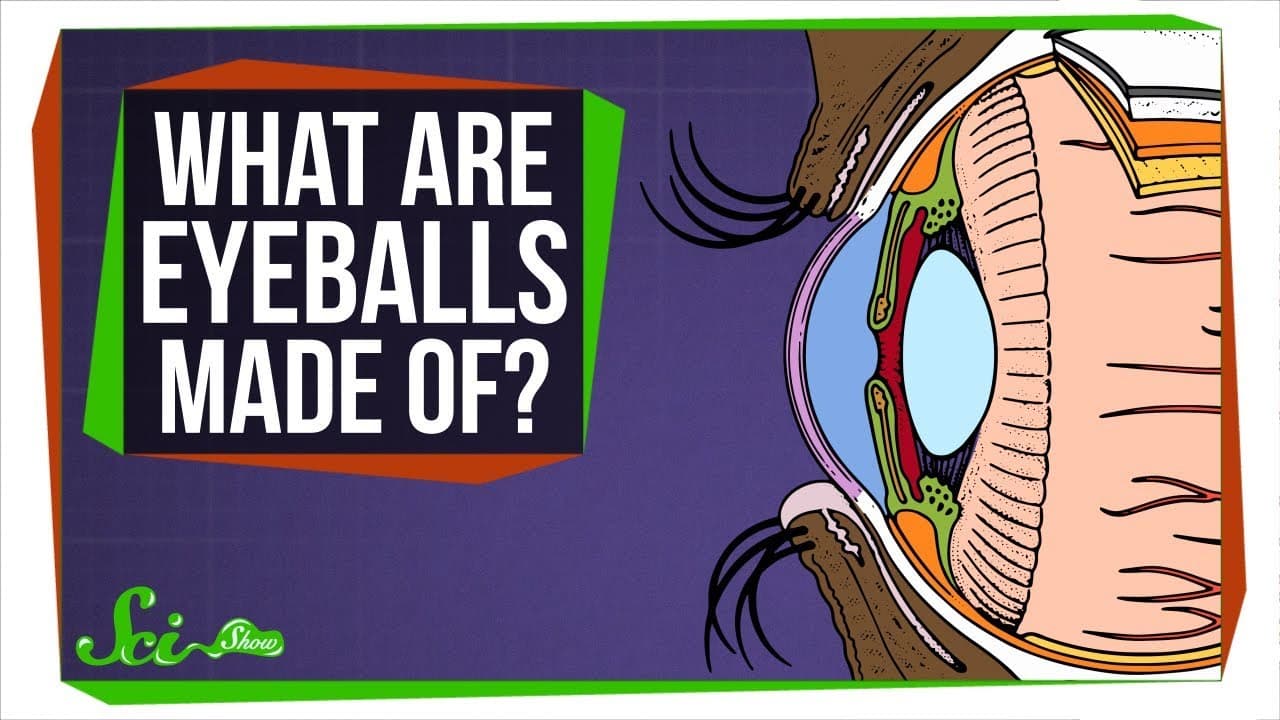
Eyeballs are complex structures made up of various components, including the sclera, cornea, iris, lens, retina, and vitreous humor, all working together to allow us to see.
Transcript
SciShow is supported by Squarespace. Whether you need a domain, website, or online store, make it with Squarespace [♪ INTRO] Eyeballs are … weird. They’re these strange little blobs that sit inside your skull, and there’s nothing else in your body quite like them. They aren’t bone, but they aren’t soft like the tissue under your skin, either. Most ... Read More
Key Insights
- ❓ The eyeball is made up of various components, including the sclera, cornea, iris, lens, retina, vitreous humor, and aqueous humor.
- 😇 The vitreous humor is a clear, gel-like substance that fills most of the eyeball and serves as a shock absorber.
- 😂 Oxygen reaches the cornea through dissolved gases in tears, as both the cornea and vitreous humor lack blood vessels.
- 🤕 The vitreous humor becomes more liquidy with age, which can lead to floaters.
- 😂 The cornea does not have a blood supply and gets its oxygen supply from tear gases.
Install to Summarize YouTube Videos and Get Transcripts
Explore YouTube Video Summarizer or Get YouTube Transcript Extractor
Questions & Answers
Q: What is the function of the vitreous humor in the eyeball?
The vitreous humor acts as a shock absorber and provides structural support to the eyeball. It also helps maintain the shape of the eye.
Q: How does oxygen reach the cells in the cornea if it doesn't have a blood supply?
The cornea receives oxygen from the gas dissolved in tears. Although there isn't a significant amount of oxygen in tears, it is enough to nourish the corneal cells.
Q: Why is the majority of the eyeball made up of the vitreous humor?
The vitreous humor fills up most of the eyeball because it acts as a shock absorber, protecting the delicate structures of the eye from sudden movements or impacts.
Q: What are floaters in the eye, and why do they appear?
Floaters are small moving shadows that people sometimes see in their vision. They occur when the vitreous humor separates from the retina, casting shadows on the retina.
Summary & Key Takeaways
-
Eyeballs are not like any other part of the body; they are unique structures that allow us to see.
-
The majority of the eyeball is made up of a clear, jelly-like substance called the vitreous humor.
-
The cornea, iris, lens, and retina are all essential components that help light reach the back of the eye to form an image.
Read in Other Languages (beta)
Share This Summary 📚
Summarize YouTube Videos and Get Video Transcripts with 1-Click
Try YouTube Summary with ChatGPT & Claude or YouTube Transcript Generator
Explore More Summaries from SciShow 📚


Summarize YouTube Videos and Get Video Transcripts with 1-Click
Try YouTube Summary with ChatGPT & Claude or YouTube Transcript Generator