The simulation was not created for us | Charles Isbell and Michael Littman and Lex Fridman
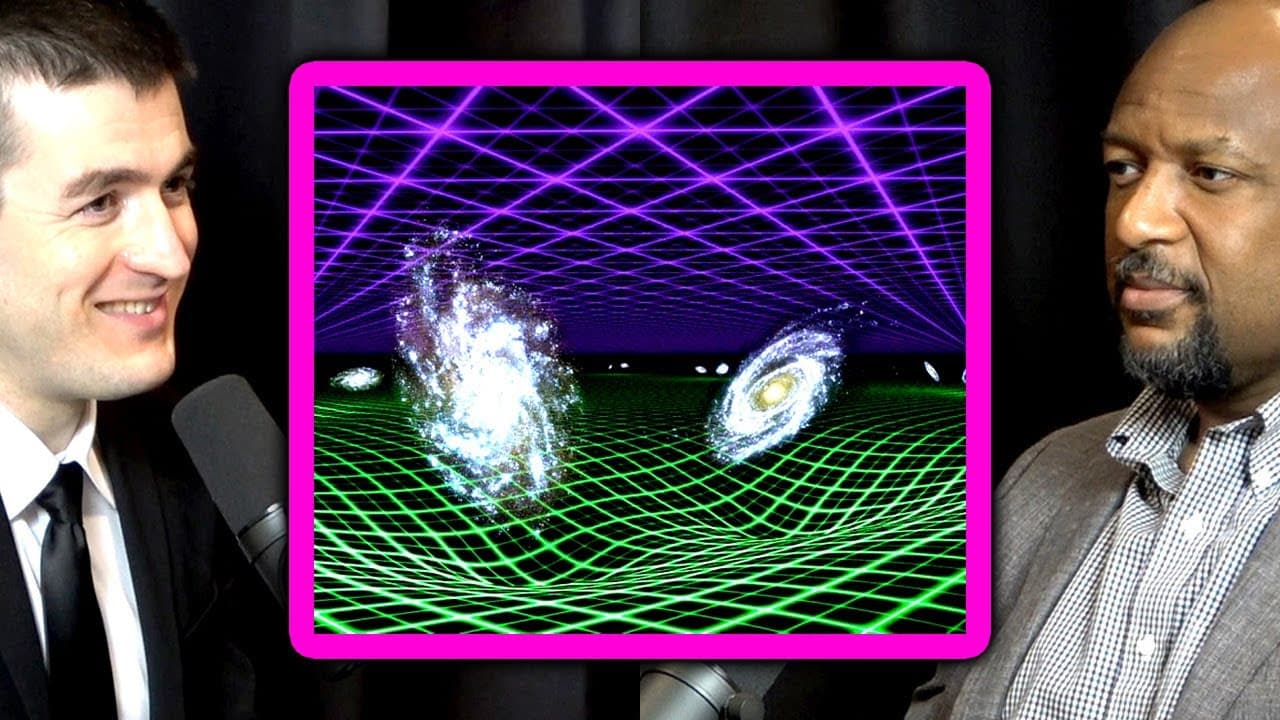
TL;DR
Computer scientist discusses the simulation hypothesis, virtual reality, and the potential impact on society in the future.
Transcript
you mentioned the matrix do you think we're living in a simulation it does feel like a thought game more than a real scientific question well i'll tell you why like i think it's an interesting thought experiment to see what you think from a computer science perspective it's a good experiment of how difficult would it be to create a sufficiently rea... Read More
Key Insights
- 🤔 The simulation hypothesis is seen as a thought experiment rather than a provable scientific theory.
- 🔇 The speaker considers the possibility of the universe itself being a simulation.
- 🔬 Virtual reality technology is advancing rapidly and may have significant impacts on society, including potential changes in the labor market.
- 🫥 Virtual reality can create immersive worlds that blur the line between reality and simulation.
- 🎮 Video games are becoming more realistic and have a growing influence on people's lives.
- 👯 The speaker suggests that the invention of the holodeck in Star Trek represents a potential singularity, where people may prefer to live in artificially created worlds rather than the physical one.
- 💄 Virtual reality has the potential to extend or alter human lifespan and decision-making processes.
Install to Summarize YouTube Videos and Get Transcripts
Explore YouTube Video Summarizer or Get YouTube Transcript Extractor
Questions & Answers
Q: Do you believe we are living in a simulation?
The speaker sees the simulation hypothesis as a thought experiment rather than a belief. They think it's interesting to explore the idea from a computer science perspective and consider the possibility of creating a sufficiently realistic world.
Q: Can the bugs in a simulation be perceived by its inhabitants?
According to the speaker, the bugs in a simulation would not be apparent to the people living in it unless they were somehow aware of the simulation's existence. The focus is on creating a world that feels real and immersive to its inhabitants.
Q: How does virtual reality impact our perception of reality?
Virtual reality has the potential to create worlds that feel real, pulling people in and making them forget about the physical world. The speaker suggests that the developing brain, especially when exposed to virtual reality early on, may have difficulty distinguishing between the virtual and physical worlds.
Q: Could virtual reality become the primary way of living in the future?
The speaker speculates that virtual reality may become a dominant form of existence in the future, potentially changing society fundamentally. They predict that in 100 years, people might predominantly live in a virtual world rather than the physical one.
Summary & Key Takeaways
-
The speaker believes the idea of living in a simulation is an interesting thought experiment rather than a scientific question.
-
They suggest that the universe itself could be seen as a simulation.
-
Virtual reality and video games are becoming increasingly realistic and may change society fundamentally in the future.
Read in Other Languages (beta)
Share This Summary 📚
Summarize YouTube Videos and Get Video Transcripts with 1-Click
Try YouTube Summary with ChatGPT & Claude or YouTube Transcript Generator
Explore More Summaries from Lex Clips 📚

Summarize YouTube Videos and Get Video Transcripts with 1-Click
Try YouTube Summary with ChatGPT & Claude or YouTube Transcript Generator