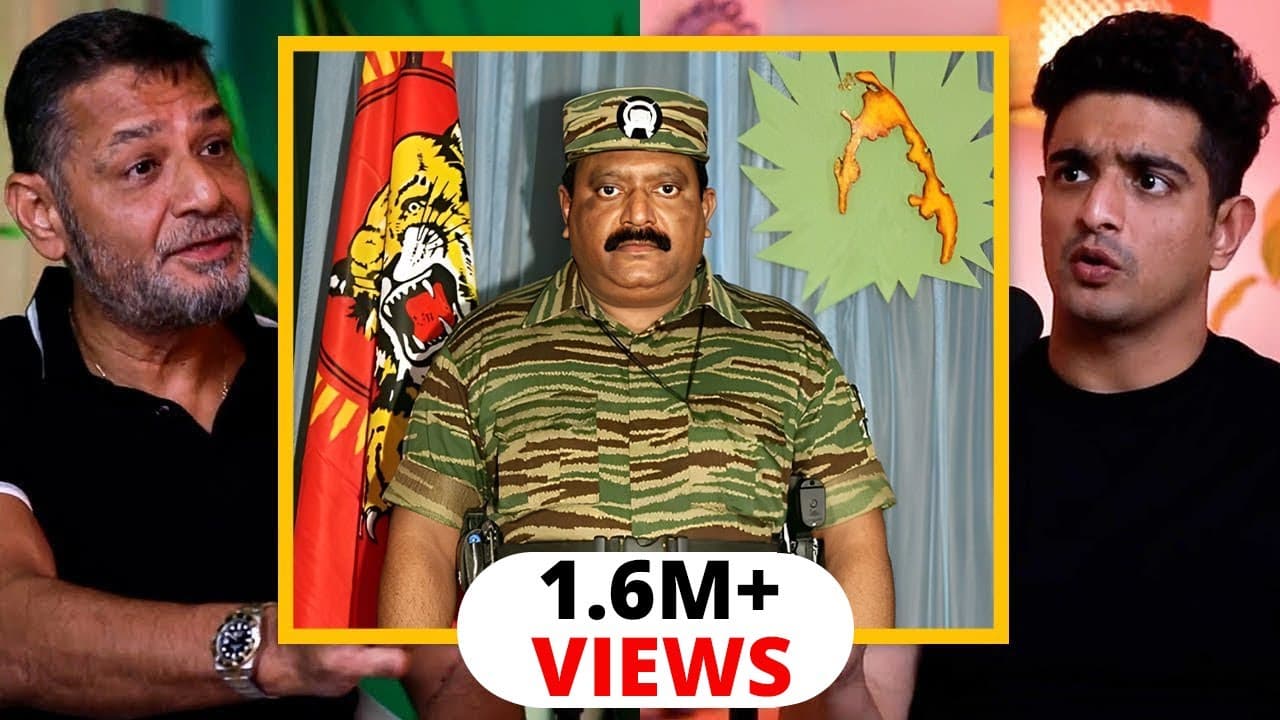
LTTE (Tamil Tigers) - Explained In 18 minutes by Indian Commando
TL;DR
The speaker shares experiences of challenging military operations in Sri Lanka and the mindset of Tamil Tigers.
Transcript
happiness through Curiosity on the ranveer show Welcome to TRS clips of Kashmir the Northeast and Sri Lanka which one I mean I don't even know how you can like gauge this but is it a fair question do you ask you which one was the most challenging oh of course it is I mean you can uh Sri Lanka really oh so and I can say it with complete confidence i... Read More
Key Insights
- 💄 The Tamil Tigers used guerrilla warfare strategies, making them challenging opponents for Indian forces unfamiliar with the terrain.
- 🇱🇰 Historical marginalized status of Tamils in Sri Lanka led to long-standing grievances and eventual conflict, necessitating intervention.
- 🎟️ The Indian peacekeeping mission was initially intended to restore order but quickly unraveled into a complex and violent engagement.
- 🧑🚒 Tamil fighters demonstrated extraordinary motivation, complicating the narrative of resistance against established military forces.
- 🎖️ Training locations were often hidden and exposed soldiers to fundamental military strategies, enhancing their combat effectiveness.
- 💍 Engaging in jungle warfare required immense psychological resilience and adaptability due to the evolving nature of conflicts.
- 👻 Funding from the Tamil diaspora allowed the Tamil Tigers to strengthen their military capabilities significantly.
Install to Summarize YouTube Videos and Get Transcripts
Explore YouTube Video Summarizer or Get YouTube Transcript Extractor
Questions & Answers
Q: What made the Sri Lankan conflict particularly challenging for Indian soldiers?
The conflict's challenges stemmed from unfamiliar terrain, guerrilla tactics employed by the Tamil Tigers, and a lack of preparation for the intensity of the conflict. Many Indian units faced heavy casualties, and soldiers had to constantly remain vigilant, as ambushes or attacks could occur without warning, creating a stressful combat environment.
Q: How did geopolitical factors influence the conflict between Tamils and the Sri Lankan government?
Geopolitically, the Tamils were historically marginalized in Sri Lanka, seen as second-class citizens, which fueled their resistance. India's involvement was initially to support the Tamils against oppression, but it complicated matters as the training provided led to fierce confrontations, highlighting how local grievances can escalate into larger geopolitical issues.
Q: What insights did the speaker share about the mindset of the Tamil fighters?
The speaker described the Tamil fighters as highly motivated, imbued with a strong sense of purpose derived from their struggle for recognition and rights. Their motivation played a crucial role in their combat effectiveness, as trained soldiers fighting on familiar terrain often perform better than untrained forces.
Q: What role did the training of Tamil fighters play in the conflict?
The training of Tamil fighters was significant, as they received rigorous military instruction from Indian Army personnel, which helped them become effective guerrilla fighters. This training included not only weapon handling but also tactics suited for traumas, making them a formidable force against the Indian peacekeeping operations.
Q: Can you explain the emotional toll of combat as described by the speaker?
The speaker illustrated the intense psychological strain during combat, where heightened senses and constant alertness were necessary for survival. The unpredictability of ambushes and the fear of sudden death impacted mental health, making it essential for soldiers to maintain focus amid chaos and uncertainty.
Q: How did the conflict escalate after the Indian peacekeeping force was deployed?
The situation escalated rapidly when the LTT's leadership was captured, leading to significant retaliatory actions. After a peace agreement was violated, the conflict intensified as troops were drawn into deeper engagements with a well-trained and elusive enemy, leading to fierce jungle warfare.
Q: What was the significance of Tamil diaspora funding for the Tamil Tigers?
The Tamil diaspora played a crucial role in sustaining the Tamil Tigers through financial support, helping them procure arms and maintain operations. This global backing showcased the widespread sympathy for their cause and highlighted the international dimensions of localized conflicts.
Q: What did the speaker mean by the concept of “motivation” in combat scenarios?
Motivation in combat refers to a soldier's psychological readiness and determination to engage in battle, which significantly influences their performance. The speaker emphasized that motivated soldiers are likely to take calculated risks and perform effectively, while those lacking motivation may hesitate and hold back, impacting their effectiveness in combat.
Summary & Key Takeaways
-
The discussion focuses on the unique difficulties faced by Indian soldiers during the Sri Lanka campaign, particularly against the Tamil Tigers, who employed guerrilla warfare tactics and motivated fighters.
-
The geopolitical background of the conflict is explored, emphasizing the historical treatment of Tamils in Sri Lanka and India's complicated involvement, which led to a peacekeeping force being sent in.
-
Personal anecdotes highlight the intensity of jungle warfare, the unpredictability of operations, and the impactful training Tamil fighters received, making them formidable opponents in their terrain.
Read in Other Languages (beta)
Share This Summary 📚
Summarize YouTube Videos and Get Video Transcripts with 1-Click
Try YouTube Summary with ChatGPT & Claude or YouTube Transcript Generator
Explore More Summaries from TRS Clips 📚





Summarize YouTube Videos and Get Video Transcripts with 1-Click
Try YouTube Summary with ChatGPT & Claude or YouTube Transcript Generator