What Are the Leading Theories on Life's Origin?
TL;DR
The origin of life on Earth remains a mystery, with leading theories proposing that it arose from primordial soup, RNA-based life forms, or even as fully formed organisms. Experiments have shown that while amino acids can be created under certain conditions, no definitive answer has been found regarding whether cells, metabolism, or genetics came first in life's evolution.
Transcript
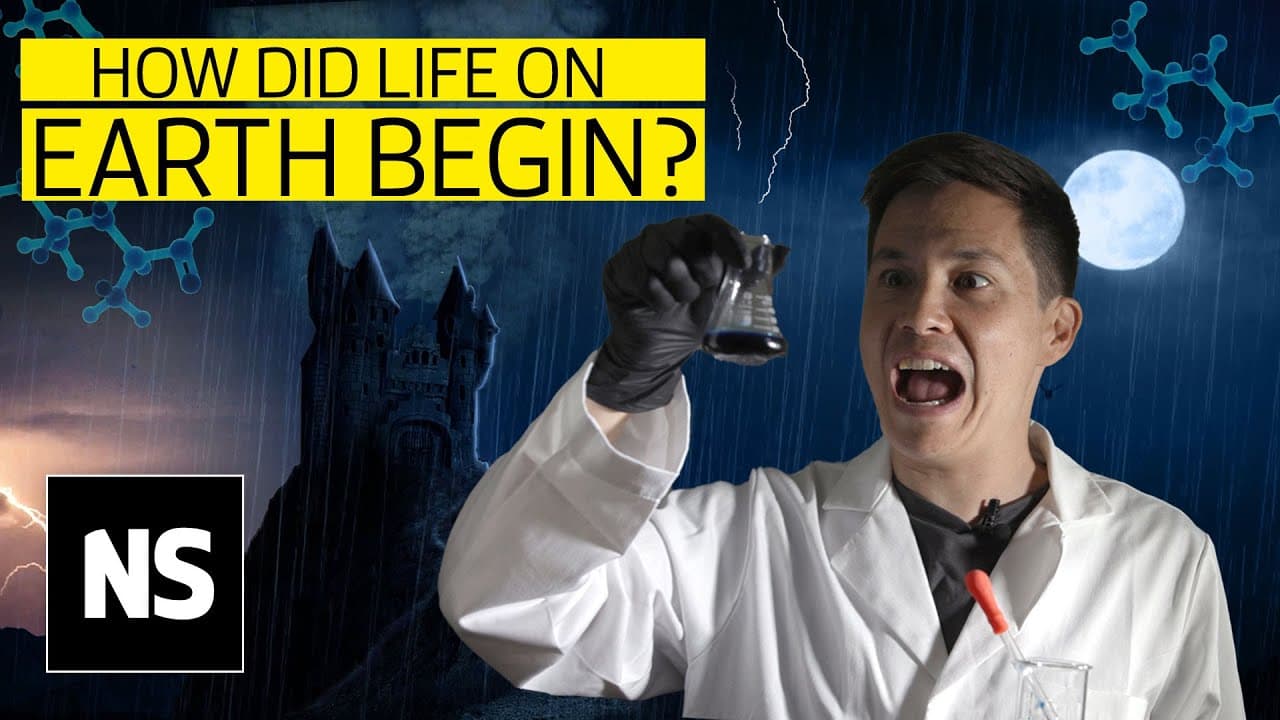
ah how you meant to do it in 1953 a graduate student named stanley miller mixed four simple chemicals methane ammonia hydrogen and water heated them up and shot them with electricity to mimic lightning he hoped the results would be the key to unlocking the origins of life but almost 70 years on from the experiment we still don't have the answer fig... Read More
Key Insights
- 💁 DNA and proteins likely came after RNA in early life forms' evolution.
- 😥 Various theories propose different starting points for life, from chemical reactions to metabolisms.
- 🙂 Lab experiments have shed light on the components needed for life but have not yet fully recreated its emergence.
- 🛟 Metabolism might have preceded cells and genetics in the evolution of life.
- 💪 RNA's versatility makes it a strong contender for early life forms' building blocks.
- 👨🔬 The mystery of life's origins continues to challenge scientists despite decades of research.
- 💁 The possibility of life arising fully formed with all components in place remains a subject of debate.
Install to Summarize YouTube Videos and Get Transcripts
Explore YouTube Video Summarizer or Get YouTube Transcript Extractor
Questions & Answers
Q: What was Stanley Miller's experiment, and what did it aim to achieve?
Stanley Miller's 1953 experiment mixed simple chemicals and electricity to simulate conditions for life's origin, resulting in the production of amino acids but not life itself.
Q: Why is RNA considered a strong candidate for early life forms?
RNA, with its ability to fold and act as both information carrier and enzyme, is more versatile than DNA and proteins, leading scientists to speculate it played a crucial role in early life.
Q: What are the different theories proposed for the origin of life?
Theories range from primordial soup, oil droplets acting as primitive cells, to metabolism-first approaches at hydrothermal vents, reflecting the complexity and mystery surrounding life's origins.
Q: How have experiments in lab settings influenced our understanding of life's beginnings?
While experiments have yielded insights into the components necessary for life, none have fully replicated the emergence of life, leaving researchers still grappling with unanswered questions.
Summary & Key Takeaways
-
Stanley Miller's 1953 experiment aimed to recreate conditions for life's origin, producing amino acids.
-
RNA likely played a role in early life forms due to its versatility compared to DNA and proteins.
-
The chicken-and-egg debate persists on whether cells, metabolism, or genetics came first in life's evolution.
Read in Other Languages (beta)
Share This Summary 📚
Summarize YouTube Videos and Get Video Transcripts with 1-Click
Try YouTube Summary with ChatGPT & Claude or YouTube Transcript Generator
Explore More Summaries from New Scientist 📚


Summarize YouTube Videos and Get Video Transcripts with 1-Click
Try YouTube Summary with ChatGPT & Claude or YouTube Transcript Generator