How to Use Try Except Else in Python Programming
TL;DR
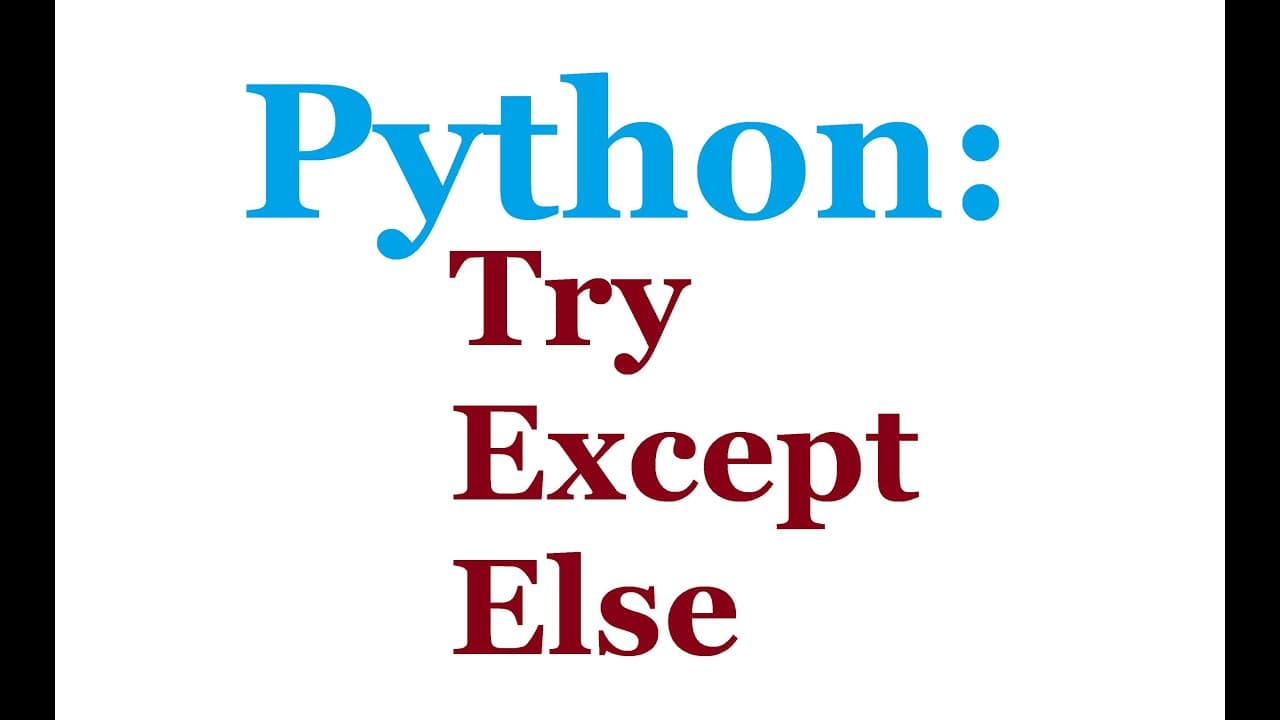
The try except else statement in Python runs the else block only when no exceptions occur in the try block. If an exception is raised, it skips the else block and moves to the except block for error handling. This structure improves code efficiency and clarity by avoiding duplicated code in exception handling.
Transcript
what's up everybody welcome to another Python tutorial video in this video I'm going to be showing you guys the try accept else which is best thought of as the quote unquote except else because if the accept is not triggered the else will run you can think of the accept else as if it is the if else where except um well well where if is except and e... Read More
Key Insights
- 🍵 The try accept else statement is an easy way to handle exceptions in Python code execution without the need for break statements.
- 🚫 The else block runs only if the try block does not encounter any exceptions, providing additional functionality.
- 👨💻 Using the try accept else statement allows for cleaner and more efficient code in certain situations, preventing duplicate code.
- 👨💻 The try accept else statement can be combined with other statements like finally to ensure specific code runs regardless of exception or success.
- 💐 It is essential to understand the order of execution in the try accept else statement and how it differs from other control flow statements in Python.
- 🤝 The try accept else statement provides flexibility in dealing with errors and executing alternative code paths.
- 👨💻 Double code can be avoided by utilizing the try accept else statement in scenarios where variable manipulation is involved.
Install to Summarize YouTube Videos and Get Transcripts
Explore YouTube Video Summarizer or Get YouTube Transcript Extractor
Questions & Answers
Q: What is the purpose of the try accept else statement in Python?
The try accept else statement is used to handle exceptions in Python code execution. It allows you to try a block of code and provides an alternative execution path if an exception occurs.
Q: Can the else block run if the except block is triggered?
No, the else block will only run if the try block executes successfully without any exceptions. If an exception occurs and the except block is triggered, the else block is skipped.
Q: What happens if a break statement is used within the try accept else statement?
Using a break statement within the try accept else statement will result in a syntax error. Unlike the while/for else statements, the try accept else statement does not require a break statement.
Q: How can the try accept else statement be used to manipulate variables?
By using the try accept else statement with variable manipulation, you can attempt one approach within the try block. If it fails, you can handle the exception in the except block and then proceed with an alternative solution in the else block.
Summary & Key Takeaways
-
The try accept else statement in Python is similar to an if-else statement, but it executes the else block only if the except block is not triggered.
-
If the try block encounters an exception, it will not execute the else block, and the code will move to the except block for error handling.
-
The else block will run only when there is no exception, providing additional functionality to handle situations where the try block is successful.
Read in Other Languages (beta)
Share This Summary 📚
Summarize YouTube Videos and Get Video Transcripts with 1-Click
Try YouTube Summary with ChatGPT & Claude or YouTube Transcript Generator
Explore More Summaries from sentdex 📚

Summarize YouTube Videos and Get Video Transcripts with 1-Click
Try YouTube Summary with ChatGPT & Claude or YouTube Transcript Generator