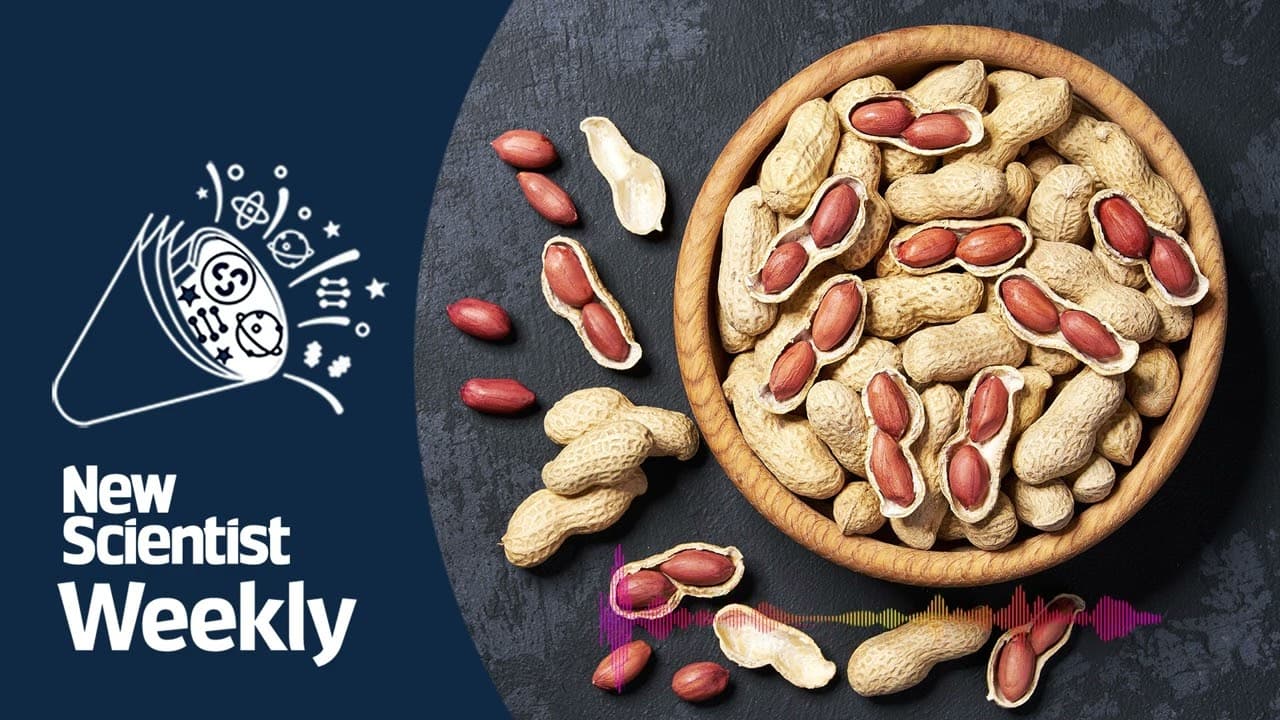
Treating food allergies with butyrate | New Scientist Weekly podcast, episode 133
TL;DR
- Breakthrough in food allergies treatment using gut bacteria-derived molecule, potential earthquake prediction improvements, and advancements in boosting crop photosynthesis on Europa's moon.
Transcript
it's summer sale time we're giving podcast listeners an amazing 50 off an annual subscription to new scientist it's an incredible deal you can get unlimited access to all the articles on newscientist.com for under 50 pounds in the uk or 50 in the u.s go to newscientist.com pod50 to get this bargain hello and welcome to new scientist weekly i'm penn... Read More
Key Insights
- 😋 Butyrate in micelles shows promise in treating food allergies by improving gut bacteria balance.
- 🫨 Machine learning models offer advancements in earthquake prediction accuracy akin to weather forecasting.
- 🥺 Enhancing crop photosynthesis can lead to increased yields with environmental benefits in agriculture.
- 🥶 Frazzle ice on Europa hints at potentially habitable environments that could support life.
- 🪘 Long-termism philosophy emphasizes preparing for future scenarios and addressing existential risks.
- 🎙️ Genetically modified crops offer solutions for improving farming efficiency and sustainability.
- 🌍 Europa Clipper mission aims to explore potential for life on Europa's ocean world.
Install to Summarize YouTube Videos and Get Transcripts
Explore YouTube Video Summarizer or Get YouTube Transcript Extractor
Questions & Answers
Q: Can butyrate effectively treat food allergies?
Butyrate packaged in micelles has shown promise in reducing allergic reactions in mice, offering a potential treatment for food allergies.
Q: How accurate are earthquake predictions using machine learning models?
Machine learning models have shown a prediction skill score of 0.708, indicating significant improvement over random chance, allowing for more accurate earthquake predictions.
Q: What are the environmental benefits of enhancing crop photosynthesis?
Improving crop photosynthesis can lead to increased yields, reducing the need for additional land use in farming and mitigating greenhouse gas emissions associated with agriculture.
Q: How does frazzle ice on Europa's moon relate to the potential for life?
The discovery of frazzle ice under the ice shell of Europa suggests unique environments that could support life, similar to habitats where basic life forms have been found in Antarctica.
Summary & Key Takeaways
-
Researchers explore using a gut bacteria-derived molecule, butyrate, packaged in micelles to reduce allergic reactions in mice with promising results.
-
Scientists develop a machine learning model to predict earthquakes, offering new possibilities in earthquake forecasting.
-
Advancements in soy crop photosynthesis through genetic modifications increase yields and offer environmental benefits, addressing issues of land use and greenhouse gas emissions in farming.
Read in Other Languages (beta)
Share This Summary 📚
Summarize YouTube Videos and Get Video Transcripts with 1-Click
Try YouTube Summary with ChatGPT & Claude or YouTube Transcript Generator
Explore More Summaries from New Scientist weekly podcast 📚


Summarize YouTube Videos and Get Video Transcripts with 1-Click
Try YouTube Summary with ChatGPT & Claude or YouTube Transcript Generator