Animal Eyes - Professor William Ayliffe

TL;DR
This comprehensive analysis explores the fascinating world of animal vision, discussing various types of eyes and their unique capabilities.
Transcript
we are this evening going to discuss Animalize and I'm often asked this question what does my dog see what does the fly see or a honey bee for that matter and it's an interesting and perplexing question that has exercised the minds of many many intelligent people in the field of optometry vision science and a lot of new research and data has come o... Read More
Key Insights
- 😃 Animals have evolved a remarkable array of eyes, each uniquely adapted to their specific environment and lifestyle.
- 😃 Compound eyes are excellent for detecting motion and shadows, whereas camera-like eyes provide higher acuity and color vision.
- 🙂 Insects and deep-sea creatures have developed ingenious ways of using light, such as counter illumination, to camouflage or attract prey.
- 😃 Birds have superior visual acuity, thanks to larger eyes and specialized adaptations for color vision and detecting subtle movements.
- 📺 Dogs have different color vision than humans, but they compensate with superior night vision and wider visual perception.
Install to Summarize YouTube Videos and Get Transcripts
Explore YouTube Video Summarizer or Get YouTube Transcript Extractor
Questions & Answers
Q: How do compound eyes differ from camera-like eyes?
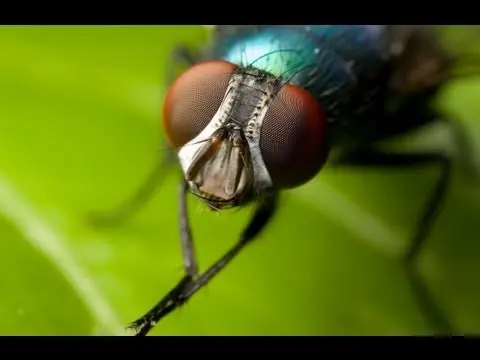
Compound eyes, found in insects, are made up of many individual ommatidia, each containing its own receptor. These eyes are excellent at detecting motion and shadows. Camera-like eyes, on the other hand, have a single lens that focuses light onto the retina, enabling higher resolution and more detailed vision.
Q: What special adaptations do deep-sea creatures have to survive in low light conditions?
Deep-sea creatures have evolved a variety of adaptations to thrive in the darkness. Some have tubular eyes that point upward to detect prey silhouettes against the dim background, while others use counter illumination, lining their bodies with bioluminescent animals to blend in with the faint light from above.
Q: How do birds, such as kestrels, have better visual acuity than humans?
Birds, like kestrels, have larger eyes relative to their body size, allowing for more light to enter the eye and improving their visual acuity. Additionally, birds have oil droplets in their cones that enhance color vision and can detect finer details and faster movements than humans.
Q: Can dogs see color?
Dogs have some color vision but not as extensive as humans. They have fewer cones in their eyes, making it more challenging to differentiate between red and green hues. However, they have better night vision, flicker fusion, and a wider field of view than humans.
Summary & Key Takeaways
-
Animal vision has long intrigued scientists, who have studied the many types of eyes found in different species, ranging from insects to mammals.
-
Compound eyes, such as those of flies and bees, are made up of multiple facets and have different types of receptors. They excel in detecting motion and shadows.
-
Other animals, like fish and cephalopods, have evolved camera-like eyes with lenses that can focus light onto the retina, enabling higher acuity and color vision.
Read in Other Languages (beta)
Share This Summary 📚
Summarize YouTube Videos and Get Video Transcripts with 1-Click
Try YouTube Summary with ChatGPT & Claude or YouTube Transcript Generator
Explore More Summaries from Gresham College 📚
Summarize YouTube Videos and Get Video Transcripts with 1-Click
Try YouTube Summary with ChatGPT & Claude or YouTube Transcript Generator