How Can Two Dads Create Life Using Stem Cells?
TL;DR
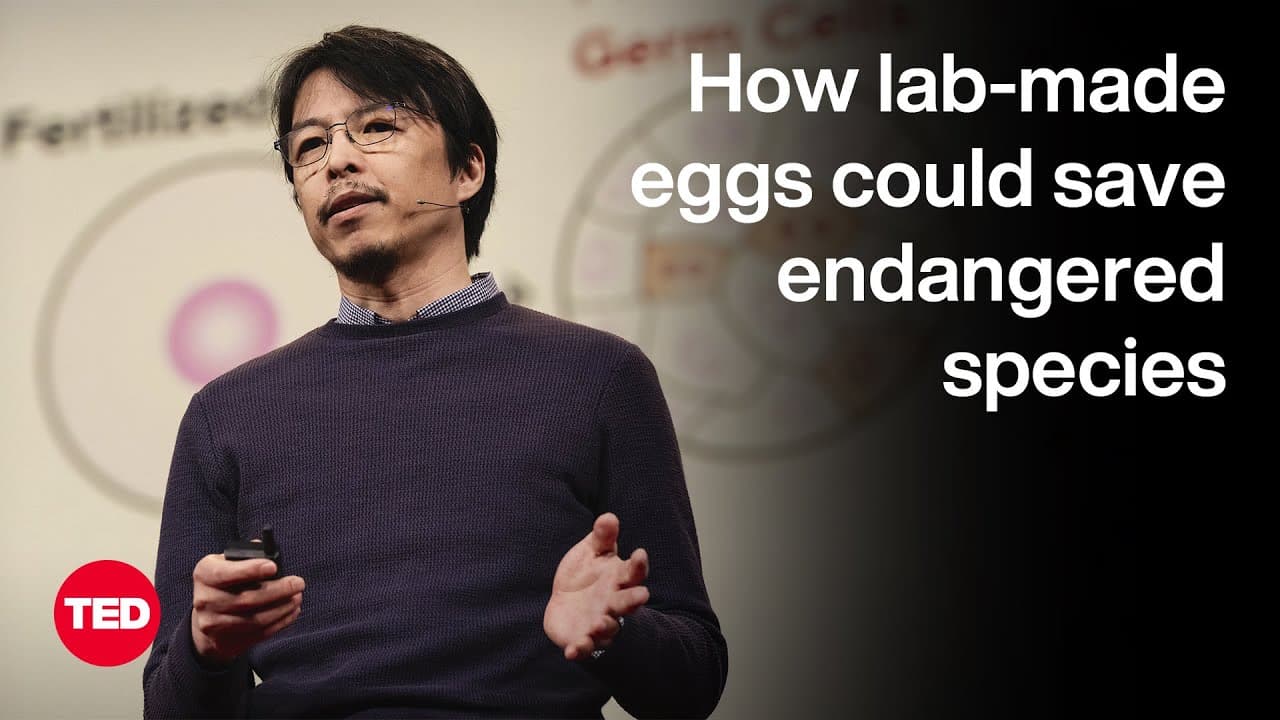
Research shows that it's possible to create viable gametes in a dish from pluripotent stem cells, allowing for the possibility of reproduction from two male parents. This groundbreaking technology opens new avenues for fertility treatments in humans and helps preserve endangered species by generating gametes from diverse sources.
Transcript
it is my great pleasure to be here to share some news from biology today with you so your life and mine start with this the union of spam and egg the fertilization involves spam from the father and egg from the mother they meet in usual way and parze the Egg acquire the potential to give rise to the individuals like you and me if you trust back you... Read More
Key Insights
- 🧭 Germ cell lineage is essential for human reproduction, ensuring genetic material is passed through generations.
- ☠️ Current reproductive challenges stem from delayed parenthood and declining fertility rates across populations.
- ❓ Assisted reproductive technologies have evolved significantly since IVF was first introduced, now exploring complex methodologies.
- 🪺 Pluripotent stem cells can be harnessed to generate viable sperm and eggs, enabling reproduction beyond conventional means.
- 🥺 Lab-created gametes have been successfully fertilized, leading to healthy offspring in experimental settings.
- 🥹 The technology holds promise for preserving endangered species by creating viable gametes for breeding programs.
- 👻 Future applications may allow reproduction from same-sex pairs, potentially transforming legal and social concepts of family.
Install to Summarize YouTube Videos and Get Transcripts
Explore YouTube Video Summarizer or Get YouTube Transcript Extractor
Questions & Answers
Q: What is the significance of germ cell lineage in human reproduction?
Germ cell lineage is crucial as it represents the biological continuity from parents to offspring. These germ cells are the only immotile cells that can perpetuate human genetic material through generations, making them essential for successful fertilization and reproduction. The decline in viable germ cells poses risks to fertility.
Q: How has assisted reproductive technology evolved since its inception?
Since the first successful IVF procedure led by Robert Edwards, assisted reproductive technologies have facilitated the birth of over 12 million babies. While initially focused on helping couples conceive using their gametes, researchers are now investigating more complex methods, including creating gametes from pluripotent stem cells, to address various reproductive challenges.
Q: What role do pluripotent stem cells play in generating gametes?
Pluripotent stem cells have the unique ability to differentiate into various cell types in the body, including gametes. By directing these stem cells with specific signals, researchers can induce them to develop into mature sperm and eggs, expanding the potential sources for reproduction beyond traditional means.
Q: Can gametes generated in the lab be viable for fertilization?
Yes, the lab-generated gametes have been tested successfully for fertilization. In experiments, mature eggs derived from pluripotent stem cells were fertilized and resulted in healthy mice, indicating that these lab-created gametes can function equivalently to those produced in vivo.
Q: How might this research impact endangered species?
The ability to generate gametes from pluripotent stem cells could be transformative for endangered species with dwindling populations, such as the northern white rhino. By creating viable eggs and sperm, researchers could potentially aid in breeding efforts to prevent extinction and preserve genetic diversity.
Q: What are the future implications of being able to create gametes from same-sex pairs?
This breakthrough could drastically change reproductive possibilities, allowing for biological reproduction from same-sex couples or individuals. In the future, it may be possible to create offspring from diverse genetic combinations, enhancing reproductive choices and addressing infertility across various demographics.
Q: How does the technology challenge traditional notions of reproduction?
The advancement in producing gametes from pluripotent stem cells challenges existing paradigms of sexual reproduction, suggesting that genetic contribution can come from varied combinations of individuals, potentially redefining family structures and societal norms around parenthood.
Summary & Key Takeaways
-
The talk outlines how the fusion of sperm and egg leads to human development, emphasizing the importance of germ cell lineage that is at risk due to declining fertility rates.
-
Assisted reproductive technologies, such as in vitro fertilization (IVF), have made significant progress, yet there remains a challenge in producing viable gametes from diverse sources.
-
Researchers are exploring the potential of using pluripotent stem cells to generate gametes in vitro, which could be applied to humans, livestock, and endangered species.
Read in Other Languages (beta)
Share This Summary 📚
Summarize YouTube Videos and Get Video Transcripts with 1-Click
Try YouTube Summary with ChatGPT & Claude or YouTube Transcript Generator
Explore More Summaries from TED 📚






Summarize YouTube Videos and Get Video Transcripts with 1-Click
Try YouTube Summary with ChatGPT & Claude or YouTube Transcript Generator