How to Calculate Angular Velocity and Linear Speed
TL;DR
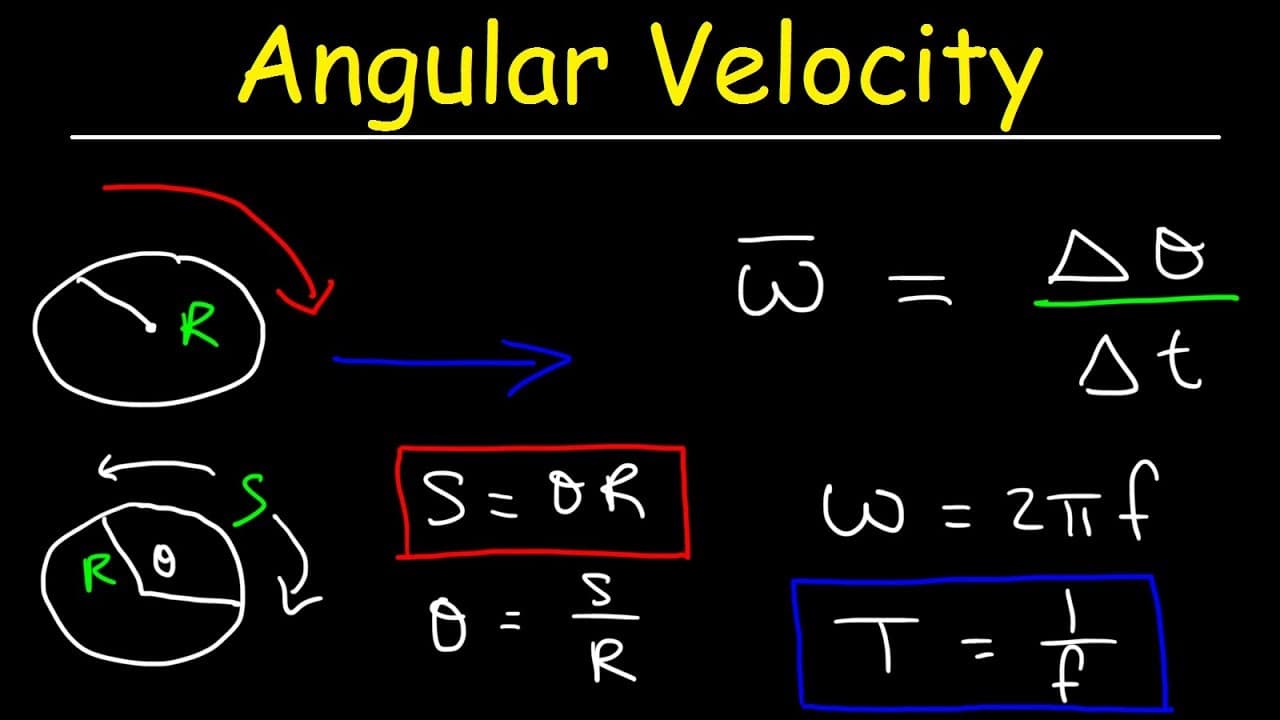
To calculate angular velocity, use the formula Omega = 2πF, where F is frequency in Hertz. Linear speed can be found by multiplying the angular speed (Omega) by the radius of the object in meters. Understanding the relationship between frequency, period, angular velocity, and linear speed is crucial for solving physics problems related to rotation.
Transcript
in this tutorial we're going to go over physics problems associated with angular speed and angular velocity so let's start with this one the frequency of a spinning will is 30 Hertz if the diameter of the world is 50 centimeters what is the angular speed of the wheel in radians per second so what equation do we need to calculate the anguish speed t... Read More
Key Insights
- 📐 The equation for angular speed and angular velocity is Omega = 2πF, where Omega represents angular speed and F represents frequency.
- 🏍️ Frequency represents the number of cycles or revolutions per unit time, such as Hertz.
- 🥡 Period is the reciprocal of frequency and represents the time it takes to complete one revolution or cycle.
- 🐎 Linear speed can be calculated by multiplying the angular speed by the radius of the rotating object.
Install to Summarize YouTube Videos and Get Transcripts
Explore YouTube Video Summarizer or Get YouTube Transcript Extractor
Questions & Answers
Q: How can angular speed and angular velocity be calculated for a spinning wheel?
Angular speed can be calculated by multiplying the frequency (given in Hertz) by 2π. Angular velocity can also be calculated using the same equation. For example, if the frequency is 30 Hertz, the angular speed would be 60π radians per second.
Q: What is the difference between period and frequency?
Period represents the time it takes for a wheel to complete one revolution or cycle, while frequency indicates the number of cycles that occur in one second. The period is the reciprocal of frequency, so if the frequency is 30 Hertz, the period would be 1/30 seconds.
Q: How can linear speed be determined for a rotating wheel?
Linear speed can be calculated using the equation V = ω * R, where V is the linear speed, ω is the angular speed or velocity in radians per second, and R is the radius of the wheel in meters. Simply multiply the angular speed by the radius to obtain the linear speed.
Q: How can angular velocity be converted from radians per second to rotations per minute?
To convert angular velocity from radians per second to rotations per minute, divide the value in radians per second by 2π and then multiply by 60. For example, an angular velocity of 8.33 radians per second would be equivalent to 79.5 rotations per minute.
Summary & Key Takeaways
-
The tutorial begins by explaining the equation for angular speed and angular velocity, using the example of a spinning wheel with a given frequency and diameter to calculate the angular speed in radians per second.
-
It then defines and differentiates between period and frequency, explaining how they relate to the time it takes for a wheel to make one revolution or cycle.
-
Next, the tutorial shows how to calculate linear speed by multiplying the angular speed with the radius of a rotating wheel in meters.
-
It concludes by discussing how to convert angular velocity from radians per second to rotations per minute and linear speed from revolutions per minute to miles per hour.
Read in Other Languages (beta)
Share This Summary 📚
Summarize YouTube Videos and Get Video Transcripts with 1-Click
Try YouTube Summary with ChatGPT & Claude or YouTube Transcript Generator
Explore More Summaries from The Organic Chemistry Tutor 📚



Summarize YouTube Videos and Get Video Transcripts with 1-Click
Try YouTube Summary with ChatGPT & Claude or YouTube Transcript Generator