From Alan Turing to GPT-3: The Evolution of Computer Speech | Otherwords
TL;DR
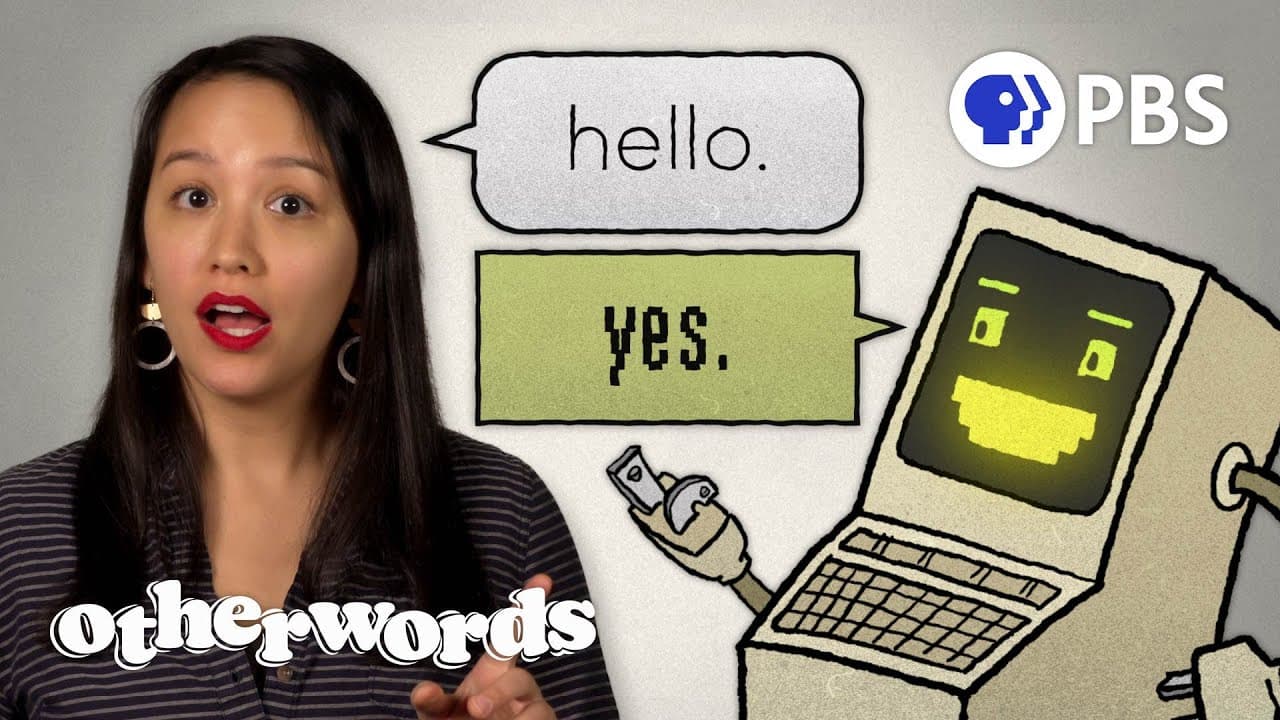
Natural language processing has evolved from early chatbots like ELIZA to sophisticated models like GPT-3, but true human-like understanding is still a challenge.
Transcript
In the mid-1960s a computer scientist named Joseph Weisenbaum created one of the first natural language processing programs, called ELIZA. The user would type conversational sentences and get responses in return--a system that today we might call a "chatbot," like the ones you find on customer support websites. ELIZA used simple pattern m... Read More
Key Insights
- ❓ ELIZA and SHRDLU were early attempts at natural language processing but had limitations in understanding and contextual comprehension.
- 👨💻 Symbolic language processing, that involved manually coding grammar rules, was challenging due to complex variable grammar, contextual knowledge, and exceptions.
- ⚾ Statistical language processing, involving analyzing patterns and making educated guesses based on probabilities, revolutionized language processing.
- 🍂 GPT-3, a highly advanced natural language processor, utilizes an enormous corpus to predict tokens and demonstrates potential but still falls short of passing the Turing Test.
- 🖤 Humans learn language by grasping word categories, while GPT-3 focuses on predicting token sequences, lacking the distinction between form and content.
Install to Summarize YouTube Videos and Get Transcripts
Explore YouTube Video Summarizer or Get YouTube Transcript Extractor
Questions & Answers
Q: What is ELIZA and what was its purpose?
ELIZA was one of the first natural language processing programs, designed as a chatbot to demonstrate the limited language skills of computers. Users believed ELIZA understood them, despite using simple pattern matching and substitution techniques.
Q: How did SHRDLU attempt to improve language processing?
SHRDLU aimed to understand simple objects and actions, enabling users to instruct it to rearrange virtual objects and verify its understanding through questions. However, broad grammar rules and contextual knowledge posed challenges.
Q: What led to the shift towards statistical language processing?
The complexity of manually coding grammar rules and contextual knowledge led to the development of algorithms that analyzed large bodies of text and made guesses based on statistical probabilities. This approach, seen in Siri and predictive text, proved more efficient.
Q: How does GPT-3 differ from previous natural language processors?
Unlike most AI systems designed for specific tasks, GPT-3 provides a general-purpose text in, text out interface. It can be applied to various English language tasks, showing versatility in summarizing legal documents, for example.
Key Insights:
- ELIZA and SHRDLU were early attempts at natural language processing but had limitations in understanding and contextual comprehension.
- Symbolic language processing, that involved manually coding grammar rules, was challenging due to complex variable grammar, contextual knowledge, and exceptions.
- Statistical language processing, involving analyzing patterns and making educated guesses based on probabilities, revolutionized language processing.
- GPT-3, a highly advanced natural language processor, utilizes an enormous corpus to predict tokens and demonstrates potential but still falls short of passing the Turing Test.
- Humans learn language by grasping word categories, while GPT-3 focuses on predicting token sequences, lacking the distinction between form and content.
- GPT-3 is a powerful tool for generating human-like text but relies on human input and lacks the ability to generate original thoughts behind the words.
Summary & Key Takeaways
-
In the mid-1960s, a computer scientist named Joseph Weisenbaum created ELIZA, a chatbot that used pattern matching to respond to user inputs, revealing the illusion of comprehension.
-
Terry Winograd developed SHRDLU, a natural language processor that aimed to understand objects and actions, but the complexity of grammar and contextual understanding posed challenges.
-
Programming rules of English grammar proved difficult, leading to a shift towards statistical language processing, which involved analyzing text patterns and making guesses based on probabilities.
Read in Other Languages (beta)
Share This Summary 📚
Summarize YouTube Videos and Get Video Transcripts with 1-Click
Try YouTube Summary with ChatGPT & Claude or YouTube Transcript Generator
Explore More Summaries from Storied 📚


Summarize YouTube Videos and Get Video Transcripts with 1-Click
Try YouTube Summary with ChatGPT & Claude or YouTube Transcript Generator