How to Build and Price SaaS Products Effectively
TL;DR
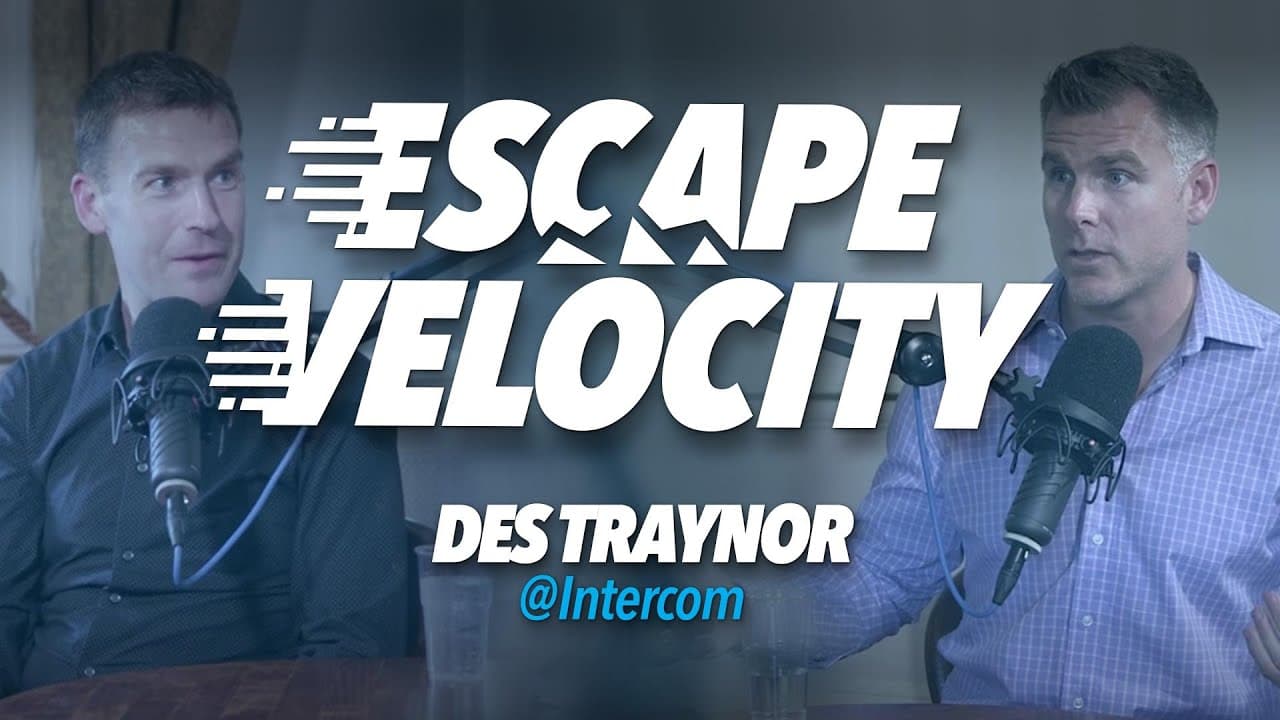
Des Traynor, Intercom's co-founder, shares insights on building and pricing SaaS products. He emphasizes the importance of understanding customer needs, iterating on pricing strategies, and maintaining product innovation. Traynor also highlights the significance of personal discipline and health in sustaining leadership effectiveness.
Transcript
you can easily blame your company for a lot as well but oftentimes you just did not want to get off off the couch or you just like beers too much dez trainer thanks for coming on thank you for having me dude the man the myth the legend uh intercoms people have never heard yeah founder uh product so now you're chief solution officer strategy officer... Read More
Key Insights
- Intercom evolved from solving its own problem of customer communication to becoming a major SaaS player.
- Pricing strategies should evolve with customer understanding and market demands.
- Product development should balance between innovation and meeting existing customer needs.
- Effective product teams require strong collaboration between product managers, designers, and engineers.
- Listening to customer feedback is crucial for product and pricing decisions.
- Personal discipline and health significantly impact leadership and business success.
- Competition often influences companies to make reactive decisions that may not align with their strategy.
- Systematic processes are essential for maintaining efficiency and throughput in growing organizations.
Install to Summarize YouTube Videos and Get Transcripts
Explore YouTube Video Summarizer or Get YouTube Transcript Extractor
Questions & Answers
Q: How did Intercom evolve its product and pricing strategy?
Intercom's evolution involved identifying distinct customer segments such as support, marketing, and sales, each with unique needs. This led to diversifying their product offerings and adjusting pricing strategies to cater to these segments. By conducting deep customer research, Intercom realized the need for tailored solutions and pricing models, allowing customers to purchase specific features without adopting the entire product suite.
Q: What is the role of collaboration in product development at Intercom?
Collaboration at Intercom involves a triad of product managers, designers, and engineers working closely together. Product managers articulate the problem, designers propose solutions, and engineers bring these solutions to life. This collaborative approach ensures that product decisions are well-informed, feasible, and aligned with customer needs, fostering effective product development and innovation.
Q: How does Des Traynor view competition in the SaaS space?
Des Traynor advises caution against reactionary decisions based on competitors' actions. He emphasizes focusing on customer feedback and internal metrics to guide product and pricing strategies. Traynor believes that the real threat from competition often lies in how it influences a company to deviate from its core strategy, rather than the competitors themselves.
Q: What are the key components of maintaining organizational efficiency?
Maintaining efficiency involves designing systematic processes to handle inputs and outputs across teams. This includes clear communication channels, effective feedback loops, and streamlined decision-making processes. Intercom constantly evaluates these systems to ensure they facilitate, rather than hinder, productivity and throughput, adapting as the organization scales.
Q: How important is personal discipline for leaders, according to Des Traynor?
Des Traynor highlights the significant impact of personal discipline on leadership effectiveness. He shares his journey of improving health and fitness, which has enhanced his energy levels, decision-making, and overall leadership capabilities. Traynor encourages founders to prioritize their well-being, recognizing it as a crucial factor in sustaining business success and personal growth.
Q: What challenges did Intercom face in its early development stages?
In its early stages, Intercom faced challenges such as understanding diverse customer needs and developing a product that could cater to different segments. The company also grappled with establishing effective pricing strategies and ensuring its product offerings were clear and accessible to various buyers. Iterative learning and customer feedback were pivotal in overcoming these challenges.
Q: How does Intercom balance innovation with meeting existing customer needs?
Intercom balances innovation and existing customer needs by segmenting product teams to focus on both areas. While some teams address immediate customer requests and market demands, others explore new solutions and innovations. This approach ensures that Intercom continues to evolve its product offerings while maintaining alignment with customer expectations and industry trends.
Q: What personal changes did Des Traynor undergo to improve his leadership?
Des Traynor underwent significant personal changes, focusing on health and discipline to enhance his leadership. This included adopting a healthier lifestyle, engaging in regular exercise, and maintaining a balanced diet. These changes have improved his energy, clarity, and problem-solving abilities, enabling him to lead Intercom more effectively and sustainably.
Summary & Key Takeaways
-
Des Traynor discusses the evolution of Intercom, highlighting the importance of understanding customer needs and iterating on pricing strategies. He emphasizes the balance between innovation and addressing existing customer requirements, and the role of effective collaboration among product teams. Traynor also shares personal insights on maintaining discipline and health to enhance leadership capabilities.
-
The conversation delves into how Intercom identified different customer segments and adjusted its pricing and product offerings accordingly. Traynor stresses the importance of listening to customer feedback and avoiding reactionary decisions based on competitors' actions. He also discusses the role of systematic processes in maintaining organizational efficiency.
-
Traynor reflects on his personal journey towards better health and discipline, noting how these changes have positively impacted his leadership and decision-making abilities. He encourages founders to prioritize their well-being alongside business success, recognizing the interconnectedness of personal and professional growth.
Read in Other Languages (beta)
Share This Summary 📚
Summarize YouTube Videos and Get Video Transcripts with 1-Click
Try YouTube Summary with ChatGPT & Claude or YouTube Transcript Generator
Explore More Summaries from Dan Martell 📚




Summarize YouTube Videos and Get Video Transcripts with 1-Click
Try YouTube Summary with ChatGPT & Claude or YouTube Transcript Generator