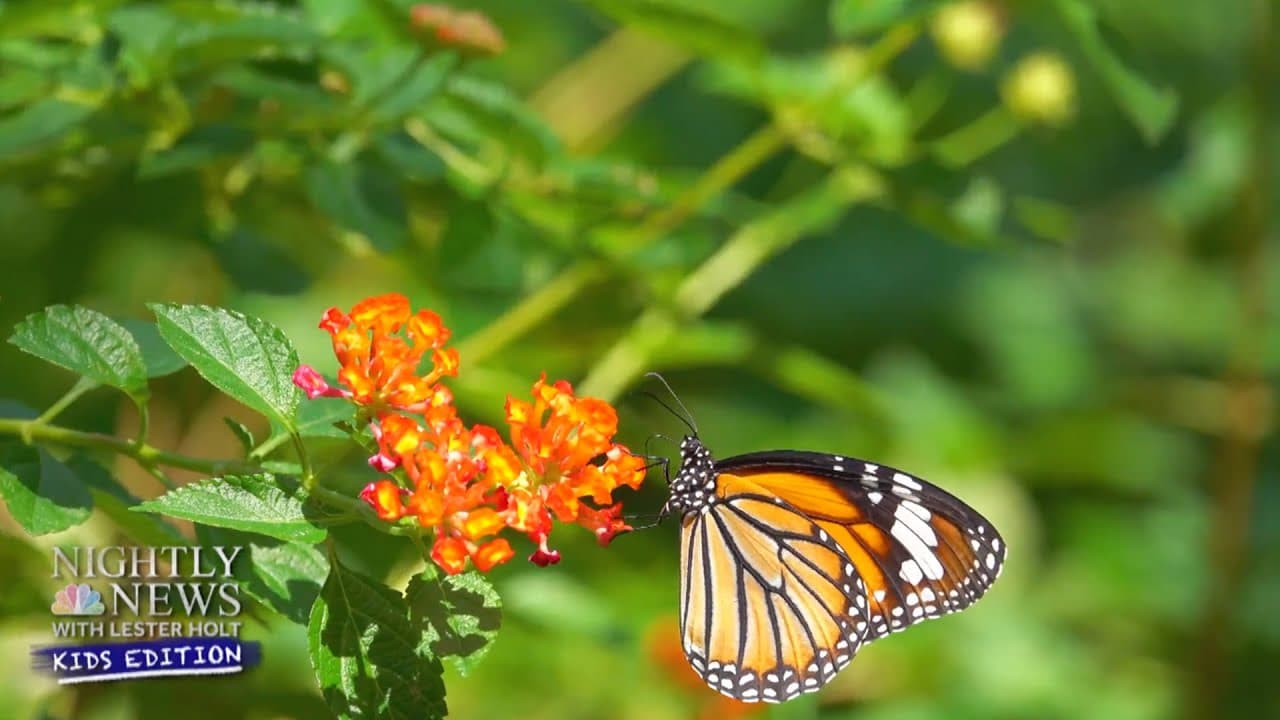
Butterflies On The Move: All About Monarch Migration | Nightly News: Kids Edition
TL;DR
Explores monarch butterfly migration and debunks Thanksgiving myths.
Transcript
coming up thanksgiving myths does turkey really make you sleepy we'll take a look at some of the common thanksgiving myths and find out what's fact and what's fiction then your latest questions about the road to recovery why do you need the vaccine on your arm also ahead the heat is on why some experts are worried this winte... Read More
Key Insights
- Thanksgiving myths debunked: Turkey doesn't make you sleepy; it's the large meal that causes drowsiness.
- Skipping breakfast on Thanksgiving can lead to overeating; a balanced meal is recommended.
- Monarch butterflies migrate thousands of miles to Mexico, a journey still not fully understood by scientists.
- Vaccines work by helping your body produce antibodies, acting like superheroes to fight viruses.
- The coronavirus vaccine is typically administered in the arm for convenience, but can be given in any muscle.
- Families are advised to get vaccinated, mask in crowded places, and test for COVID-19 to stay safe during holidays.
- Heating costs are expected to rise this winter due to increased energy demand and supply constraints.
- A 13-year-old boy chose to feed the homeless as his Make-A-Wish, teaching a lesson in selflessness and empathy.
Install to Summarize YouTube Videos and Get Transcripts
Explore YouTube Video Summarizer or Get YouTube Transcript Extractor
Questions & Answers
Q: Why do people believe turkey makes you sleepy?
People often think turkey makes you sleepy because it contains tryptophan, an amino acid that can induce sleep. However, the amount in turkey isn't enough to cause drowsiness. The real reason people feel sleepy after Thanksgiving dinner is the large amount of food consumed, which requires significant energy to digest, leading to tiredness.
Q: How does the COVID-19 vaccine work?
The COVID-19 vaccine helps your body produce antibodies, which are like superheroes that fight off the virus. When you receive a vaccine, it introduces a harmless piece of the virus, prompting your immune system to create antibodies. These antibodies remain in your system, ready to combat the virus if you are exposed in the future, preventing illness.
Q: Why is the COVID-19 vaccine given in the arm?
The COVID-19 vaccine is usually administered in the arm because it is a convenient and accessible muscle for injection. The deltoid muscle in the shoulder is easy to access and provides a large enough area for the vaccine to be effectively absorbed. However, the vaccine can technically be given in any muscle, but the arm is the most practical choice.
Q: What advice is given for staying safe during Thanksgiving amid COVID-19?
To stay safe during Thanksgiving, families are advised to ensure everyone eligible is vaccinated, wear masks in crowded indoor spaces, and consider outdoor or well-ventilated gatherings. Additionally, testing before and after travel is recommended to minimize the risk of spreading COVID-19. These measures help protect against infection while allowing families to enjoy the holiday together.
Q: Why are heating costs expected to rise this winter?
Heating costs are expected to rise due to a combination of factors, including increased demand for energy as temperatures drop and supply constraints. The colder winter predicted by experts means more energy will be needed to maintain comfortable indoor temperatures. Additionally, the costs of natural gas, heating oil, and electricity are expected to increase, impacting household budgets.
Q: What makes the monarch butterfly migration unique?
Monarch butterfly migration is unique because it involves a long journey spanning thousands of miles from North America to the mountains of Mexico. This migration is remarkable not only for its distance but also because the butterflies navigate using an internal GPS-like system. Despite extensive research, scientists still don't fully understand why these butterflies choose Mexico as their winter destination.
Q: How did a 13-year-old boy use his Make-A-Wish to help others?
A 13-year-old boy named Abraham, diagnosed with aplastic anemia, chose to use his Make-A-Wish opportunity to feed the homeless instead of personal gains like a trip or a gaming console. His decision was driven by a desire to give back and help those in need, demonstrating empathy and selflessness. His wish will provide 700 meals over eight months, highlighting the impact of kindness.
Q: What advice does Lester Holt give to aspiring news anchors?
Lester Holt advises aspiring news anchors to focus on being reporters first, as reporting is the foundation of anchoring. He emphasizes the importance of developing strong writing skills to effectively communicate stories. Holt also suggests staying informed by reading and watching the news daily. These skills and habits are crucial for anyone looking to pursue a career in journalism and anchoring.
Summary & Key Takeaways
-
The episode covers various topics, including debunking common Thanksgiving myths such as the belief that turkey makes you sleepy, and offers tips for enjoying a balanced holiday meal.
-
Monarch butterflies embark on an incredible migration journey to Mexico, with scientists still studying the reasons behind their specific destination choices.
-
The program also addresses COVID-19 vaccine questions, winter heating cost concerns, and features a story about a teenager who chose to help the homeless over personal gains.
Read in Other Languages (beta)
Share This Summary 📚
Summarize YouTube Videos and Get Video Transcripts with 1-Click
Try YouTube Summary with ChatGPT & Claude or YouTube Transcript Generator
Explore More Summaries from NBC News 📚

Summarize YouTube Videos and Get Video Transcripts with 1-Click
Try YouTube Summary with ChatGPT & Claude or YouTube Transcript Generator