Why Is Virginia Woolf Important in Literature?
TL;DR
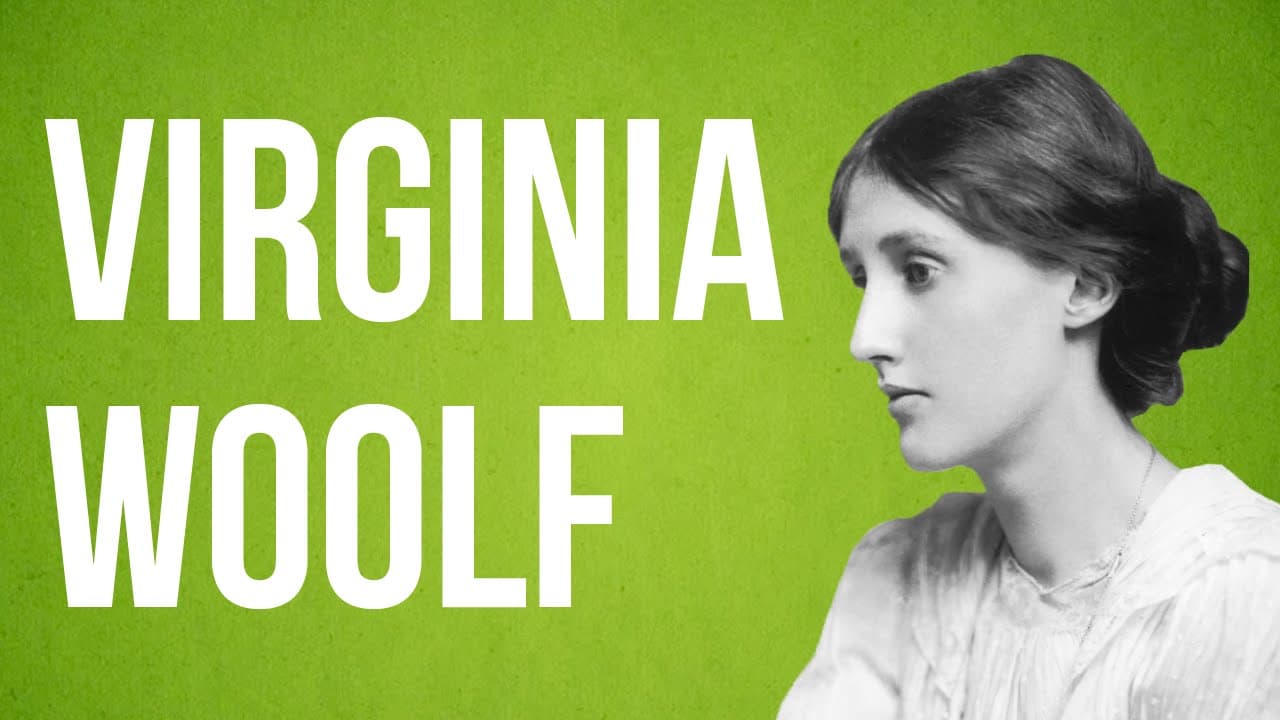
Virginia Woolf was a groundbreaking modernist who transformed literature by delving into modern consciousness and advocating for women's rights. Her notable works challenge traditional narratives and explore the complexities of identity, ultimately asserting the need for women's financial independence and a space to express their creativity.
Transcript
Virginia Woolf was a writer concerned, above all, with capturing in words the excitement, pain, beauty, and horror of what she termed, the Modern Age. Born in 1882, she was conscious of herself as a distinctively modernist writer at odds with a raft of the staid and complacent assumptions of nineteenth-century English literature. She realized that ... Read More
Key Insights
- 💁 Woolf was a modernist writer who innovatively bridged literary forms to reflect contemporary consciousness and emotional depth.
- 🧑⚕️ Her upbringing and personal trials, including mental health challenges and familial restrictions, influenced her literary lens and thematic focus.
- ⚧️ She challenged traditional gender roles and advocated for fluid identities, emphasizing that the binary view of gender limits individuality.
- 🍔 Woolf's essays addressed overlooked topics, such as illness and everyday experiences, urging writers to embrace the mundane alongside the profound.
- ✍️ As a central figure in the Bloomsbury Group, her interactions with other intellectuals greatly enriched her perspectives and writings.
- 🍽️ Woolf's narrative techniques, particularly the stream-of-consciousness style, were revolutionary in redirecting literary focus from plot to inner life.
- 😢 Her feminist rallying cry emphasized the need for women’s economic independence and equal access to education, pivotal to their literary presence.
Install to Summarize YouTube Videos and Get Transcripts
Explore YouTube Video Summarizer or Get YouTube Transcript Extractor
Questions & Answers
Q: How did Woolf's early life influence her writing?
Woolf's experience of losing her mother at a young age and her consequent mental health struggles significantly shaped her literary voice. The trauma and societal restrictions she faced highlighted the emotional depths in her writing, leading her to explore themes of consciousness, identity, and the human experience. This background informed her modernist approach, where she reflected on both personal and societal complexities.
Q: What is the significance of "A Room of One's Own" in feminist literature?
"A Room of One's Own" is pivotal in feminist literature as it underscores the link between financial independence and creative expression for women. Woolf argued that women require space, both physically and intellectually, to write and contribute to literature. This essay became a foundational text advocating for women's rights, challenging societal norms that restricted women's voices and achievements.
Q: In what ways did Woolf address the themes of gender in her works?
Woolf critically examined gender roles, advocating for a fluid understanding of identity. In works like "Orlando," she depicted characters who transcend traditional gender boundaries. Woolf posited that rigid definitions of masculinity and femininity limit human potential and advocated for experiences that allow individuals to explore their fuller selves, regardless of gender norms.
Q: How did Woolf's literary style differ from Victorian writers?
Woolf's literary style diverged from Victorian conventions by focusing on the inner lives of characters rather than external details or linear plots. Her use of stream-of-consciousness narrative allowed for a deeper exploration of thoughts and feelings, prioritizing emotional experiences over societal expectations, which marked a foundational shift in modern literature.
Q: What role did the Bloomsbury Group play in Woolf's career?
The Bloomsbury Group provided Woolf with a supportive network of intellectuals and artists that fostered her creative development. Engaging with other influential figures, such as John Maynard Keynes and E. M. Forster, allowed her to exchange ideas and challenge traditional literary and social norms, contributing significantly to her evolution as a writer.
Q: Why is "The Death of the Moth" considered one of Woolf's best works?
"The Death of the Moth" is celebrated for its profound observations and mastery in conveying the complex emotions tied to life and death. Through the metaphor of a moth trapped by a pane of glass, Woolf reflects on existence, vitality, and the struggles inherent in life, encapsulating her skill in imbuing everyday moments with deep philosophical significance.
Summary & Key Takeaways
-
Virginia Woolf was a pioneering modernist writer who sought to capture the complexities of 20th-century life and consciousness through innovative literary forms.
-
Despite facing personal tragedies, including mental illness and societal restrictions on women, Woolf became a prominent figure in the Bloomsbury Group and used her experiences to challenge traditional narratives in literature.
-
Her feminist essay "A Room of One's Own" argued for women's financial independence and educational rights, emphasizing the need for space and resources for women to write and express themselves.
Read in Other Languages (beta)
Share This Summary 📚
Summarize YouTube Videos and Get Video Transcripts with 1-Click
Try YouTube Summary with ChatGPT & Claude or YouTube Transcript Generator