MinuteEarth Explains: Stuff That...Isn’t
TL;DR
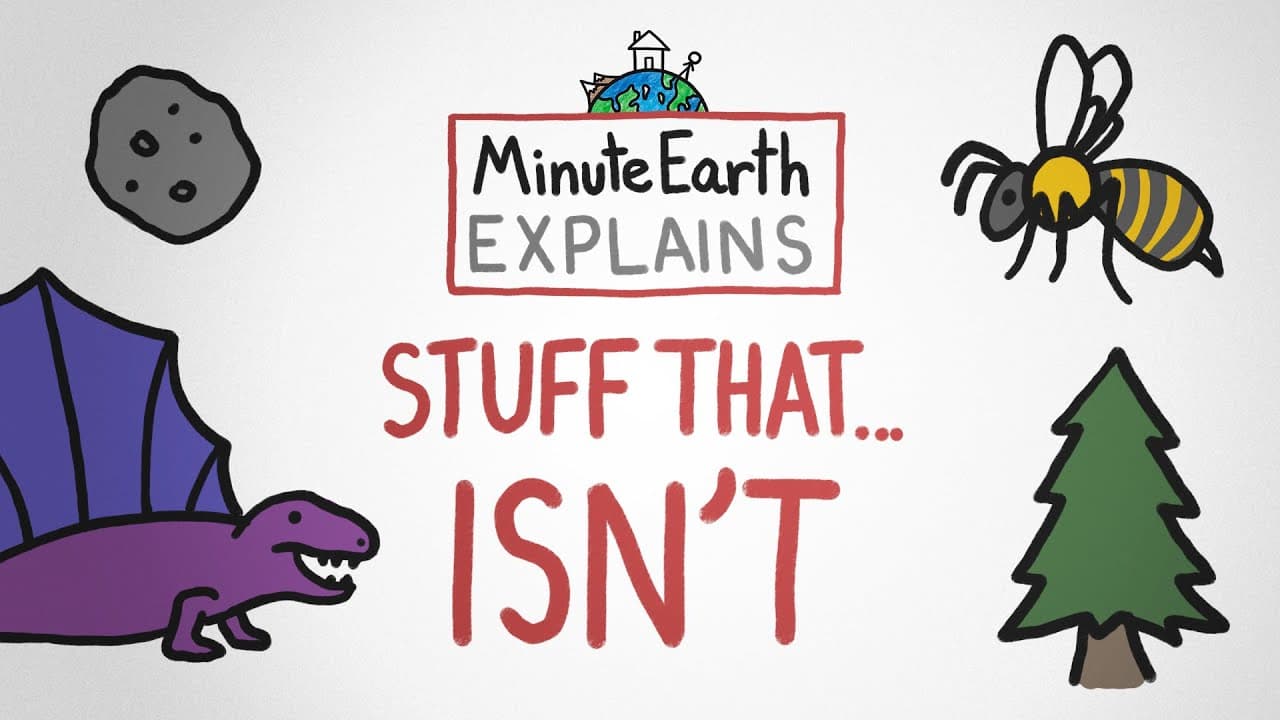
Differentiating between bees, pines, dinosaurs, and moons is more complex than their labels suggest.
Transcript
Hi, I'm Emily from MinuteEarth and this is not a pipe. Although, you may already know that if you speak French. But in real life, objects don't always come with a helpful label, and it can be really hard to determine what things are, or are not. Coming up: four quick videos to try to set the record straight, starting with bees. Close your eyes—no, ... Read More
Key Insights
- 🥺 In nature, appearances can be deceiving, and relying on superficial labels can lead to misidentifications.
- 🛟 Similar appearances between harmful and harmless species can serve as protective mechanisms in nature.
- ⚾ Scientific classification based on evidence, such as fossils and DNA analysis, provides a more accurate understanding of relationships between species.
Install to Summarize YouTube Videos and Get Transcripts
Explore YouTube Video Summarizer or Get YouTube Transcript Extractor
Questions & Answers
Q: How can one distinguish between bees and similar-looking insects?
Bees and wasps can be identified by their stingers, elbow-shaped antennae, and four wings. Bees are typically hairy, while wasps are mostly bald. Flies can be recognized by their two wings and "goggles" appearance, while moths have long feathery antennae.
Q: What are the key differences between pines, spruces, and firs?
Pines have needles in bunches of two, three, or five, with seeds released from downward-hanging cones that take two years to mature. Spruces have squarish, individual needles in a bottle-brush shape, and cones with scales that take one year to grow. Firs have upright cones with scales that detach along with the seeds and flat needles in a horizontal pattern.
Q: How has the understanding of dinosaurs' relationships evolved?
Previously, dinosaurs were classified based on their appearances, but evidence from fossils and DNA analysis has led to a reclassification. Some dinosaurs are now known to be more closely related to birds or snakes, challenging previous assumptions.
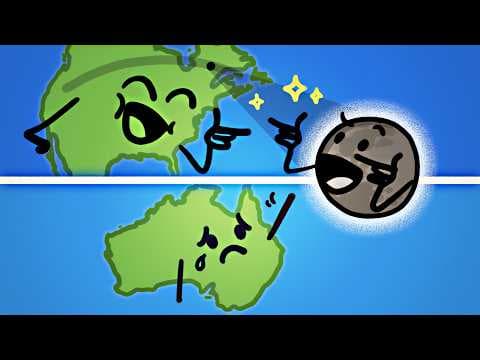
Q: What factors should be considered when defining a moon?
Defining a moon is subjective and can depend on factors such as size, shape, visibility from the planet's surface, and the complexity of the orbit. There is no one definition that can capture all the different ways objects can orbit each other.
Summary & Key Takeaways
-
Bees are often mistaken for flies, wasps, and moths due to their similar appearances, but key differences include stingers, antennae shape, and hairiness.
-
Pines, spruces, and firs are often mislabeled as each other, but their distinct features can be identified through needle and cone characteristics.
-
Dinosaurs were historically classified based on appearances, but fossils and DNA analysis have revealed their true relationships, with some dinosaurs being more closely related to birds or snakes.
-
The definition of a moon is subjective and varies depending on factors such as size, shape, orbit, and visibility from the planet's surface.
Read in Other Languages (beta)
Share This Summary 📚
Summarize YouTube Videos and Get Video Transcripts with 1-Click
Try YouTube Summary with ChatGPT & Claude or YouTube Transcript Generator
Explore More Summaries from MinuteEarth 📚

Summarize YouTube Videos and Get Video Transcripts with 1-Click
Try YouTube Summary with ChatGPT & Claude or YouTube Transcript Generator