How to Build Backend with Spring Boot in Telugu
TL;DR
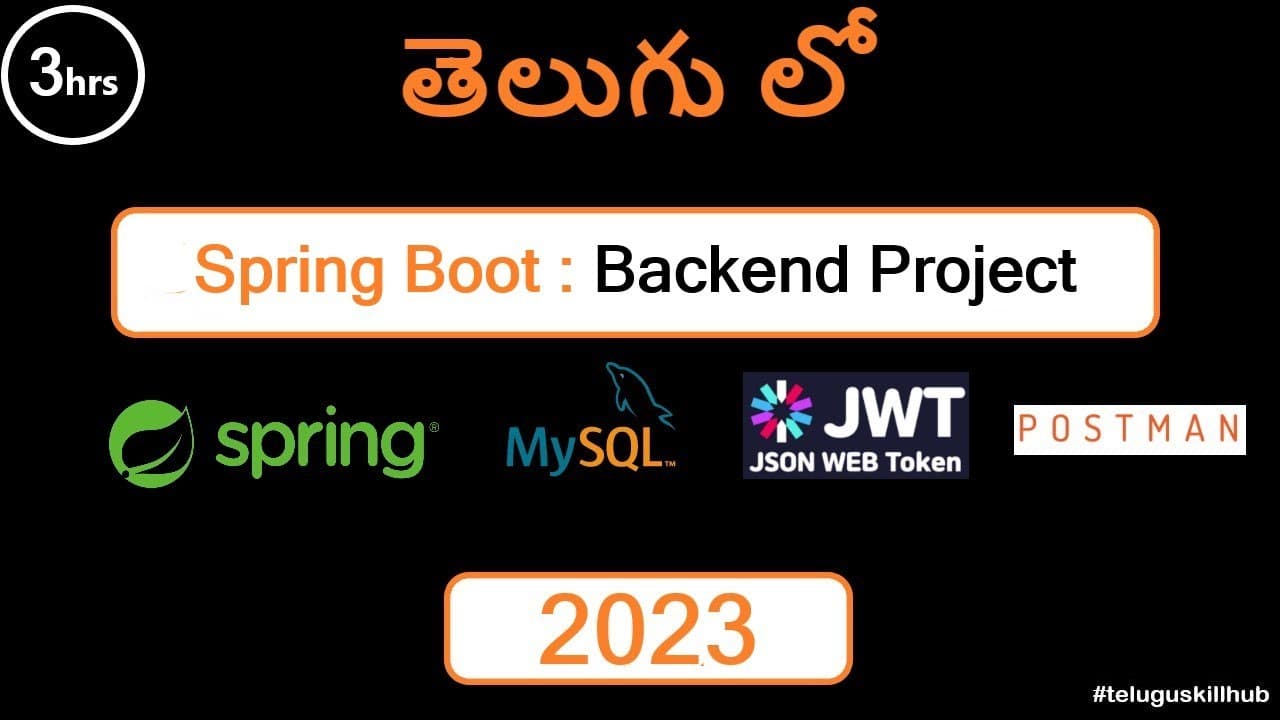
Learn to build a backend project using Spring Boot, focusing on creating RESTful endpoints, handling exceptions, and securing with JWT. The video covers setting up Spring Security, generating and validating JWT, and implementing CRUD operations. Suitable for Telugu-speaking developers looking to enhance backend skills.
Transcript
we will be covering lot of spring boot features guys okay now for example creating restfully pay endpoints and handling individual profile management and handling individual State Management at the same time creating and handling custom exceptions big level application created support will get lot of exceptions on it guys so I accepted will create ... Read More
Key Insights
- Spring Boot facilitates creating RESTful endpoints and managing application states.
- Custom exceptions help handle application-level errors effectively.
- Spring Security and JWT protect endpoints by ensuring only authenticated users access them.
- Model Mapper simplifies object conversion between DTO and entity classes.
- Spring Data JPA integrates SQL databases into Spring Boot applications seamlessly.
- The video demonstrates building a task management application with user registration and task tracking.
- JWT tokens are generated for authenticated users, enhancing security.
- Handling API requests with valid JWT tokens ensures secure communication.
Install to Summarize YouTube Videos and Get Transcripts
Explore YouTube Video Summarizer or Get YouTube Transcript Extractor
Questions & Answers
Q: How to create RESTful endpoints in Spring Boot?
RESTful endpoints in Spring Boot are created using @RestController and @RequestMapping annotations. These annotations map HTTP requests to handler methods in controller classes. Spring Boot simplifies the process by providing default configurations and embedded servers, allowing developers to focus on defining request mappings and handling business logic.
Q: What is the role of DTO in Spring Boot?
DTO (Data Transfer Object) in Spring Boot is used to transfer data between client and server. It helps in encapsulating data and reducing the amount of data transferred over the network. DTOs ensure that only necessary data is exposed, enhancing security and performance. They are typically used in conjunction with model mappers to convert between entity and DTO objects.
Q: How to handle exceptions in Spring Boot?
Exceptions in Spring Boot can be handled using @ControllerAdvice and @ExceptionHandler annotations. Custom exceptions can be created to represent specific error conditions, and global exception handlers can catch and process these exceptions, providing meaningful responses to clients. This approach centralizes error handling and improves application robustness.
Q: How does Spring Security work with JWT?
Spring Security integrates with JWT by generating tokens upon successful authentication. JWT tokens are included in the Authorization header of HTTP requests, allowing secure access to protected resources. Spring Security validates these tokens, ensuring the user is authenticated and authorized to perform requested actions, thus enhancing application security.
Q: What is the purpose of Model Mapper in Spring Boot?
Model Mapper in Spring Boot simplifies object mapping between different layers, such as converting entity objects to DTOs and vice versa. It reduces boilerplate code and ensures consistency in data transformation, making it easier to manage complex object structures in applications. Model Mapper is particularly useful in scenarios involving multiple data representations.
Q: How to implement Spring Data JPA in Spring Boot?
Spring Data JPA is implemented in Spring Boot by defining repository interfaces that extend JpaRepository. These interfaces provide CRUD operations and custom query methods without requiring boilerplate code. Spring Boot's integration with JPA allows seamless database interactions, supporting various SQL databases and simplifying data access layer development.
Q: How to generate JWT for authenticated users?
JWT for authenticated users is generated by creating a token containing user details and signing it with a secret key. In Spring Boot, this is typically done using a JWT library, where the token includes claims such as subject (user identifier) and expiration time. The generated token is returned to the client upon successful authentication, enabling secure API access.
Q: How to secure APIs using JWT in Spring Boot?
APIs in Spring Boot are secured using JWT by validating the token in each request. The token is extracted from the Authorization header, verified for authenticity and expiration, and used to authenticate the user. This process ensures that only requests with valid tokens can access protected endpoints, preventing unauthorized access and enhancing application security.
Summary & Key Takeaways
-
The video guides viewers on building a backend application using Spring Boot, covering RESTful endpoints, state management, and custom exceptions. It also delves into Spring Security, focusing on JWT for securing endpoints.
-
Key concepts like DTOs, model mapping, and Spring Data JPA are explained, providing a comprehensive understanding of backend development in Spring Boot. The tutorial is delivered in Telugu, catering to native speakers.
-
Practical implementation is demonstrated through a task management application, showcasing user registration, task tracking, and secure API handling with JWT authentication.
Read in Other Languages (beta)
Share This Summary 📚
Summarize YouTube Videos and Get Video Transcripts with 1-Click
Try YouTube Summary with ChatGPT & Claude or YouTube Transcript Generator
Explore More Summaries from Telugu Skillhub 📚
Summarize YouTube Videos and Get Video Transcripts with 1-Click
Try YouTube Summary with ChatGPT & Claude or YouTube Transcript Generator