Which is Better for Conversions: Radio Buttons or Dropdowns?
TL;DR
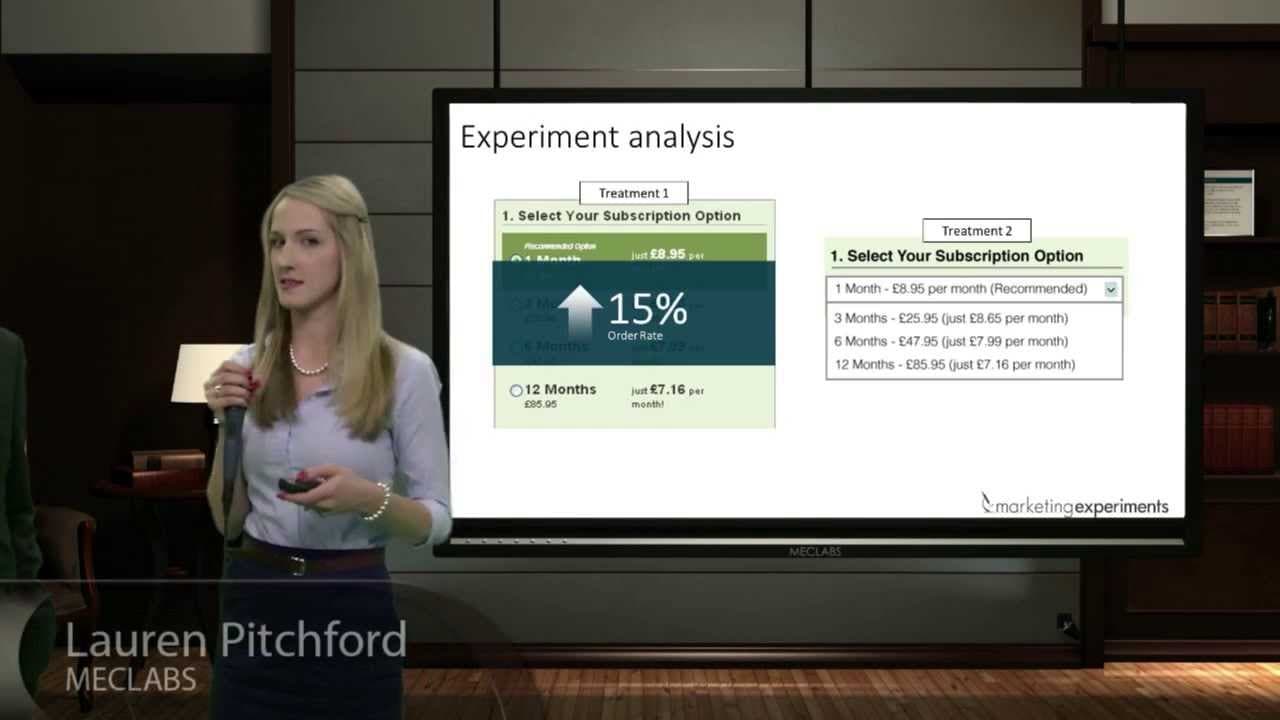
Radio buttons outperform dropdowns by 15% in conversion rates, challenging the belief that shorter forms always yield better results. This experiment underscores the significance of understanding how presentation influences customer decision-making and highlights the delicate balance between reducing friction and maintaining value throughout the user journey.
Transcript
all right thank you very much Luke uh it's a pleasure to uh have you jumping on the call we've got hundreds of markers I'm kind of watching them come in right now we got lots of marketers jumping online from all over the world uh another marketing experience web clinic today uh if if you're new to these clinics uh we want to do here is we want to a... Read More
Key Insights
- 🔘 The test revealed that radio buttons are more effective than dropdowns by producing a 15% increase in conversions, challenging common assumptions about form length.
- 💁 Psychological resistance, or friction, is a crucial factor in customer decision-making that can be affected by the presentation of information.
- 🥺 Reducing perceived length may not always lead to better conversion rates if complexity is introduced elsewhere in the user’s journey.
- 💁 Understanding the balance between cost and value is fundamental in designing effective promotional messages and forms.
- 😥 Marketers should actively experience their own forms and processes to identify potential friction points hindering customer actions.
- 💁 Eliminating vital information to shorten forms can negatively impact conversion rates, countering the intended effect of making processes easier.
- 🤪 Difficulty-oriented friction often goes unnoticed, but it is essential to streamline the customer experience to enhance conversion success.
Install to Summarize YouTube Videos and Get Transcripts
Explore YouTube Video Summarizer or Get YouTube Transcript Extractor
Questions & Answers
Q: What were the main findings of the radio buttons versus dropdowns test?
The test found that radio buttons had a 15% higher conversion rate than dropdowns, indicating that the method of information presentation significantly impacts user engagement and order rates. This was particularly important in contexts where simplicity and clarity lead to better outcomes in user action.
Q: Why is reducing friction important in marketing?
Reducing friction is crucial because it lessens psychological resistance from customers during their decision-making processes. However, marketers must be careful that attempts to shorten forms or simplify options do not unintentionally complicate the decision-making experience, which could decrease conversions instead.
Q: What is the distinction between length-oriented friction and difficulty-oriented friction?
Length-oriented friction refers to the number of items or the physical length of a form, while difficulty-oriented friction relates to the cognitive and effort-based obstacles encountered during the user experience. Both play integral roles in determining the overall ease of use and effectiveness of a web page.
Q: How can marketers test the effectiveness of their forms?
Marketers should undergo the customer experience themselves, simulating the path a customer would take. This helps identify any unnecessary complications or barriers that may obstruct the conversion process, allowing for targeted improvements based on firsthand experience.
Q: What role does value play in a customer's decision-making process?
Value is critical as customers weigh costs against perceived benefits. Marketers must ensure that the value offered is clear and compelling enough to tip the scales in favor of completing an action, like subscribing or purchasing, especially when costs are inherent.
Q: How did the removal of certain elements influence conversion outcomes in various tests?
Removing elements, even if aimed at shortening pages for a cleaner look, often eliminated vital information that customers needed to make informed decisions, leading to decreased conversions. Maintaining essential value messages can sometimes require more information rather than less.
Q: What key takeaway did the presenters highlight regarding forms and their complexity?
The key takeaway was to understand that a longer, more informative form could outperform a shorter one if it adds value without increasing difficulty. The balance between providing crucial information and keeping the process straightforward is essential for maximizing conversions.
Q: What should marketers do before simplifying their pages?
Before simplifying pages or forms, marketers should analyze how the changes impact both friction types—length and difficulty. Additionally, they should test variations to see what works best for their particular audience and context to avoid unintentionally complicating processes.
Summary & Key Takeaways
-
This web clinic focused on comparing the effectiveness of radio buttons versus dropdowns in marketing strategies for capturing customer information.
-
A live audience was engaged in discussing the conversion rates from both methods, resulting in a 15% increase in conversions with radio buttons according to the test outcomes.
-
The importance of reducing friction and maintaining value during the customer interaction process was emphasized throughout the presentation.
Read in Other Languages (beta)
Share This Summary 📚
Summarize YouTube Videos and Get Video Transcripts with 1-Click
Try YouTube Summary with ChatGPT & Claude or YouTube Transcript Generator
Explore More Summaries from Flint McGlaughlin 📚


Summarize YouTube Videos and Get Video Transcripts with 1-Click
Try YouTube Summary with ChatGPT & Claude or YouTube Transcript Generator