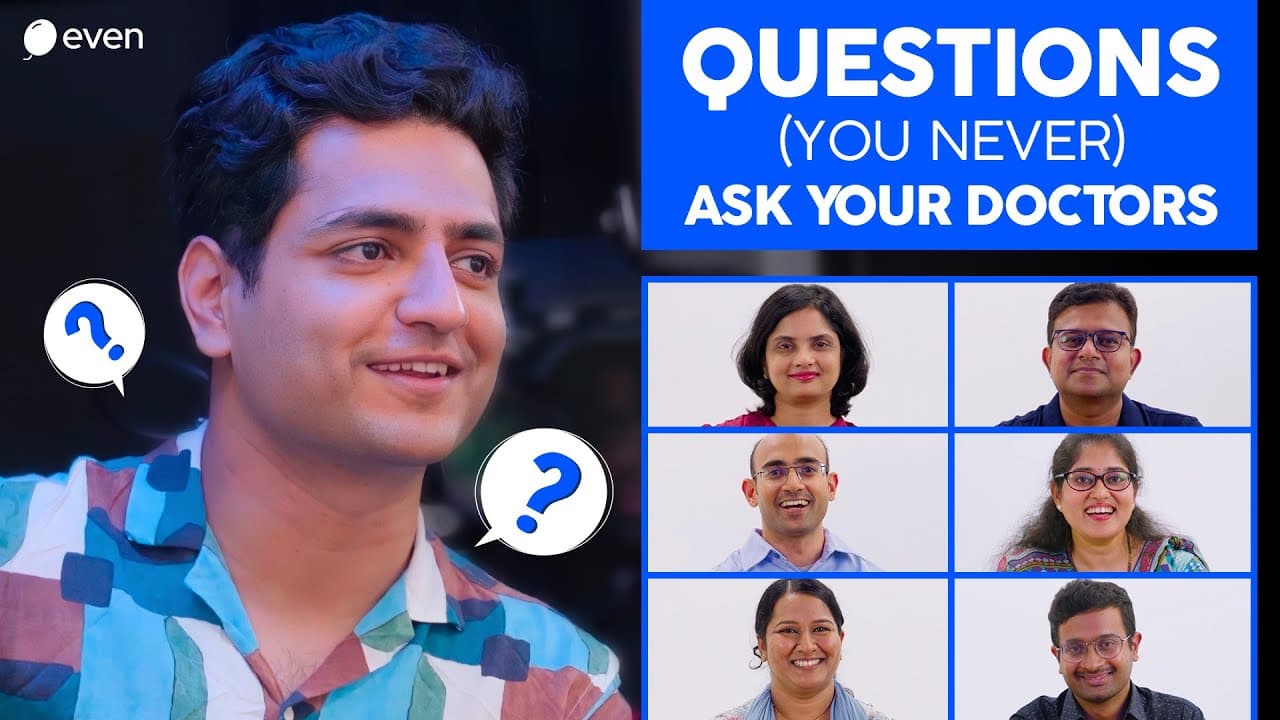
Questions you NEVER get to ask your Doctor with Kenny Sebastian
TL;DR
Medical professionals discuss patient communication and work-life balance issues.
Transcript
foreign questions but I couldn't mostly guys whenever I meet a doctor I'm sick and uh I don't want to waste their time also why would they answer them but no I can so here are some questions I've always wanted to ask doctors with real doctors and how do you guys deal with mistakes because you and I make a mistake maximum people won't laugh but when... Read More
Key Insights
- 😷 Mistakes in medical practice carry high stakes and require vigilance and teamwork to prevent.
- 😨 Communication is an essential component of patient care, often determining treatment success.
- 😷 Work-life balance is a continual struggle for medical professionals due to patient demands.
- 👨⚕️ The perception of doctors in social settings creates unique challenges regarding personal boundaries.
- 👨⚕️ Many doctors find it hard to consistently practice what they preach in terms of healthy lifestyles.
- 👨⚕️ The integration of technology has made consultations quicker and more accessible for both doctors and patients.
- 😷 New medical professionals are encouraged to concentrate on essential subjects to build a solid foundation for their careers.
Install to Summarize YouTube Videos and Get Transcripts
Explore YouTube Video Summarizer or Get YouTube Transcript Extractor
Questions & Answers
Q: What strategies do doctors use to manage mistakes in patient care?
Doctors understand the high stakes involved in their decisions, leading them to adopt practices like confirming diagnoses through test results and collaborating with peers. When uncertainties arise, they consult colleagues or seek second opinions, ensuring patient safety and enhancing their own knowledge. This collective approach fosters a supportive environment that emphasizes accuracy.
Q: How do doctors perceive their communication with patients?
Doctors recognize the crucial role of communication in patient recovery, noting that their demeanor and interaction style can significantly impact outcomes. They believe that effectively addressing a patient's emotional and psychological needs is as important as administering medical treatment, as comfort and trust form the essential basis of healing processes.
Q: What is the reality of doctors' work-life balance?
Many doctors report significant challenges in maintaining a healthy work-life balance due to their demanding schedules and patient obligations. While they aim to carve out personal time, the nature of their profession often necessitates being available around the clock, leading to a lifestyle that can feel overwhelming and unforgiving.
Q: How do doctors manage patient expectations in social settings?
When introduced as doctors in social situations, many feel pressure to provide medical advice or consultations, particularly during family gatherings. While some adeptly navigate these queries, they often seek to establish boundaries to enjoy their personal time without the burden of unsolicited medical discussions.
Q: Do doctors follow their own health advice?
While doctors are trained to promote healthy practices, many admit struggles with adhering to their own guidance regarding sleep, nutrition, and exercise. This acknowledgment underscores the challenges of balancing demanding careers with personal well-being while still emphasizing the importance of preventive healthcare for their patients.
Q: How has technology impacted patient care from a doctor's perspective?
Technology has revolutionized patient care by making healthcare services more accessible and efficient. Doctors note that telehealth options reduce travel time and make it easier for patients to receive timely consultations, helping to alleviate the anxiety associated with seeking medical advice, particularly in the wake of COVID-19.
Q: What advice do experienced doctors offer to medical students?
Experienced doctors suggest that prospective medical students focus on foundational subjects during their initial years of training. A strong understanding of the basics is critical for success in advanced clinical training, helping them to identify their specialties and navigate their medical careers more effectively.
Q: How have patient behaviors changed during and after the pandemic?
Post-COVID, patients increasingly rely on digital platforms for consultations, showing greater trust in telehealth services. Doctors are observing that this shift has led to a more informed patient base who are less inclined to self-diagnose using online resources, thereby fostering a healthier doctor-patient relationship.
Summary & Key Takeaways
-
Medical professionals face significant pressure and responsibility, leading them to double-check their decisions and involve colleagues in confirming diagnoses.
-
The respect and experience associated with elder doctors greatly influence patient interactions and overall treatment efficacy, highlighting the importance of communication in healing.
-
Balancing work and personal life remains challenging for doctors, yet they strive to guide patients in preventive care despite occasionally struggling to adhere to their advice.
Read in Other Languages (beta)
Share This Summary 📚
Summarize YouTube Videos and Get Video Transcripts with 1-Click
Try YouTube Summary with ChatGPT & Claude or YouTube Transcript Generator
Explore More Summaries from Kenny Sebastian 📚


Summarize YouTube Videos and Get Video Transcripts with 1-Click
Try YouTube Summary with ChatGPT & Claude or YouTube Transcript Generator