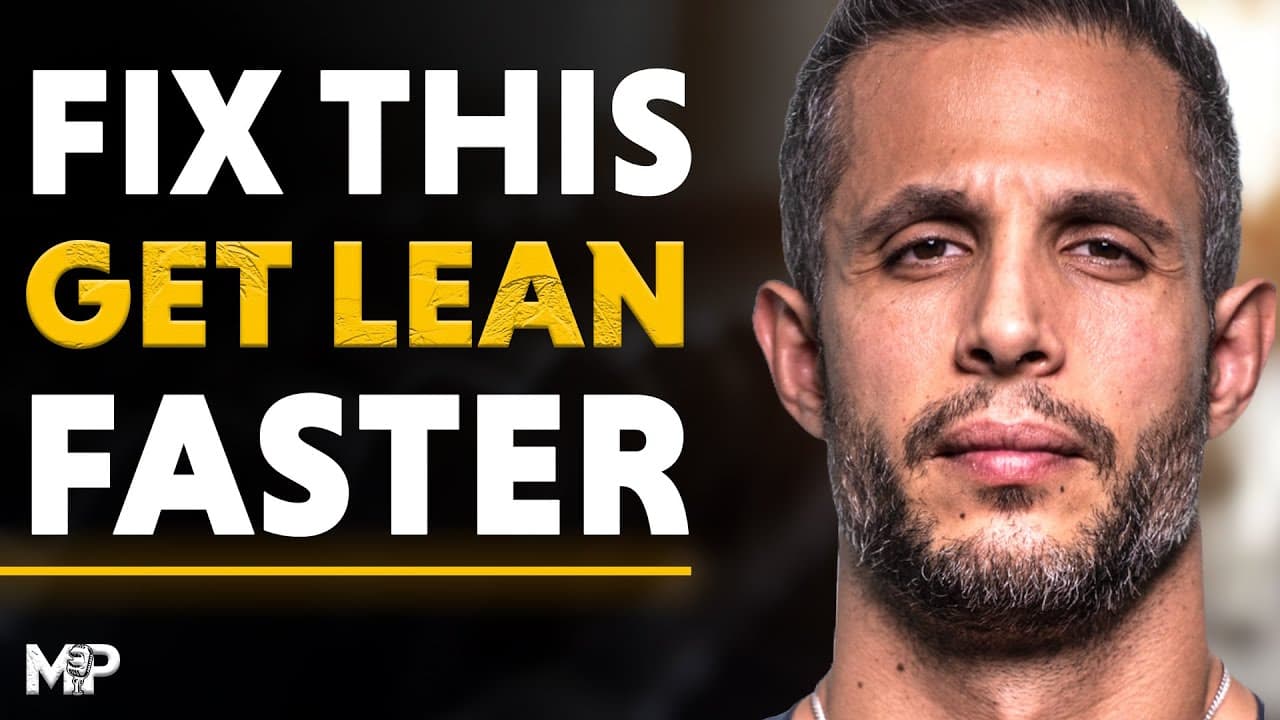
5 Common Struggles with Cutting & Bulking (And How to Fix Them) | Mind Pump 2382
TL;DR
Cutting and bulking require overcoming psychological and physical challenges.
Transcript
cutting and bulking both of them come with their own challenges in today's episode we're going to talk about the biggest challenges that come along with trying to cut or trying to bulk uh Justin's been on a Perma bulk as whole yeah it's living it man he's said cut what's that what's a cut what's a cut sounds like jealousy over there you know all ri... Read More
Key Insights
- Cutting and bulking are often misunderstood; cutting is specifically about losing fat, while bulking focuses on gaining muscle.
- Psychological challenges, such as feeling fat during a bulk or small during a cut, are common and can derail progress.
- Consistency is crucial for success in both cutting and bulking, and overcoming insecurities is a key part of the journey.
- The scale can be misleading, as it measures total mass and not specifically fat or muscle mass changes.
- Overcorrecting based on short-term results can lead to failure; patience and consistency are essential.
- Feeling full or constantly hungry can be challenging depending on whether you are bulking or cutting.
- Exercise routines should not be overdone, especially during a cut, as the body has fewer resources for recovery.
- Proper coaching and setting expectations can significantly increase the success rate in achieving fitness goals.
Install to Summarize YouTube Videos and Get Transcripts
Explore YouTube Video Summarizer or Get YouTube Transcript Extractor
Questions & Answers
Q: What are the main psychological challenges in cutting and bulking?
The main psychological challenges include feeling fat when bulking or feeling small when cutting. These feelings can tap into deep-seated insecurities and often lead to people abandoning their fitness plans prematurely. Overcoming these mental hurdles is crucial for success in either process.
Q: Why is consistency important in cutting and bulking?
Consistency is important because it ensures that the body adapts to the changes in diet and exercise over time. Without consistency, the body cannot effectively lose fat or gain muscle, and the psychological challenges become even harder to manage. Consistent effort leads to sustainable results.
Q: How can the scale be misleading in tracking progress?
The scale can be misleading because it only measures total body weight, not the composition of that weight. A person might lose muscle instead of fat, or gain water weight instead of muscle, leading to incorrect assumptions about progress. It's important to use other metrics like body fat percentage and performance to get a true picture.
Q: What is overcorrecting, and why is it a problem?
Overcorrecting is making drastic changes to diet or exercise based on short-term results. It's problematic because it can lead to yo-yo dieting or training that doesn't align with long-term goals. Patience and sticking to a plan based on consistent measurements are key to avoiding this pitfall.
Q: How does feeling full or hungry impact the bulking or cutting process?
For those bulking, feeling overly full can be uncomfortable and lead to abandoning the process. Conversely, those cutting may struggle with constant hunger, which can lead to overeating. Managing these feelings is crucial for sticking to a bulking or cutting plan successfully.
Q: Why is it important to manage exercise volume during a cut?
During a cut, the body has fewer resources for recovery due to reduced caloric intake. Increasing exercise volume can lead to overtraining and muscle loss. It's important to focus on maintaining muscle mass with strength training rather than increasing cardio or workout volume.
Q: How can proper coaching improve success in cutting and bulking?
Proper coaching can set realistic expectations and help clients navigate the psychological and physical challenges of cutting and bulking. By preparing clients for the feelings and experiences they will encounter, coaches can increase adherence and success rates significantly.
Q: What role does patience play in achieving fitness goals?
Patience is crucial because significant changes in body composition take time. Impatience can lead to overcorrecting or giving up entirely. Understanding that progress is incremental and requires consistent effort over time is key to achieving lasting results in cutting and bulking.
Summary & Key Takeaways
-
Cutting and bulking are distinct processes, with cutting aimed at fat loss and bulking focused on muscle gain. Both come with unique challenges, particularly psychological ones that can affect adherence and success.
-
Consistency is vital in both cutting and bulking, as is overcoming personal insecurities. The scale can often mislead, making it important to use multiple metrics to track progress accurately.
-
Overcorrecting due to short-term results can lead to failure. Patience and understanding the process are essential. Exercise should be balanced, particularly during a cut, to avoid overtraining and ensure recovery.
Read in Other Languages (beta)
Share This Summary 📚
Summarize YouTube Videos and Get Video Transcripts with 1-Click
Try YouTube Summary with ChatGPT & Claude or YouTube Transcript Generator
Explore More Summaries from Mind Pump Show 📚





Summarize YouTube Videos and Get Video Transcripts with 1-Click
Try YouTube Summary with ChatGPT & Claude or YouTube Transcript Generator