You Are Being Brainwashed - Duncan Trussell
TL;DR
Duncan Trussell critiques societal conditioning and the effects of propaganda.
Transcript
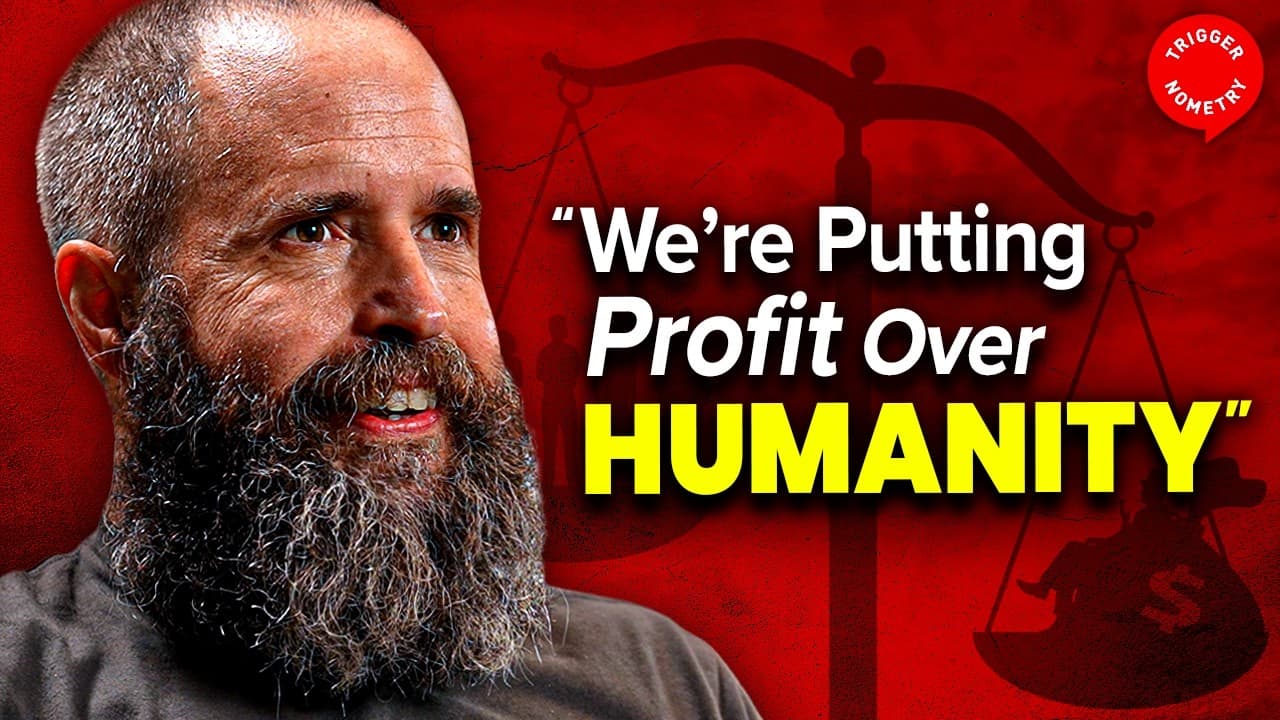
we're putting like profit over like over Humanity how do we quantify motherhood imagine if your mother at the end of your life like wrote you a bill like how much would a mother charge what's the value of a mother capitalism and motherhood don't seem to go very well together cuz how do you quantify unconditional love why is ... Read More
Key Insights
- Duncan Trussell argues that capitalism and motherhood are incompatible, questioning how unconditional love can be quantified in economic terms.
- The conversation highlights the pervasive nature of propaganda in the United States, suggesting it manipulates public perception through sophisticated means.
- Trussell emphasizes the importance of community over reliance on political figures, advocating for local support systems during crises.
- The discussion critiques the current cultural climate where simple jokes can provoke extreme reactions, reflecting broader societal tensions.
- Trussell explores the impact of digital interactions, warning against the insidious nature of online propaganda and its potential to distort reality.
- The dialogue questions the societal shift towards anti-natalism and the devaluation of motherhood, attributing it to profit-driven motives.
- Trussell suggests that the tribal nature of humans is being manipulated, advocating for a return to fundamental human connections.
- The conversation raises concerns about the future implications of quantum computing, particularly its potential to decrypt sensitive information.
Install to Summarize YouTube Videos and Get Transcripts
Explore YouTube Video Summarizer or Get YouTube Transcript Extractor
Questions & Answers
Q: What does Duncan Trussell say about capitalism and motherhood?
Trussell argues that capitalism and motherhood are incompatible because the unconditional love and sacrifices made by mothers cannot be quantified in economic terms. He suggests that the societal emphasis on profit devalues motherhood, reducing it to a part-time job rather than recognizing its true significance.
Q: How does Trussell describe the impact of propaganda in the United States?
Trussell describes the impact of propaganda in the United States as pervasive and sophisticated, with teams dedicated to manipulating public perception. He highlights how propaganda is injected into individuals' consciousness, creating divisions and distorting reality, ultimately benefiting political agendas rather than the public.
Q: What is Trussell's view on community versus political reliance?
Trussell emphasizes the importance of community support over reliance on political figures. He argues that during crises, it is local communities and neighbors who provide real support, not distant political leaders. He advocates for strengthening local connections and prioritizing direct human interactions.
Q: Why does Trussell critique the cultural reaction to jokes?
Trussell critiques the cultural reaction to jokes as a reflection of broader societal tensions. He observes that simple jokes can provoke extreme reactions, suggesting that people channel their frustrations into easily targeted figures like comedians, rather than addressing more complex societal issues.
Q: What concerns does Trussell raise about digital interactions?
Trussell raises concerns about the insidious nature of digital interactions, where online propaganda can distort reality and create a fragmented society. He warns that people may equate online interactions with real community, while being manipulated by propaganda that shapes their perceptions and beliefs.
Q: How does Trussell view the societal shift towards anti-natalism?
Trussell views the societal shift towards anti-natalism as a consequence of profit-driven motives that devalue motherhood. He criticizes the notion that having children is detrimental to the planet, arguing that this perspective undermines the fundamental value of human life and community.
Q: What does Trussell suggest about human tribal nature?
Trussell suggests that human tribal nature is being manipulated by propaganda, leading to divisions and conflicts. He advocates for a return to fundamental human connections, emphasizing the importance of community and compassion in overcoming societal challenges and fostering unity.
Q: What future implications of quantum computing does Trussell discuss?
Trussell discusses the future implications of quantum computing, particularly its potential to decrypt sensitive information. He warns that quantum computers could render current encryption methods obsolete, leading to the exposure of state secrets and personal data, fundamentally altering global security dynamics.
Summary & Key Takeaways
-
Duncan Trussell discusses the pervasive influence of propaganda in modern society, highlighting its impact on public perception and behavior. He argues that propaganda is more sophisticated and insidious than ever before, manipulating individuals' consciousness and creating divisions.
-
The conversation also delves into the societal devaluation of motherhood and the shift towards profit-driven motives. Trussell critiques the notion that motherhood is less valuable than corporate work, emphasizing the importance of unconditional love and community support.
-
Trussell warns against the dangers of digital interactions and online propaganda, which can distort reality and create a fragmented society. He advocates for reconnecting with fundamental human values and prioritizing local community support over reliance on political figures.
Read in Other Languages (beta)
Share This Summary 📚
Summarize YouTube Videos and Get Video Transcripts with 1-Click
Try YouTube Summary with ChatGPT & Claude or YouTube Transcript Generator
Explore More Summaries from Triggernometry 📚


Summarize YouTube Videos and Get Video Transcripts with 1-Click
Try YouTube Summary with ChatGPT & Claude or YouTube Transcript Generator