How Do Plants Respire and Exchange Gases?
TL;DR
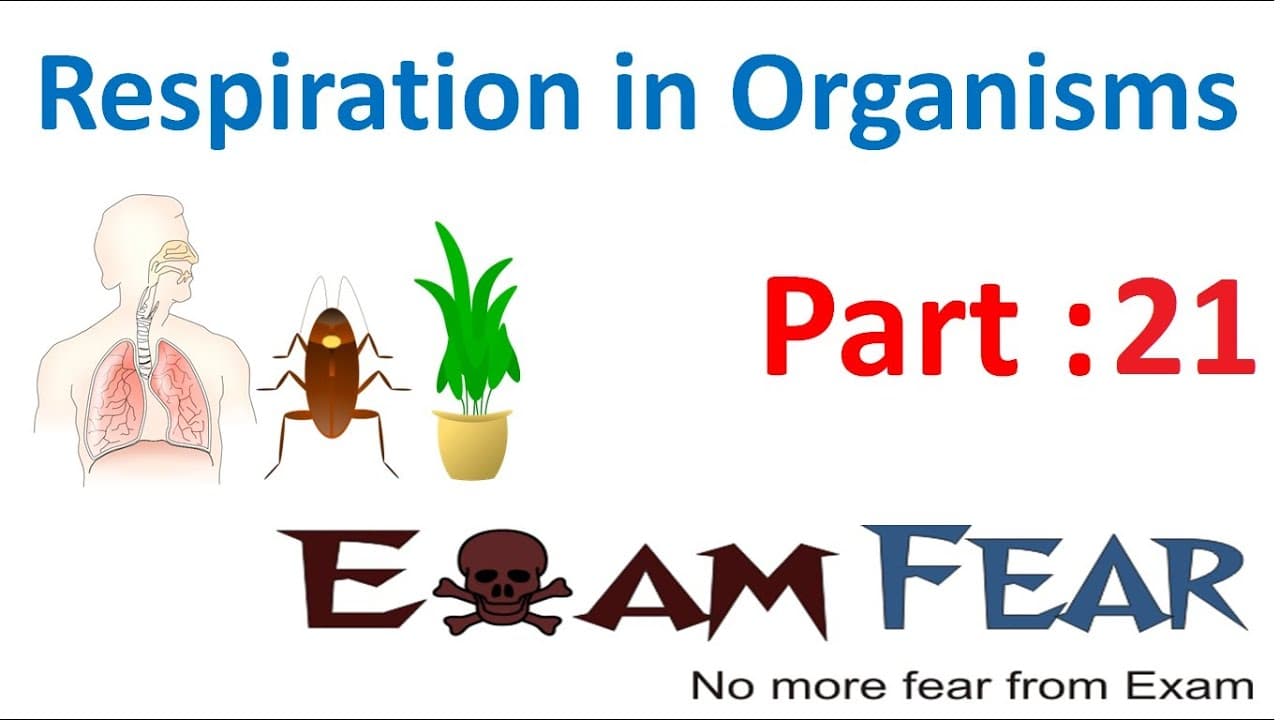
Plants respire by converting glucose into ATP, generating energy vital for their functions. Gaseous exchange occurs through stomata on leaves, root hairs, and lenticels, without the need for specialized organs. This process is slower than in animals, as plants produce oxygen during photosynthesis, reducing their reliance on external oxygen.
Transcript
Hello friends this video on respiration in organisms part 21 is brought to you by exam fear.com no more fear from exam so let us now talk about plants so we have spoken a lot about many different animals so what do you think can happen in Plants how do plants undergo respiration now plants something that strikes your mind immediately when you think... Read More
Key Insights
- 🌱 Plants undergo respiration to convert glucose into ATP energy, similar to animals.
- 👱 Gaseous exchange in plants occurs through stomata, root hairs, and lenticels.
- 🧑🏭 Glucose is not energy itself, but it can be converted into ATP molecules, acting as energy currency in plants.
- 🐢 Respiration in plants is slower compared to animals due to the production of oxygen during photosynthesis.
- 🌱 Plants do not have specialized respiratory organs, as gaseous exchange happens at various parts of the plant.
- 😘 The rate of respiration in plants is lower than in animals due to the reduced need for external oxygen.
- 🫢 Transport of gases in plants occurs over smaller distances compared to animals.
Install to Summarize YouTube Videos and Get Transcripts
Explore YouTube Video Summarizer or Get YouTube Transcript Extractor
Questions & Answers
Q: How do plants undergo respiration?
Plants undergo respiration to convert glucose into ATP energy, which is essential for their life processes and activities.
Q: How do plants obtain carbon dioxide for photosynthesis?
Plants obtain carbon dioxide for photosynthesis through stomata, which are tiny pores present on the leaves of plants.
Q: What is the purpose of gaseous exchange in plants?
Gaseous exchange in plants allows them to take in carbon dioxide for photosynthesis and release oxygen as a byproduct.
Q: Why don't plants require specialized respiratory organs like animals?
Plants do not require specialized respiratory organs because they have stomata on leaves, root hairs, and lenticels on stems for gaseous exchange, which eliminates the need for extensive gas transport.
Summary & Key Takeaways
-
Plants undergo respiration to convert glucose into energy in the form of ATP molecules.
-
Gaseous exchange in plants occurs through stomata on leaves, root hairs, and lenticels on stems.
-
Unlike animals, plants do not have specialized respiratory organs, as they require less transport of gases.
Read in Other Languages (beta)
Share This Summary 📚
Summarize YouTube Videos and Get Video Transcripts with 1-Click
Try YouTube Summary with ChatGPT & Claude or YouTube Transcript Generator
Explore More Summaries from LearnoHub - Class 11, 12 📚



Summarize YouTube Videos and Get Video Transcripts with 1-Click
Try YouTube Summary with ChatGPT & Claude or YouTube Transcript Generator