Dave Rumelhart: The Stephen Hawking of cognitive science | Jay McClelland and Lex Fridman
TL;DR
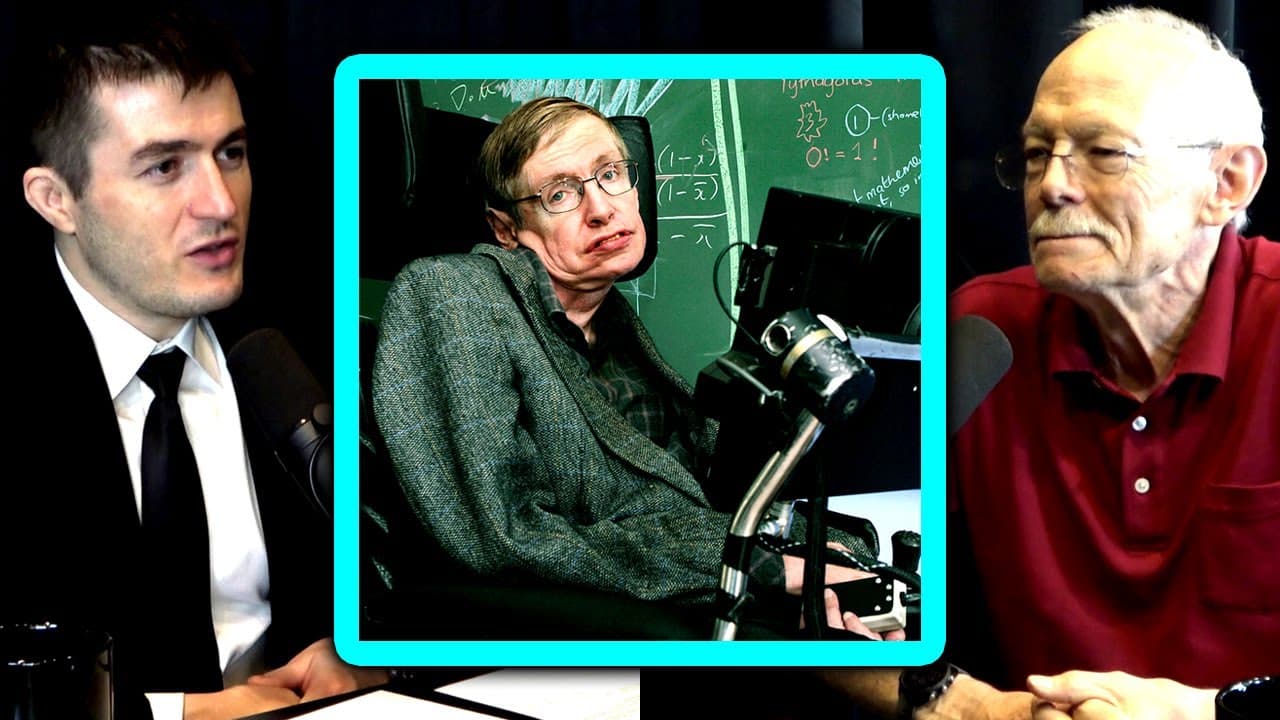
Dave Romohart was a renowned scientist who grew up in South Dakota and made significant contributions to the fields of mathematical psychology and cognitive modeling.
Transcript
and you started talking about uh dave romohart so who is this person that was so you've spoken very highly of him yeah can you tell me about him his ideas his mind who he was as a human being as a scientist so dave came from a little tiny town in western south dakota and his mother was the librarian and his father was the editor of the newspaper um... Read More
Key Insights
- 🤯 Dave Romohart's upbringing in a competitive environment played a role in shaping his scientific mind and drive for excellence.
- 😒 His work in mathematical psychology, particularly in cognitive modeling, aimed to use mathematics to understand mental processes and behavior.
- 🙈 Romohart saw the limitations of traditional AI approaches and proposed more interactive and integrated models of understanding.
- 💌 His collaborative work on the interactive activation model of letter perception demonstrated the potential of using neural network-like processing units in cognitive modeling.
- ❓ Romohart's contributions highlighted the importance of simultaneous, bidirectional, and hierarchical processes in cognition and understanding.
- 💡 The idea that mathematical psychology and cognitive modeling could address fundamental questions about human cognition was a profound insight.
- 💁 Romohart's research emphasized the interplay between bottom-up information processing and top-down knowledge in perception and understanding.
Install to Summarize YouTube Videos and Get Transcripts
Explore YouTube Video Summarizer or Get YouTube Transcript Extractor
Questions & Answers
Q: Who was Dave Romohart, and what were his early influences?
Dave Romohart was a scientist who grew up in South Dakota, surrounded by competitive siblings and encouraged by his parents. His early experiences in sports and mind games shaped his competitive edge and curiosity.
Q: What is mathematical psychology, and how did Romohart contribute to it?
Mathematical psychology involves using mathematical equations to model mental processes. Romohart made significant contributions to this field by developing computational models that described behavioral phenomena in terms of mathematical relationships.
Q: What were Romohart's interests in cognition and understanding?
Romohart became interested in cognition and understanding language comprehension. He aimed to build machines that could infer meaning from sentences, delving into the mechanisms of understanding itself.
Q: How did Romohart's research on language comprehension differ from traditional AI approaches?
Unlike traditional AI approaches, Romohart's research focused on integrating multiple simultaneous constraints to create a mutually influencing system. His interactive model of reading viewed every aspect of interpretation as interconnected, with experts at various levels updating hypotheses based on incoming information.
Summary & Key Takeaways
-
Dave Romohart grew up in a small town in South Dakota, where his parents encouraged him and his brothers to compete with each other, both in sports and mind games.
-
He pursued a degree in mathematics and later applied to the mathematical psychology program at Stanford University for his PhD.
-
Romohart's work focused on using mathematics to model mental processes, particularly in the context of cognitive modeling and understanding language comprehension.
Read in Other Languages (beta)
Share This Summary 📚
Summarize YouTube Videos and Get Video Transcripts with 1-Click
Try YouTube Summary with ChatGPT & Claude or YouTube Transcript Generator
Explore More Summaries from Lex Clips 📚


Summarize YouTube Videos and Get Video Transcripts with 1-Click
Try YouTube Summary with ChatGPT & Claude or YouTube Transcript Generator