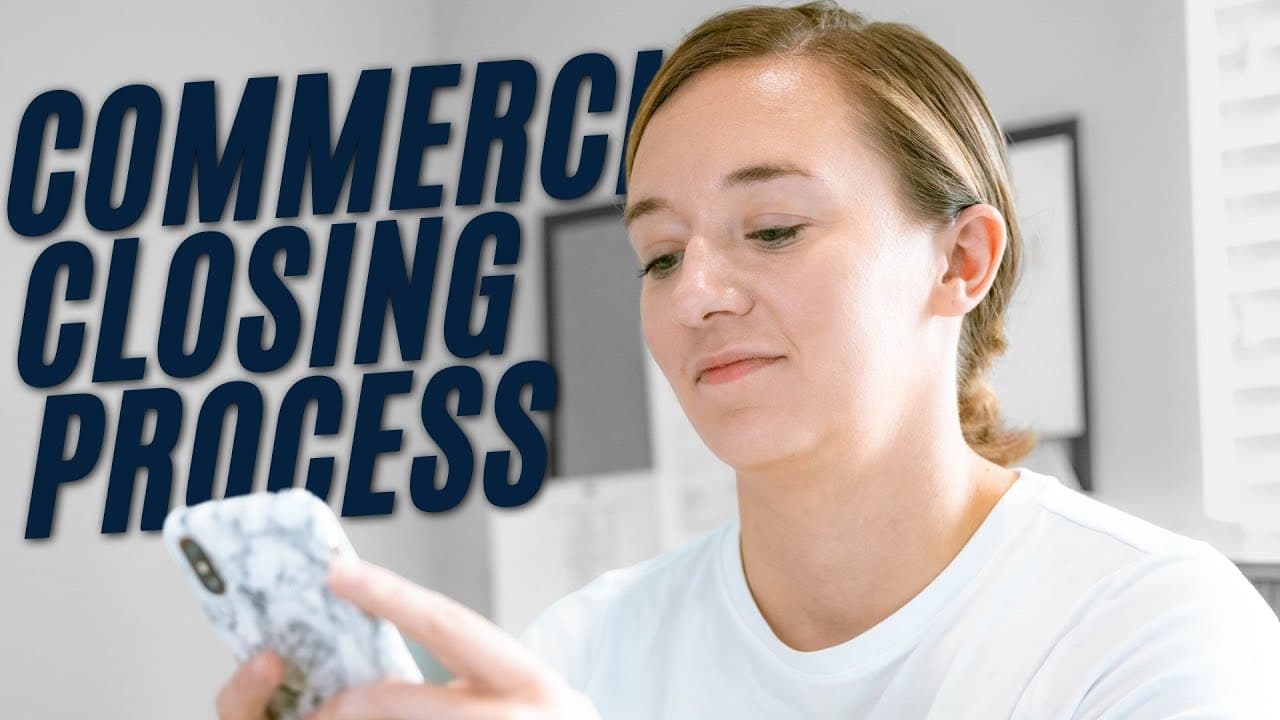
Commercial Real Estate Closing Process
TL;DR
Commercial real estate closings are more complex and time-consuming than residential closings, involving negotiations, inspections, title searches, zoning considerations, and financing.
Transcript
today our video is okay hey y'all today we're going to talk about the commercial closing process i'm tiffany weber a real estate attorney in north carolina with thomas and weber and we're going to explain the whole process to you the commercial real estate process is traditionally much longer than a residential closing which you know you can pull o... Read More
Key Insights
- ⌛ Commercial real estate closings require more time due to the complexity of negotiations, inspections, and regulations.
- 👨🔬 Custom-drafted contracts and title searches are crucial in commercial transactions to address specific requirements.
- 🖐️ Zoning considerations play a significant role in commercial closings, as the property must meet the buyer's business needs.
- 📜 Financing and loan document preparation are essential steps in the commercial closing process.
- ®️ Registering the property at the register of deeds finalizes the transaction and transfers ownership.
- 🧑🏭 Environmental tests and watershed restrictions are vital factors to consider in commercial closings.
- 💨 Access to adjacent parcels and right-of-ways are considerations unique to commercial transactions.
Install to Summarize YouTube Videos and Get Transcripts
Explore YouTube Video Summarizer or Get YouTube Transcript Extractor
Questions & Answers
Q: Why does the commercial closing process take longer than residential closings?
Commercial transactions involve more complex details, such as inspections, zoning requirements, environmental tests, and potential restrictions. These factors require more time to ensure the property meets the buyer's intended use.
Q: What is a letter of intent in a commercial closing?
A letter of intent is a document that outlines the basic terms and agreement reached between the parties. It serves as a starting point before moving on to formalize the details in the contract.
Q: Why are commercial contracts usually custom drafted by an attorney?
Commercial transactions have various moving parts and unique considerations that require specific language and provisions. An attorney custom drafts the contract to ensure all aspects of the transaction are appropriately addressed.
Q: What happens during the inspection period in a commercial closing?
The inspection period allows the buyer to perform inspections, tests, and surveys to ensure the property aligns with their intended purpose. It also provides an opportunity to identify any issues or deal-breakers before proceeding with the closing.
Summary & Key Takeaways
-
Commercial real estate closings take longer than residential closings, typically between 30 and 60 days.
-
Negotiations and formalizing terms are followed by an inspection period where inspections and testing are conducted.
-
Title searches, title objections, surveys, zoning considerations, and financing are essential steps in the commercial closing process.
Read in Other Languages (beta)
Share This Summary 📚
Summarize YouTube Videos and Get Video Transcripts with 1-Click
Try YouTube Summary with ChatGPT & Claude or YouTube Transcript Generator
Explore More Summaries from The Real Estate Lawyer 📚

Summarize YouTube Videos and Get Video Transcripts with 1-Click
Try YouTube Summary with ChatGPT & Claude or YouTube Transcript Generator