The failure of NY Times on Stalin and the Soviet Union | Michael Malice and Lex Fridman
TL;DR
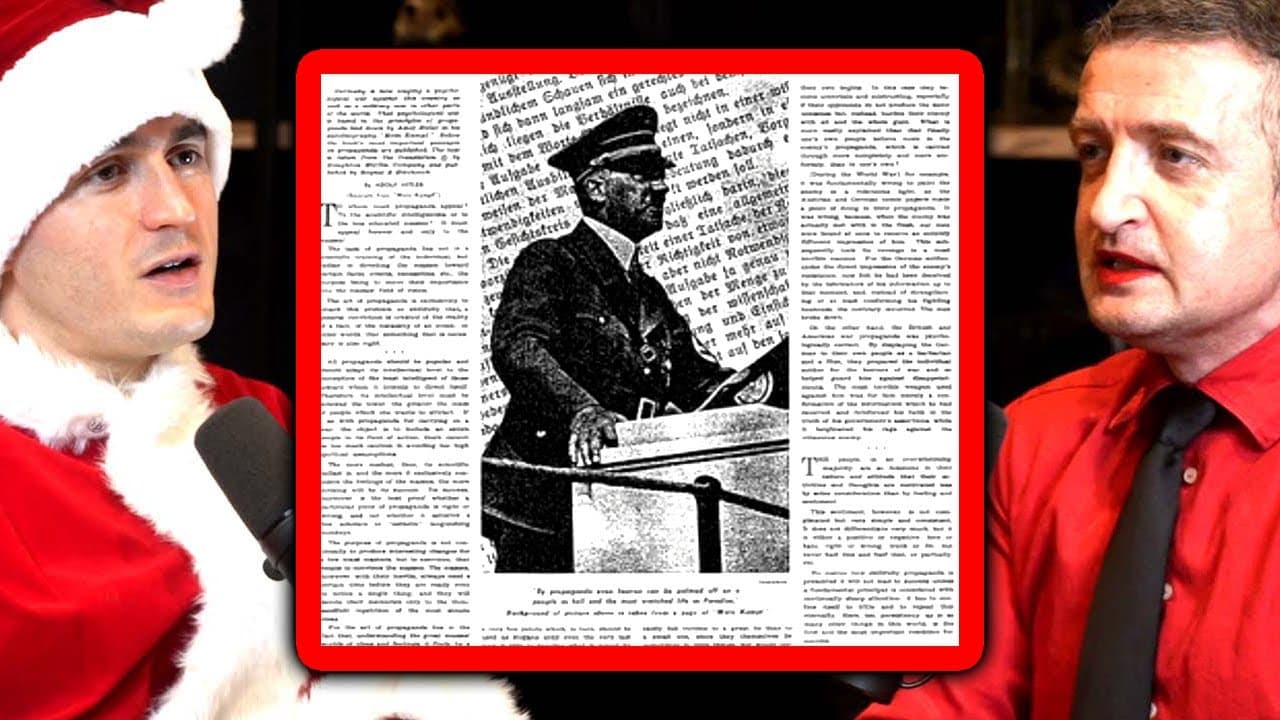
Western journalists faced strict censorship and pressure to portray the Soviet Union in a positive light, leading to the suppression of information about a famine in Ukraine.
Transcript
this is something that's really cool regarding the holiday more so there was one Western journalist Gareth Jones who was like all right something's not adding up here so he was supposed to take a train uh through Ukraine and he got out early and decided to start walking through the countryside to go from Village to Village and I'll get to his story... Read More
Key Insights
- 🇪🇺 Western journalists in the Soviet Union faced strict censorship and pressure to portray the Soviet Union positively.
- 👊 The New York Times, through Walter Durante, denied the existence of the famine and attacked journalists who investigated the issue.
- ⚖️ Journalists had to navigate the delicate balance of maintaining access and resources while also seeking to report the truth.
- 🤔 Some journalists believed in Soviet propaganda and thought the Soviet Union was a better society than the West.
- 🚠 Journalists like Gareth Jones were able to defy censorship and report on the famine in Ukraine.
- ❓ The famine was a result of the catastrophic effects of collectivization in agriculture.
- 😑 Western journalists had to pre-censor their stories to ensure they would be approved by Soviet censors.
Install to Summarize YouTube Videos and Get Transcripts
Explore YouTube Video Summarizer or Get YouTube Transcript Extractor
Questions & Answers
Q: Why were so few journalists able to report on the famine in Ukraine?
Western journalists in the Soviet Union faced strict censorship, the risk of deportation, and the pressure to portray the Soviet Union positively. They also had to go through a censor who controlled the narrative and had to pre-censor their stories.
Q: Why did some journalists believe in the Soviet propaganda?
Some journalists were pro-Soviet and believed that the Soviet Union was building a better society. They were also influenced by the consensus among Western journalists that Stalin was a good leader and that the Soviet Union was superior to Western societies.
Q: How did Walter Durante and the New York Times contribute to the denial of the famine?
Durante, a journalist for the New York Times, denied the existence of the famine in his articles and attacked journalists who questioned the narrative. The New York Times published a 13-page article titled "Russians hungry not starving" that further perpetuated Soviet propaganda.
Q: How difficult was it for journalists to see the truth during that time?
Journalists faced pressure from their censors and editors, as well as the fear of deportation. They were influenced by the consensus among journalists and believed that questioning the Soviet narrative would jeopardize their access and resources.
Summary & Key Takeaways
-
Western journalist Gareth Jones defied censorship by traveling through Ukraine and documenting the famine in the 1930s.
-
Many Western journalists in the Soviet Union faced censorship and had to pre-censor their stories to avoid deportation.
-
The New York Times and its journalist Walter Durante denied the existence of the famine and perpetuated Soviet propaganda.
Read in Other Languages (beta)
Share This Summary 📚
Summarize YouTube Videos and Get Video Transcripts with 1-Click
Try YouTube Summary with ChatGPT & Claude or YouTube Transcript Generator
Explore More Summaries from Lex Clips 📚


Summarize YouTube Videos and Get Video Transcripts with 1-Click
Try YouTube Summary with ChatGPT & Claude or YouTube Transcript Generator